Gas Management & Planning for Extended Dives
By DivePlnr Editorial Team | Published March 2026 | Updated March 2026
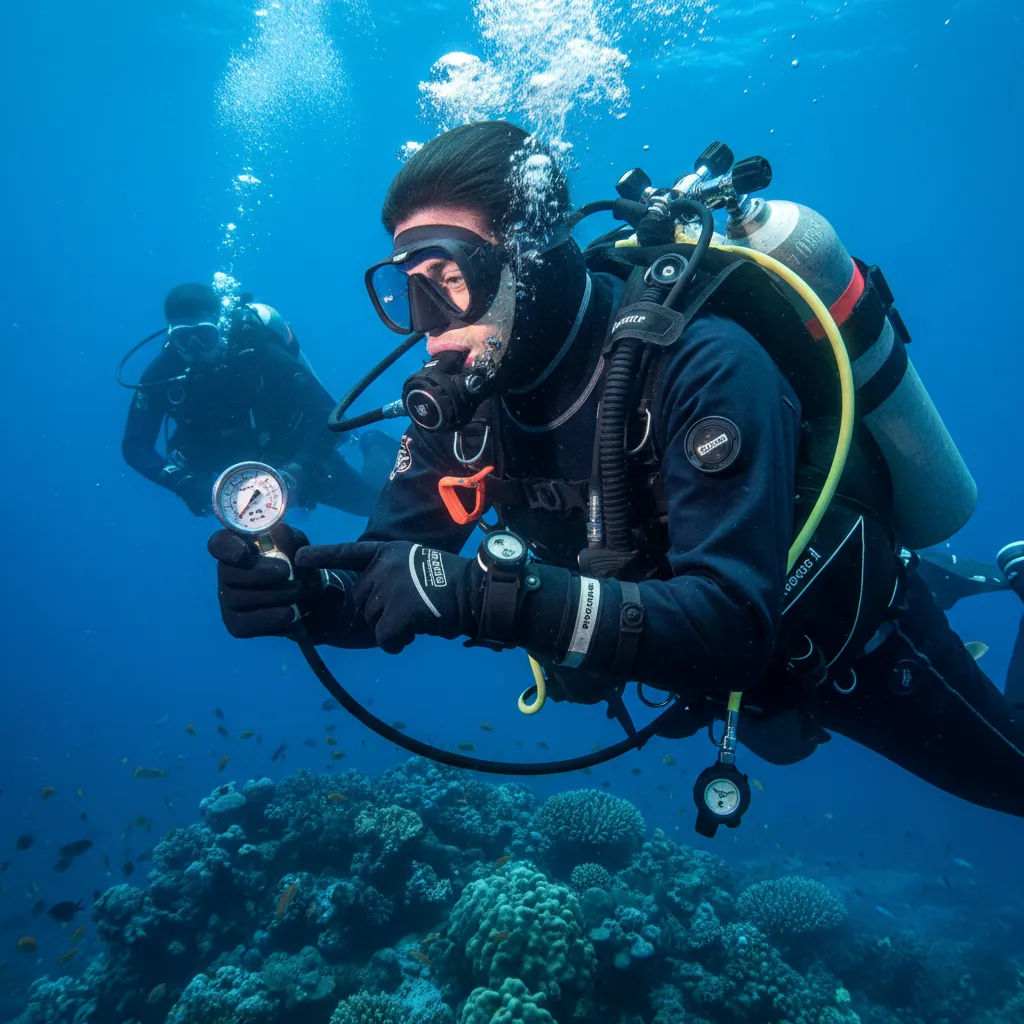
Gas management is the discipline of ensuring you always have enough breathing gas to complete your dive safely, including reserves for emergencies. In recreational diving, gas management is relatively simple - monitor your pressure gauge, plan your turn pressure, and surface with a reserve. In technical diving, gas management becomes a critical planning exercise involving multiple cylinders, different gas mixes, consumption rate calculations, and contingency planning for equipment failures and buddy emergencies. The consequences of running out of gas at 60 metres with 20 minutes of decompression obligation are catastrophic, making gas planning the single most important aspect of technical dive preparation. The fundamental principle is simple: never be in a position where you cannot reach the surface with adequate gas, even if things go wrong. Achieving this requires understanding your personal gas consumption rate (Surface Air Consumption or SAC rate), applying appropriate planning rules, and carrying sufficient reserves. Every technical diver should be able to calculate a complete gas plan on paper, even if software and computers provide the primary planning tools.
Surface Air Consumption (SAC) Rate
Your SAC rate is the volume of gas you consume per minute at the surface, expressed in litres per minute (l/min) or cubic feet per minute (cf/min). Typical SAC rates range from 12-20 l/min, with fit, experienced divers at the lower end and newer or stressed divers higher. To calculate your SAC rate: note your starting and ending cylinder pressure, the cylinder volume, average depth, and dive time. Convert pressure drop to volume consumed, adjust for depth (divide by ambient pressure in bar), then divide by time.
The Rule of Thirds
The rule of thirds is the fundamental gas planning principle for penetration diving (caves and wrecks): use one-third of your gas supply for the inward journey, one-third for the return, and reserve one-third for emergencies. For deep decompression diving, a minimum gas calculation replaces the rule of thirds: calculate the gas needed for an emergency ascent from maximum depth including all decompression stops, assuming a stressed SAC rate (typically 2-3x normal), and ensure this volume is always available.
Minimum Gas Calculation
Minimum gas is the amount required for two divers to ascend from the deepest point of the dive, sharing gas, completing all decompression obligations. The formula: Minimum Gas = SAC × Stress Factor × (Average Ascent Depth in bar) × Ascent Time. For example, with a SAC of 15 l/min, stress factor of 2.5, ascending from 40m (average depth 20m = 3 bar) over 10 minutes: 15 × 2.5 × 3 × 10 = 1,125 litres. This must be available in the back gas supply at all times during the dive.
Decompression Gas Planning
Stage cylinders carried for decompression contain oxygen-rich mixes (typically EAN50 for 21m stops and 100% O2 for 6m stops). Plan consumption at each stop depth: SAC × ambient pressure × stop time = gas required per stop. Add contingency (at minimum 50% extra). Label all cylinders clearly with gas mix, maximum operating depth (MOD), and your name. Analyse every gas before every dive - gas mix errors are a leading cause of technical diving fatalities.
Bailout Planning
For rebreather diving, bailout gas must be sufficient to complete the entire ascent and decompression on open circuit if the rebreather fails at the worst possible moment (maximum depth, maximum deco obligation). This typically requires multiple bailout cylinders. Open-circuit technical divers must plan for the scenario where they must share gas with a teammate for the entire ascent.
Key Takeaways
- 1Know your SAC rate - it is the foundation of all gas planning calculations
- 2Rule of thirds: one-third in, one-third out, one-third reserve (for penetration diving)
- 3Minimum gas calculation ensures you can always ascend safely even in an emergency
- 4Always analyse your gas mixes before every dive - never trust labels alone
- 5Plan for the worst case: sharing gas, stressed consumption, from maximum depth with full deco obligation
- 6Carry decompression gases in clearly marked stage cylinders with verified contents
Frequently Asked Questions
What is a good SAC rate?
SAC rates vary by individual. A range of 12-18 l/min is typical for experienced divers at rest. Fit, calm, experienced divers may achieve 10-14 l/min. Stress, cold, current, and workload increase SAC rates significantly. Track your SAC rate over many dives to establish your personal baseline and plan accordingly.
What is the difference between the rule of thirds and minimum gas?
The rule of thirds is a simple planning tool for penetration diving - it ensures you have gas to exit an overhead environment. Minimum gas is a calculation for deep decompression diving - it ensures you can ascend safely sharing gas from the deepest point. Both serve the same fundamental purpose: ensuring you never run out of gas, but they apply to different diving scenarios.
Why do technical divers carry multiple cylinders?
Different depths require different gas mixtures for optimal safety. Bottom gas (trimix with helium for depth) is breathed at depth. Decompression gases (nitrox or pure oxygen) accelerate nitrogen elimination at shallower stops. Each gas has a maximum operating depth based on oxygen toxicity limits. Carrying the right gas for each phase maximises efficiency and safety.
How do I improve my gas consumption?
Improve buoyancy control (less BCD adjustment = less exertion), streamline your equipment configuration, swim slowly with efficient fin technique, stay warm (shivering increases consumption dramatically), manage stress and anxiety through experience and training, and maintain physical fitness. Even small improvements compound over a long dive.