What Is a Liveaboard? The Complete Guide to Dive Safaris
By DivePlnr Editorial Team | Published April 2026 | Updated April 2026
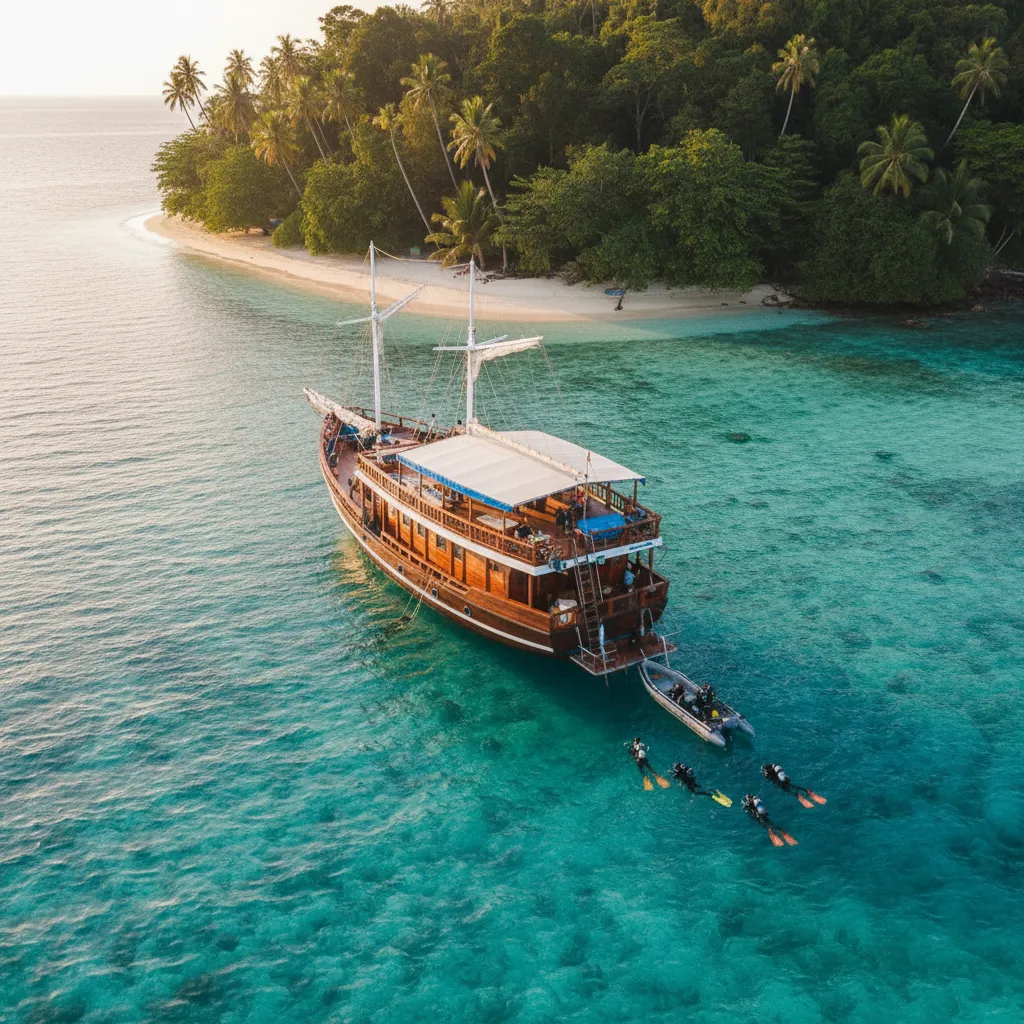
A liveaboard is a boat you live on while diving - a floating hotel that takes you to dive sites that are too remote, too far offshore, or too numerous to access from a land-based resort. Instead of returning to shore after each dive, you sleep, eat, and relax on board, with the dive sites literally minutes away by tender or directly off the stern. Liveaboard trips - also called dive safaris - typically last 3-14 nights and cover a planned itinerary of sites, often including locations that receive little or no traffic from day boats. This is where the magic lies: pristine reefs, large pelagic encounters, and dive sites you share only with your fellow passengers. The liveaboard industry has grown enormously over the past two decades, and today hundreds of vessels operate worldwide, from basic budget boats in the Red Sea to luxury expedition yachts in Raja Ampat. Prices range from $100-150 per night on budget Red Sea boats to $500-1,000+ per night on premium vessels in remote destinations. A typical liveaboard trip includes 3-4 dives per day (including night dives), all meals, snacks, and soft drinks, with varying levels of equipment rental and alcoholic beverage inclusion. It is, by a wide margin, the most diving-per-day you can achieve - and for many divers, their first liveaboard trip fundamentally changes what they expect from a dive holiday.
What to Expect on a Liveaboard
Typical Daily Schedule
A standard liveaboard day begins at dawn. Coffee and a light snack are followed by the first dive at 6:30-7:00 AM - often the best dive of the day with calm conditions and active marine life. Breakfast follows at 8:30-9:00 AM. The second dive is mid-morning, around 10:30-11:00 AM. Lunch is served at midday, followed by rest time. The third dive is mid-afternoon, around 2:30-3:00 PM. Dinner is at 7:00 PM, and on most nights, a fourth dive - a night dive - is offered at 8:30-9:00 PM. Schedules vary: some boats offer up to 5 dives per day, while others limit to 3 on transit days when the boat moves between areas.
Cabin Types
Liveaboard cabins range from basic to luxurious. Budget boats offer shared dormitory-style bunks or compact twin cabins below the waterline with shared bathrooms. Mid-range vessels provide private en-suite cabins, often with double beds and portholes. Premium boats feature spacious staterooms with ocean views, individual climate control, and marble-finished bathrooms. Many boats offer a range of cabin categories at different price points on the same trip. If you are prone to seasickness, request a cabin amidships on a lower deck - this is where the boat's motion is least felt.
Meals and Communal Life
Liveaboard food is a highlight on well-run vessels - three full meals plus snacks, often featuring local cuisine alongside international options. Dietary requirements (vegetarian, vegan, allergies) are accommodated with advance notice. The communal dining and social areas create a unique atmosphere - you are spending a week with 10-20 fellow divers who share your passion. Briefings happen before every dive, the crew knows every site intimately, and post-dive conversations about what you saw over dinner are part of the experience. Some divers travel solo specifically because liveaboards are easy social environments.
What's Included (and What's Not)
Standard inclusions on most liveaboards: all dives (tanks, weights, guide), all meals and soft drinks, cabin accommodation, and towels. Common extras at additional cost: equipment rental ($30-80/day for a full set), nitrox fills ($50-150 per trip), alcoholic beverages, marine park entry fees ($20-100+), crew gratuity, and dive insurance. Budget boats may charge for amenities that premium boats include. Always check the detailed inclusions before booking - the headline price can be misleading if significant extras are not included.
Liveaboard vs Land-Based Resort
Advantages of Liveaboards
Access to remote, pristine dive sites unreachable by day boats. More dives per day (3-5 vs typically 2-3 from a resort). No long boat transfers - you wake up at the dive site. Total immersion in diving for the entire trip duration. Dive sites are less crowded or entirely private. Night dives at remote sites most divers never experience. Marine life encounters (sharks, mantas, whale sharks) are often more reliable at offshore sites.
Advantages of Land-Based
Flexibility - dive when you want, skip dives without feeling you're wasting money. Better for mixed groups where some people dive and others do not. More variety in non-diving activities (excursions, restaurants, nightlife). Easier for beginners who may find the intensity of 4 dives daily overwhelming. No seasickness risk. Often cheaper per night (though not per dive). More comfortable for long stays (2+ weeks).
Best of Both
Many divers combine both: a liveaboard trip to hit remote sites followed by a few days at a resort for relaxed shore diving, spa time, and exploring the local area. In destinations like the Maldives or Indonesia, this combination covers both pristine offshore atolls and rich house reefs.
Budget Ranges
Budget ($100-200/night): Red Sea (Egypt), Thailand, basic boats in the Maldives. Expect functional but simple accommodation, good diving at well-known sites, and shared facilities. Excellent value for divers who prioritise time in the water over cabin luxury. Mid-range ($200-400/night): Maldives, Komodo (Indonesia), Galapagos (basic vessels), Great Barrier Reef. Comfortable private cabins, good food, experienced crews, and well-maintained dive equipment. This is the sweet spot for most divers. Premium ($400-1,000+/night): Raja Ampat, Galapagos (luxury), Tubbataha (Philippines), remote Pacific. Spacious cabins, gourmet food, premium equipment, small group sizes, and exceptional itineraries to the most remote dive destinations on Earth.
Seasickness and Tipping
Seasickness is the most common concern for first-time liveaboard guests. Most liveaboards operate in sheltered waters (inside atolls, between islands, in straits), minimising exposure to open ocean swells. For crossings in open water, take medication (meclizine/Bonine is preferred as it causes less drowsiness than dimenhydrinate/Dramamine) 1-2 hours before departure. Stay on deck in fresh air, watch the horizon, and avoid reading or screen time during transit. Most divers adjust within 24 hours even without medication. Crew gratuity is customary on liveaboards: 5-10% of the trip cost is standard practice in most destinations, typically collected at the end of the trip and distributed among the crew.
Top Liveaboard Destinations
Red Sea (Egypt) - The most accessible and affordable liveaboard destination. Brothers Islands, Daedalus, Elphinstone, and the deep south offer stunning wall diving, shark encounters, and spectacular wrecks. The SS Thistlegorm is one of the world's most famous wreck dives. Maldives - Manta rays, whale sharks, and channel dives with grey reef sharks across 26 atolls. The Maldives' geography - scattered atolls across 800km of ocean - makes liveaboards the ideal way to explore. Raja Ampat (Indonesia) - The most biodiverse marine environment on Earth. Over 1,500 fish species and 600 coral species. Remote, expensive, and absolutely worth it. Galapagos (Ecuador) - Hammerhead schools, marine iguanas, whale sharks, mola mola, and sea lions. Challenging conditions (cold water, strong currents) but unmatched big animal encounters. Komodo (Indonesia) - Manta rays, healthy reefs, and Komodo dragons on land excursions. Excellent value mid-range liveaboards with diverse diving from muck to drift.
Key Takeaways
- 1A liveaboard takes you to remote dive sites unreachable from shore - delivering 3-5 dives per day at pristine, uncrowded locations
- 2Budget liveaboards start at $100-200/night (Red Sea, Thailand); premium expeditions in Raja Ampat or Galapagos run $400-1,000+/night
- 3Standard inclusions: all dives, meals, accommodation - common extras: equipment rental, nitrox, alcohol, marine park fees, and crew gratuity (5-10%)
- 4Seasickness is manageable: most routes use sheltered waters, meclizine taken 1-2 hours before crossings is effective, and most people adjust within 24 hours
- 5First-timers should start with an accessible destination (Red Sea, Komodo) before committing to expensive remote expeditions
- 6Combining a liveaboard trip with a few land-based days gives the best of both worlds - remote offshore sites plus relaxed shore diving
Frequently Asked Questions
How many dives do I need before a liveaboard?
Most liveaboards require Open Water certification and recommend at least 20-30 logged dives. Some challenging destinations (Galapagos, Sudan, technical wrecks) require Advanced Open Water and 50+ dives. If your dive skills are rusty, consider a refresher course or a few days of shore diving before boarding - you do not want to spend day one of an expensive trip relearning buoyancy control.
Can non-divers join a liveaboard trip?
Some liveaboards accept snorkellers, but many do not - the entire itinerary is designed around diving. If you are travelling with a non-diving partner, a land-based resort is usually a better choice unless the liveaboard specifically caters to mixed groups. Check with the operator before booking.
What should I bring on a liveaboard?
Essentials: certification card, dive insurance, personal dive equipment (computer, mask, wetsuit at minimum), reef-safe sunscreen, seasickness medication, a dry bag for electronics, a torch for night dives, and a light jacket for evening deck time. Most divers bring their own mask, computer, and exposure suit but rent BCD, regulators, and fins. Pack light - cabin storage is limited.
Is it worth bringing my own equipment?
Bringing your own well-fitted equipment significantly improves comfort and safety - particularly your mask, computer, wetsuit, and regulators. BCDs and fins are more forgiving of rental fit. If you own your own gear, the savings on 7 days of rental ($200-500) can offset the baggage fees. Many liveaboard divers invest in lightweight travel equipment specifically for this reason.
What if the weather is bad during my trip?
Liveaboard captains adjust itineraries based on conditions - they will move to sheltered sites if weather deteriorates. This flexibility is actually an advantage over land-based diving, where you are stuck with whatever conditions exist at your local sites. Severe weather may reduce diving, but total cancellation is rare. Trip insurance that covers weather disruption is worth considering for expensive expeditions.