Muck Diving: The Art of Finding the Weird & Wonderful
By DivePlnr Editorial Team | Published April 2026 | Updated April 2026
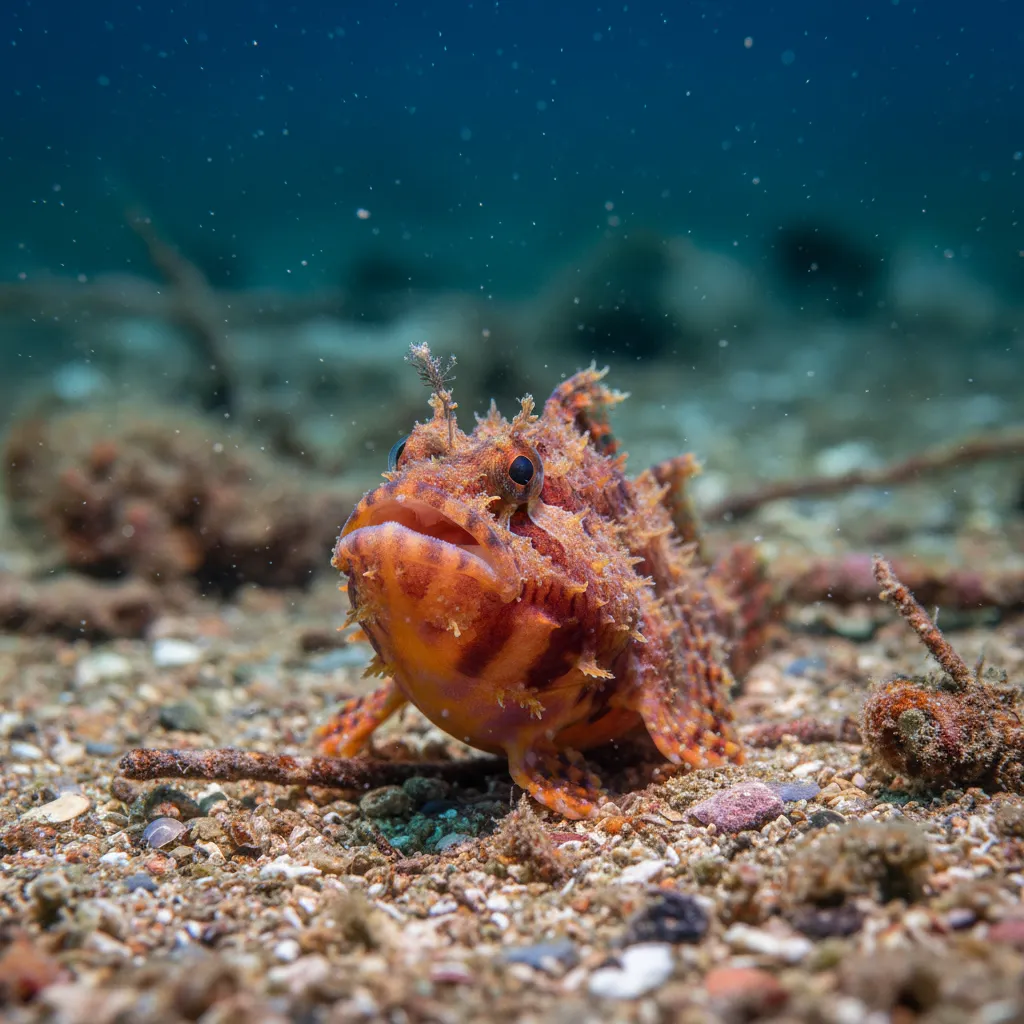
Muck diving is the art of exploring sandy, silty, or rubble-strewn seabeds that most divers would swim right over - and finding some of the ocean's most bizarre, beautiful, and behaviourally fascinating creatures hiding in plain sight. Where a coral reef announces its life with colour and movement, a muck site whispers. The seabed looks barren: dark volcanic sand, scattered debris, broken shells, perhaps a few sea pens or patches of algae. But look closer - that piece of coconut shell is home to a coconut octopus. The tiny bump on the sand is a demon stinger scorpionfish, virtually invisible. The patch of rubble hides a Harlequin shrimp methodically dismembering a sea star. Muck diving originated in Southeast Asia in the 1980s, when dive operators around Lembeh Strait in North Sulawesi, Indonesia, began exploring the volcanic sand slopes between the strait's reef-lined shores. What they found was extraordinary: a concentration of rare, endemic, and bizarre creatures found nowhere else, thriving in a habitat most divers considered worthless. Today, muck diving is one of the fastest-growing niches in recreational diving, attracting underwater photographers, marine biologists, and divers who have done every reef and wreck and are looking for something genuinely different.
What Makes Muck Diving Special
The creatures found on muck sites are specialists in camouflage, mimicry, and survival in a habitat with little structural complexity. Evolution has produced some of the ocean's most outlandish adaptations here. Frogfish - ambush predators that look like sponges - can swallow prey their own size in 6 milliseconds, the fastest strike of any vertebrate. Mimic octopuses impersonate up to 15 different species including flatfish, lionfish, and sea snakes by changing colour, texture, and body shape. Flamboyant cuttlefish are the only cephalopod that walks on the seabed rather than swimming - and their pulsating purple, yellow, and white display is one of nature's most spectacular shows. Blue-ringed octopuses, barely larger than a golf ball, carry enough venom to kill 26 adults - yet they are docile and stunningly photogenic.
Muck diving also reveals extraordinary animal behaviours rarely seen on reefs: mantis shrimp tending their eggs, jawfish mouth-brooding, bobbit worms (3-metre-long ambush predators) striking prey at the speed of a .22 calibre bullet, and nudibranchs laying egg ribbons in perfect geometric spirals. For macro photographers, a single muck dive can yield dozens of portfolio-worthy images.
Techniques for Successful Muck Diving
Slow Down - Then Slow Down More
The most important muck diving skill is patience. Move at a fraction of your normal pace. Hover over a small patch of sand for several minutes and watch - movement that was invisible at first gradually reveals itself. Critters that were hidden begin to emerge as your eyes calibrate. A good muck dive covers 50-100 metres of seabed; a rushed diver will cover 500 metres and see nothing.
Scanning Technique
Develop a systematic scanning pattern. Start with the immediate foreground (1-2 metres ahead), looking for movement, unusual shapes, eyes, or textural anomalies. Check every piece of debris: shells, bottles, cans, and coconut shells are prime octopus homes. Examine sea pens, whip corals, and any vertical structures - pygmy seahorses, shrimp, and skeleton shrimp cling to these. Look at the sand surface for signs of buried creatures: eyes protruding, gill covers pumping, or slight mounds indicating a hidden stonefish or stargazer.
Buoyancy Is Everything
Muck sites are typically fine volcanic sand or silt that becomes an impenetrable cloud with one misplaced fin kick. Your buoyancy must be impeccable - hover centimetres above the bottom without ever touching it. Use a frog kick or modified flutter kick that directs thrust upward and backward rather than down into the silt. Many serious muck divers use a modified trim with slightly head-down position for better visibility and photography angles.
Night Muck Dives
Night muck diving is a category of its own. Creatures that are hidden during the day emerge in enormous numbers after dark. Bobtail squid rise from the sand, hunting in pairs. Spanish dancers - enormous crimson nudibranchs up to 40cm long - swim in undulating spirals through the water column. Decorator crabs march across the sand trailing their camouflage. Bioluminescent plankton flash with every movement. Many muck diving veterans consider night dives the highlight - the density and diversity of life visible at night often exceeds daytime by an order of magnitude.
Top Muck Diving Destinations
Lembeh Strait, Indonesia
The world capital of muck diving. This narrow strait between North Sulawesi and Lembeh Island offers volcanic black sand slopes with an unmatched concentration of rare macro life. Highlights include hairy frogfish, wonderpus, blue-ringed octopus, mimic octopus, flamboyant cuttlefish, Banggai cardinalfish, and dozens of nudibranch species. Dive resorts line both shores, most with dedicated muck diving guides who can spot a pygmy seahorse at 10 metres.
Anilao, Philippines
The Philippines' original muck diving hub, located in Batangas province south of Manila. Anilao offers a mix of muck, rubble, and coral sites with outstanding nudibranch diversity - over 800 species have been recorded. Easily accessible as a weekend destination from Manila, Anilao has a thriving underwater photography community and hosts international photo competitions.
Dauin, Philippines
A quieter alternative to Anilao, Dauin on Negros Island has world-class muck sites with resident frogfish, octopuses, and seahorses. The nearby Apo Island combines muck diving with healthy coral reefs and sea turtles, offering excellent variety within a single trip.
Blue Heron Bridge, Florida
Proof that world-class muck diving exists outside the tropics. This shore dive under the Phil Foster Park bridge in Riviera Beach, Florida, is consistently rated among the world's best muck sites. Best dived at high tide slack water, it hosts batfish, seahorses, octopuses, mantis shrimp, and astonishing numbers of juvenile tropical fish using the rubble as nursery habitat. Entry-level accessibility (3-6 metres depth, shore access) makes it one of the most productive muck sites on Earth.
Essential Critter ID
Invest time learning to identify key muck creatures before your trip. Being able to recognise a hairy frogfish from a painted frogfish, or distinguish a wonderpus from a mimic octopus, dramatically increases your appreciation of what you are seeing. Many dive operators offer critter identification briefings. Underwater photography - even with a basic compact camera - is the best way to catalogue and identify species after the dive, and contributes to citizen science databases.
Key Takeaways
- 1Muck diving reveals some of the ocean's most bizarre and fascinating creatures on seemingly barren sandy or silty seabeds
- 2The key technique is extreme patience - move slowly, hover over small areas, and let your eyes adjust to spot camouflaged creatures
- 3Impeccable buoyancy is critical - one misplaced fin kick destroys visibility on fine volcanic sand and silt
- 4Night muck dives often produce 10x the critter density of daytime - bobtail squid, Spanish dancers, and bioluminescence transform the site
- 5Lembeh Strait (Indonesia) is the global muck diving capital; Anilao and Dauin (Philippines) and Blue Heron Bridge (Florida) are world-class alternatives
- 6Learning critter identification before your trip dramatically increases what you spot and appreciate underwater
Frequently Asked Questions
Is muck diving suitable for beginners?
Muck diving requires excellent buoyancy control to avoid silting out the site and disturbing fragile creatures. Most operators recommend at least Advanced Open Water certification and 30+ logged dives. If you have good buoyancy skills, a guided muck dive is absolutely accessible - but if you are still struggling with buoyancy, spend more time developing that skill first.
What equipment do I need for muck diving?
Standard scuba equipment works fine. A pointer stick (metal rod or chopstick) helps indicate critters to your buddy without touching them. A magnifying glass reveals details invisible to the naked eye. For photography, a macro lens setup is essential - wide-angle is almost useless on muck dives. A good dive torch helps illuminate subjects and spot creatures hiding in crevices even during day dives.
Is it true muck diving is mainly for photographers?
Photography and muck diving are a natural pairing, but plenty of non-photographers love muck diving for the thrill of discovery - it is like an underwater treasure hunt. Seeing a frogfish hunt, a mimic octopus transform, or a mantis shrimp display is extraordinary regardless of whether you capture it on camera.
Are muck diving critters dangerous?
Several muck species are venomous - blue-ringed octopus, stonefish, scorpionfish, and lionfish among them. The golden rule: look but do not touch. Maintain a safe distance, never handle marine life, and watch where you place your hands and knees. Your muck diving guide will point out any species that require extra caution.