Night Diving: Techniques, Equipment & Best Practices
By DivePlnr Editorial Team | Published March 2026 | Updated March 2026
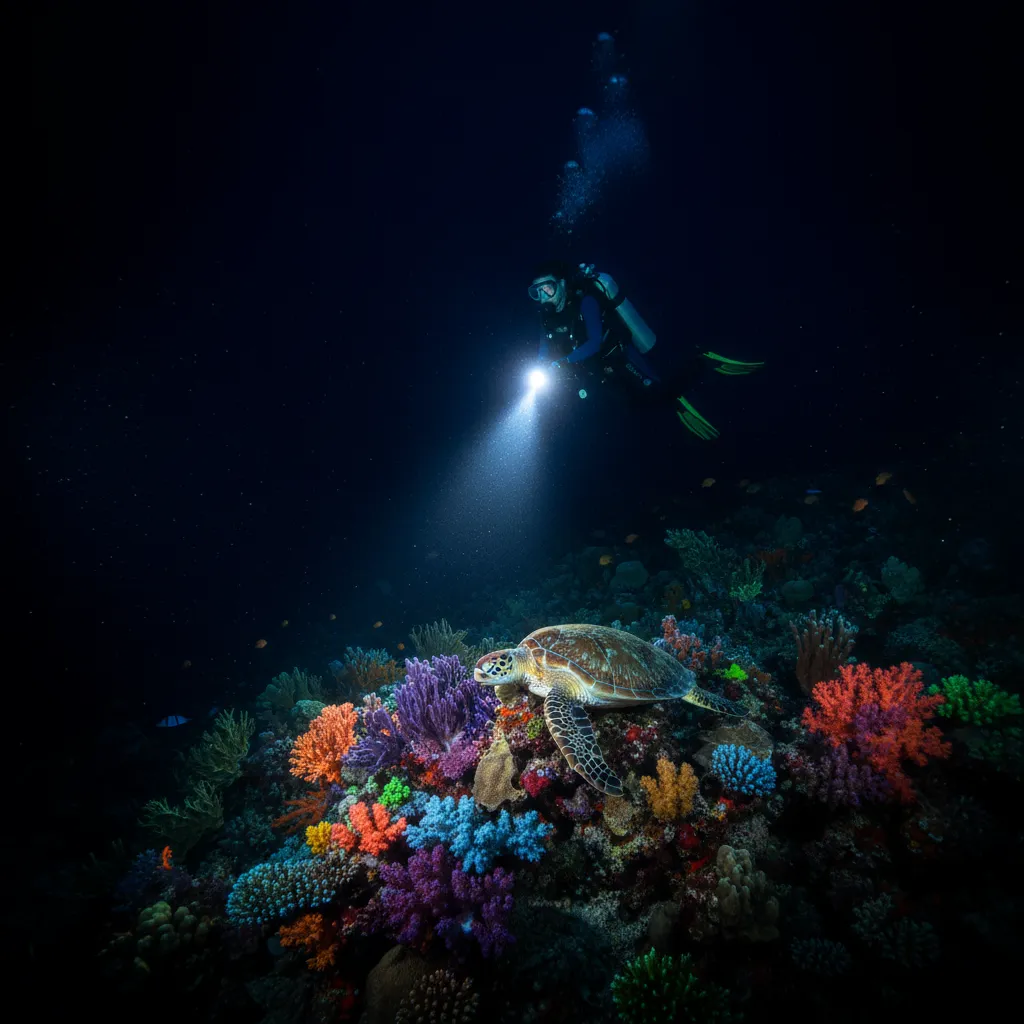
Night diving transforms a familiar dive site into an entirely different world. Creatures that hide during the day emerge to hunt - octopus prowl the reef, hunting moray eels thread through coral heads, Spanish dancers unfurl in the water column, crabs and lobsters march across the sand, bioluminescent plankton spark like underwater fireflies with every fin kick, and sleeping parrotfish float in their mucous cocoons. The reef at night is arguably more alive and more active than during the day, and the experience of exploring it by torchlight is both thrilling and meditative. Night diving also develops core diving skills: buoyancy control must be precise because visual depth references are limited, navigation requires careful attention because familiar landmarks look different in a narrow beam, and buddy communication relies on light signals rather than hand signals. The sensory experience is profound - surrounded by darkness with only the cone of your light revealing the underwater world, sounds are amplified, and the focus of observation narrows to an intimate window of illumination. Many experienced divers consider night diving their favourite type of dive. It requires some additional preparation and equipment but is well within the capability of any competent Open Water diver, and most dive destinations offer guided night dives as a regular activity.
Essential Equipment
Primary Dive Light
Your primary light should be bright enough to illuminate a wide area (1,000+ lumens), have a burn time exceeding your planned dive time by at least 50%, and fit comfortably in your hand with a wrist lanyard or goodman handle. LED lights are the standard, offering bright, efficient illumination with long battery life. Canister lights (separate battery pack and light head) provide the brightest output and longest burn times but are more expensive.
Backup Light
Always carry at least one backup light - two is better. A compact torch clipped to your BCD provides insurance if your primary light fails. There is no worse feeling underwater than being in complete darkness with no functional light. Backup lights can be smaller and less powerful than your primary.
Chemical Light Sticks
Attach a chemical glow stick to your tank valve so your buddy can see you from behind. Some divers also attach them to their BCD or arms for visibility. While not bright enough for navigation or observation, they provide passive visibility that requires no batteries.
Light Signals
Hand signals are invisible at night unless illuminated by your torch. Point your light at your hand to make signals visible. To get your buddy's attention, move your light in a slow circle on the ground or wall near them - never shine directly into their eyes or mask, as this destroys night-adapted vision. A rapid side-to-side sweeping motion indicates an emergency. The OK signal can be made by circling your light beam in a large O pattern.
Navigation at Night
Navigation is more challenging at night because visual range is limited to your light beam. Use a compass heading for outbound and reciprocal return navigation. On familiar sites, key landmarks (distinctive coral formations, mooring blocks, permanent lines) serve as waypoints. Maintain depth awareness - without visual horizon references, it is easy to drift shallower or deeper without realising. Check your computer and depth gauge frequently.
Night Diving Techniques
Move slowly - much slower than daytime diving. Nocturnal creatures are more tolerant of divers but will retreat from sudden movements or aggressive light. Approach subjects with your light beam to the side rather than directly on them. Use a red filter on your light for observing light-sensitive creatures - many nocturnal species cannot see red wavelengths and will behave naturally.
To experience bioluminescence, cover or switch off your light briefly (after confirming your buddy is aware). Wave your hand through the water and watch for blue-green sparkles from disturbed bioluminescent plankton. This is one of diving's most magical experiences, particularly in plankton-rich tropical waters.
Safety Considerations
Night dive from a familiar site - ideally one you have dived during the day. Do a reconnaissance day dive first if possible. Limit your depth - night dives are typically conducted at 12-18 metres maximum. Brief carefully and agree on light signals, buddy procedures, and the abort plan. Know the entry and exit point intimately. Carry a surface marker buoy with a light or reflective strip for visibility. Start your night dive at dusk - the transition from twilight to full dark is gentler and allows your eyes to adapt gradually.
Key Takeaways
- 1Always carry a primary light and at least one backup - losing all light underwater is an emergency
- 2Never shine your light directly into a buddy's eyes - it destroys night vision for minutes
- 3Move slowly and use sidelight illumination to observe nocturnal marine life without startling it
- 4Use compass navigation and depth monitoring as primary orientation tools at night
- 5Attach a glow stick to your tank valve so your buddy can track you from behind
- 6Night dive on familiar sites first, ideally after a daytime reconnaissance dive
Frequently Asked Questions
Is night diving safe for newly certified divers?
Night diving is well within the capability of Open Water certified divers, provided they are comfortable with basic skills and accompanied by experienced divers or a guide. Most dive operations offer guided night dives as a regular activity. A Night Diving specialty course teaches specific skills and builds confidence, but is not mandatory. Start with a guided dusk dive at a shallow, familiar site.
What marine life can I see at night that I won't see during the day?
Night reveals an entirely different cast of characters: hunting octopus, prowling moray eels, Spanish dancers (large nudibranchs), basket stars unfurled to feed, sleeping parrotfish in mucous cocoons, crabs and lobsters out of their daytime hiding spots, bioluminescent plankton, flashlight fish, and many species of shrimp. Predator activity increases significantly at night.
How bright should my dive light be?
A primary light of 1,000-3,000 lumens is ideal for most night diving. Below 500 lumens is too dim for comfortable navigation and observation. Above 5,000 lumens can be too bright, washing out colours and startling marine life. Adjustable brightness is a valuable feature - dim for close observation, bright for navigation and scanning.
How do I handle bioluminescence?
To experience bioluminescence, briefly cover or switch off your light (after signalling your buddy). Wave your hand through the water or kick your fins to disturb bioluminescent plankton. The resulting blue-green sparkles are one of diving's most magical sights. Bioluminescence is strongest in warm tropical waters, particularly during plankton-rich seasons, and on moonless nights.