Sidemount Diving: Configuration & Techniques
By DivePlnr Editorial Team | Published March 2026 | Updated March 2026
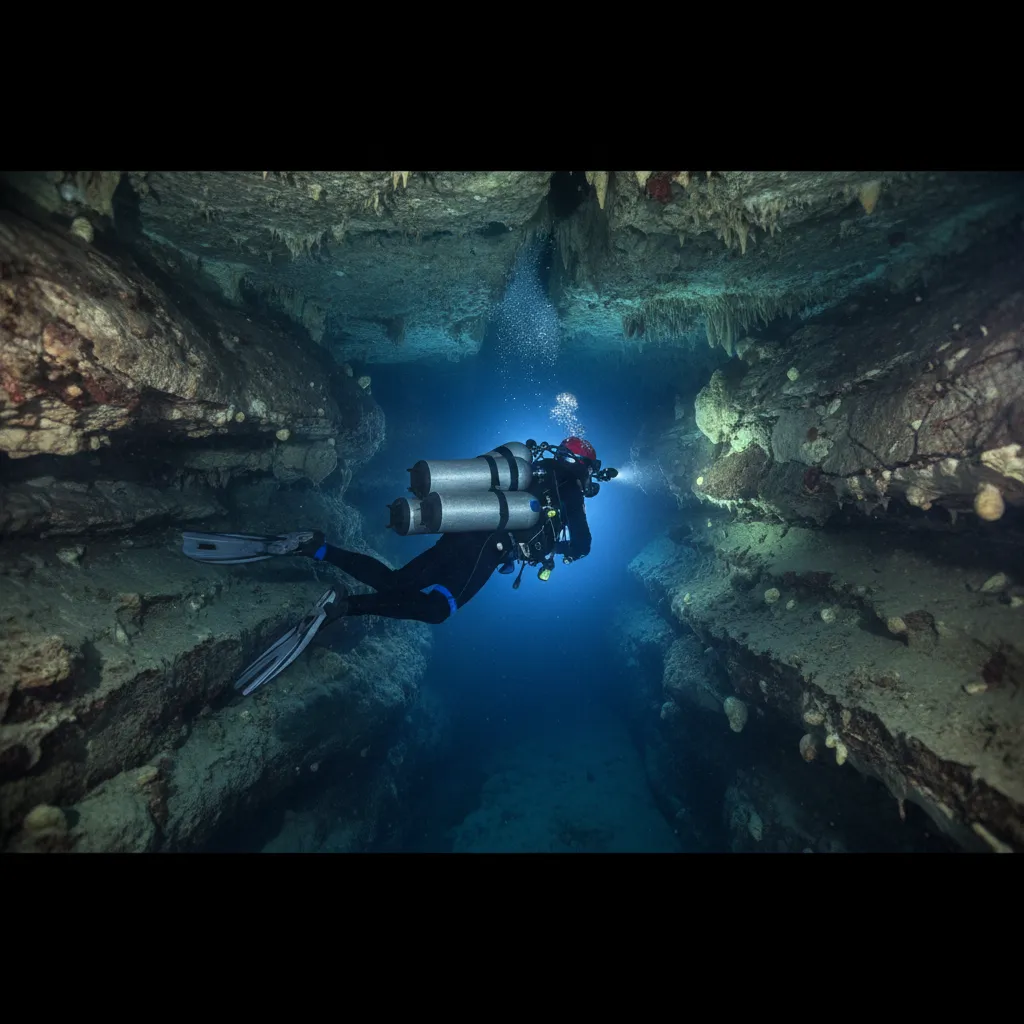
Sidemount diving - carrying cylinders alongside the body rather than on the back - has evolved from a specialised cave diving technique into one of the most significant equipment configuration trends in modern diving. Originally developed by British cave divers in the 1960s and 1970s to navigate the notoriously tight restrictions of UK sumps, sidemount has been adopted by recreational divers, technical divers, and instructors worldwide. The advantages are compelling: reduced back strain (cylinders are donned and doffed in the water, not carried on land), improved streamlining and trim, independent gas supplies with easy-to-reach valve shutdowns, better access to cylinder valves and regulators, and a lower profile that is advantageous in restrictions and overhead environments. The configuration places one or two cylinders along the diver's sides, clipped at the hip and shoulder with bungee cords, creating a sleek horizontal profile. For technical diving, sidemount readily accommodates additional stage and decompression cylinders. Many divers who switch to sidemount never go back to backmount - the comfort, accessibility, and redundancy advantages are that significant. However, sidemount does require specific training to configure properly, and incorrect setup can create problems rather than solving them.
Sidemount Harness Systems
A sidemount harness consists of a backplate or soft harness with a buoyancy wing, D-rings for cylinder attachment, and bungee loops that run from the shoulder area to hold the cylinder necks in position. Popular systems include the Razor, the X-Deep Stealth, and the Hollis SMS. The harness must be properly sized and adjusted - an incorrectly configured sidemount system causes trim problems, cylinder dangling, and frustration. Most divers benefit from professional instruction to set up their first sidemount configuration.
Cylinder Configuration
Each cylinder is rigged with a single regulator (first stage, second stage, and SPG). The cylinder attaches at two points: a bolt snap at the base clips to a hip D-ring, and a bungee loop at the neck holds the valve area close to the shoulder/chest. When properly configured, the cylinders lie flat along the body, the valve handles are easily reachable for shutdown, and the SPGs are accessible for monitoring. Typical cylinder sizes range from aluminium 80s (11.1L) to steel 12L for recreational sidemount, and larger steel cylinders for technical diving.
Gas Management in Sidemount
With two independent cylinders, each with its own regulator, sidemount provides true gas redundancy without a manifold. Gas switching follows a simple protocol: breathe from the fuller cylinder, switching regularly (every 30-50 bar) to keep both cylinders at similar pressures. This ensures maximum gas availability if one system fails - you lose at most one cylinder's worth of gas, and the other is nearly full. Monitor both SPGs frequently and maintain awareness of total and per-cylinder gas supplies.
Trim and Buoyancy
Proper trim in sidemount requires careful weight placement. Weight is distributed between a weight belt or integrated pockets and the cylinders themselves (steel cylinders are negatively buoyant; aluminium cylinders become positively buoyant as gas is consumed). The goal is a perfectly horizontal position with cylinders tucked tight to the body. Ankle weights or heavy fins may help with leg trim. Achieving good sidemount trim often requires several dives of adjustment.
When to Choose Sidemount
Sidemount excels for: divers with back problems (no heavy gear on the back on land), cave and wreck penetration (lower profile, independent gas), warm-water recreational diving (comfortable, streamlined), and anyone who wants gas redundancy without a twinset. Backmount remains preferable for: cold-water diving with drysuits where cylinder positioning is more complex, and divers who prefer the simplicity of a single cylinder for basic recreational diving.
Key Takeaways
- 1Sidemount places cylinders alongside the body for better streamlining, access, and comfort
- 2Originally a cave diving technique, now widely adopted across all diving disciplines
- 3Two independent cylinders with separate regulators provide true gas redundancy
- 4Gas switching protocol: breathe from the fuller cylinder, switch every 30-50 bar to keep pressures equal
- 5Proper harness setup and trim adjustment are critical - take a course from a qualified instructor
- 6Particularly beneficial for divers with back problems and overhead environment diving
Frequently Asked Questions
Can I learn sidemount as a recreational diver?
Absolutely. Many training agencies offer recreational sidemount courses that teach the configuration for single or twin-cylinder sidemount diving within recreational limits. You should be a competent diver (Advanced Open Water or equivalent) with good buoyancy control before starting. The course typically involves equipment setup, confined water practice, and open water dives.
Is sidemount better than backmount?
Neither is objectively better - each has advantages for different situations. Sidemount offers better access to valves, independent gas supplies, reduced back strain, and a lower profile. Backmount is simpler for single-cylinder recreational diving and may be easier to configure with drysuits. Many experienced divers are proficient in both and choose based on the dive plan.
How many cylinders can you carry in sidemount?
The standard sidemount configuration is two cylinders (one per side). For technical diving, additional stage and decompression cylinders can be clipped on - experienced sidemount technical divers may carry four or more cylinders. Each additional cylinder requires proper clipping, routing, and gas management protocols.
Does sidemount work in cold water with a drysuit?
Yes, though it requires more careful configuration. The drysuit adds bulk that affects cylinder positioning, and inflator hose routing needs attention. Some divers find sidemount less comfortable with thick drysuits, while others prefer it. Cold-water sidemount diving is common in the UK and Northern European cave diving community where the technique originated.