What Is Scuba Diving? A Complete Introduction
By DivePlnr Editorial Team | Published March 2026 | Updated March 2026
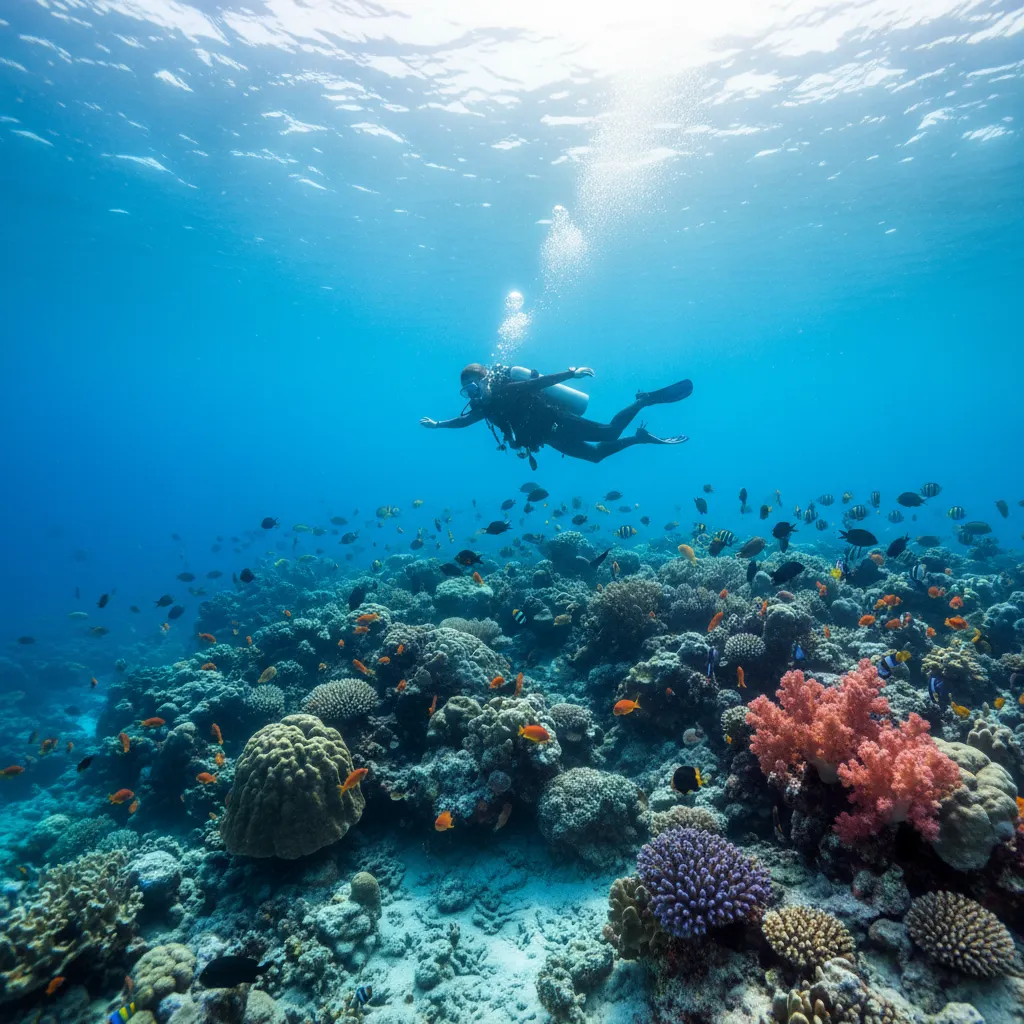
Scuba diving is one of the most transformative activities a person can experience. The acronym SCUBA stands for Self-Contained Underwater Breathing Apparatus, referring to the portable breathing equipment that allows humans to explore the underwater world for extended periods. Unlike snorkelling, which limits you to the surface, or free diving, which demands exceptional breath-hold ability, scuba diving gives virtually anyone the freedom to descend to coral reefs, shipwrecks, and underwater caves while breathing comfortably. Modern recreational scuba diving emerged in the 1940s and 1950s following the invention of the Aqua-Lung by Jacques Cousteau and Emile Gagnan. Today, tens of millions of certified divers explore the oceans every year, supported by training agencies such as PADI, SSI, NAUI, and CMAS. The sport has evolved from a niche pursuit into a global industry encompassing tourism, conservation, scientific research, and commercial operations. Whether you dream of floating weightless over a tropical reef teeming with colourful fish, exploring a century-old shipwreck encrusted with marine life, or encountering whale sharks and manta rays in the open blue, scuba diving offers experiences found nowhere else on Earth.
How Scuba Diving Works
At its core, scuba diving solves a fundamental problem: humans cannot breathe underwater. A scuba system provides compressed breathing gas - typically air or enriched air nitrox - from a cylinder strapped to the diver's back. A regulator reduces the high-pressure gas in the cylinder to ambient pressure, delivering air on demand each time the diver inhales. An exhaled breath exits through a valve and rises to the surface as bubbles.
The buoyancy compensator device (BCD) allows the diver to control vertical position in the water column. By adding air to the BCD, the diver becomes more buoyant and rises; by venting air, the diver becomes less buoyant and sinks. Skilled buoyancy control is the hallmark of an experienced diver and the single most important skill to master.
Who Can Scuba Dive?
Scuba diving is remarkably accessible. Most certification agencies accept students from age 10 upwards for junior certifications and age 12-15 for full open water certification. There is no upper age limit - many divers continue well into their 70s and beyond. You need to be a reasonably confident swimmer and in generally good health. Certain medical conditions such as epilepsy, severe asthma, and some cardiac conditions may preclude diving, and a medical questionnaire is completed before training begins. If any conditions are flagged, a physician's clearance is required.
Types of Scuba Diving
Recreational Diving
Recreational diving encompasses the vast majority of dives made worldwide. It is defined by direct access to the surface at all times, a maximum depth of 40 metres (130 feet), and the use of a single breathing gas. Recreational divers explore coral reefs, wrecks within safe limits, kelp forests, and a wide range of marine environments.
Technical Diving
Technical diving extends beyond recreational limits. It includes dives requiring decompression stops, depths beyond 40 metres, penetration into overhead environments such as caves and wrecks, and the use of multiple gas mixtures. Technical diving demands extensive additional training, experience, and specialised equipment.
Free Diving
While not scuba diving per se, free diving - breath-hold diving - is a complementary discipline. Many scuba divers also practise free diving for its meditative qualities and the challenge of exploring on a single breath.
Getting Started
The path into scuba diving typically begins with an introductory experience - often called a Discover Scuba Diving or Try Dive session - where a qualified instructor introduces you to breathing underwater in a pool or shallow confined water. If you enjoy the experience, the next step is a full open water certification course, which takes 3-5 days and combines theory, confined water skills practice, and open water dives. Upon completion, you receive a certification card (C-card) recognised worldwide that allows you to dive independently with a buddy to the depths covered by your certification level.
The Underwater World
What awaits beneath the surface is nothing short of extraordinary. The ocean covers 71% of Earth's surface and contains an estimated 700,000 to over one million species, many still undiscovered. Coral reefs alone support approximately 25% of all marine species despite covering less than 1% of the ocean floor. From the vibrant coral gardens of the Indo-Pacific to the kelp forests of California and South Africa, from the cenotes of Mexico to the volcanic seamounts of the Azores, each underwater environment offers unique experiences and encounters.
Key Takeaways
- 1SCUBA stands for Self-Contained Underwater Breathing Apparatus - portable gear that lets you breathe underwater
- 2Modern recreational scuba diving emerged in the 1940s-50s with the invention of the Aqua-Lung
- 3Most people aged 10+ in reasonable health can learn to scuba dive
- 4Recreational diving has a 40-metre depth limit with direct surface access at all times
- 5A basic open water certification course takes 3-5 days to complete
- 6The ocean covers 71% of Earth and contains hundreds of thousands of species to discover
Frequently Asked Questions
Is scuba diving dangerous?
Scuba diving has inherent risks, but with proper training, equipment maintenance, and adherence to safe diving practices, it is a remarkably safe activity. Statistics from DAN (Divers Alert Network) show that the fatality rate is approximately 1-2 per 100,000 dives - comparable to jogging. Most incidents are preventable and related to diver error rather than equipment failure.
How much does it cost to learn scuba diving?
An entry-level open water certification course typically costs between $300 and $600 USD, which usually includes classroom instruction, pool sessions, and open water dives. Equipment rental is sometimes included. After certification, ongoing costs include equipment purchases or rental, dive travel, and optional continuing education courses.
Do I need to be a strong swimmer to scuba dive?
You need to be a comfortable swimmer, but you do not need to be an athlete. Certification requirements typically include swimming 200 metres without aids and floating or treading water for 10 minutes. Scuba equipment provides buoyancy, so swimming ability underwater is less demanding than at the surface.
How deep can you go scuba diving?
Recreational scuba diving has a maximum depth of 40 metres (130 feet). Entry-level open water certification limits you to 18 metres (60 feet). With additional training (Advanced Open Water), you can dive to 30 metres, and with Deep Diving specialty training, to 40 metres. Technical divers with extensive training may go much deeper.