Scuba Diving with Asthma: Medical Guide & Safety Tips
By DivePlnr Editorial Team | Published April 2026 | Updated April 2026
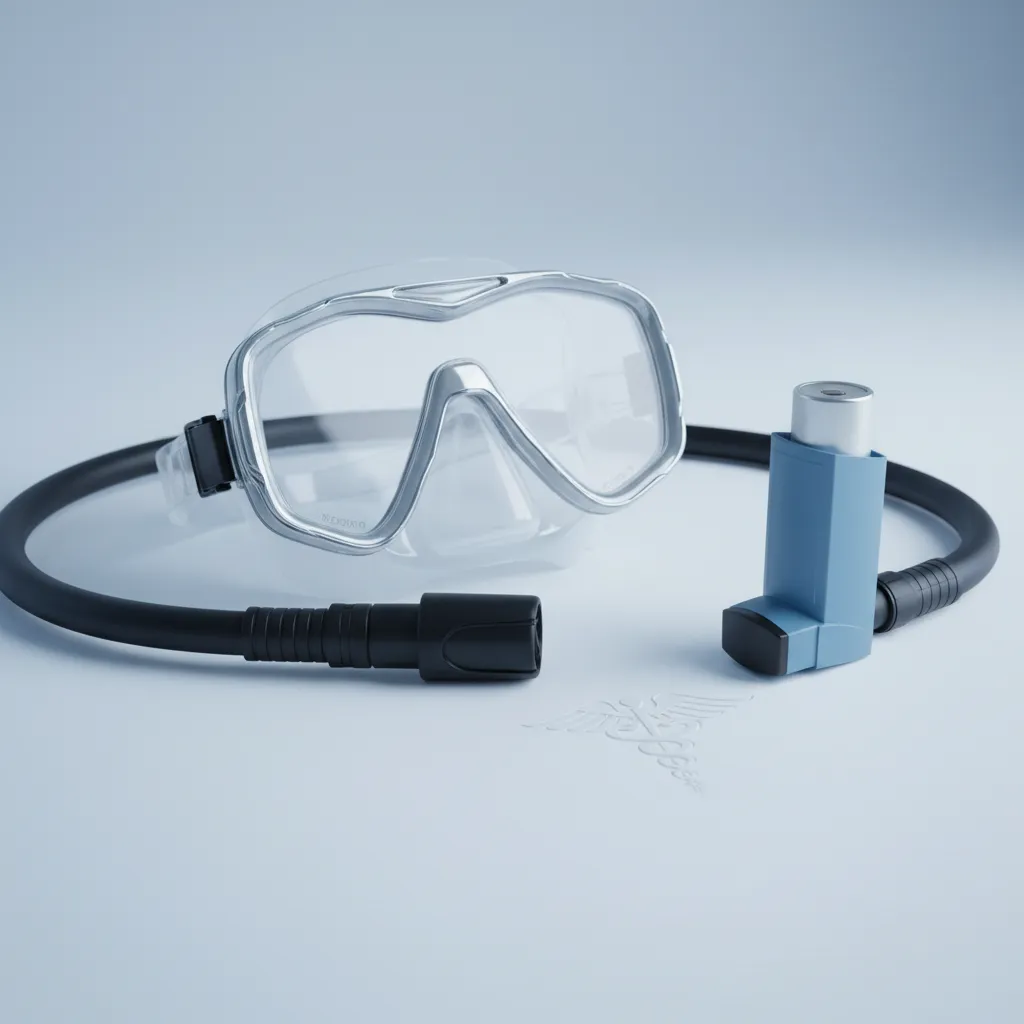
For years, asthma was considered an absolute contraindication to scuba diving. That blanket ban has evolved significantly as medical understanding has improved. Today, many asthmatics dive safely and regularly, provided their condition is well-controlled and they receive proper medical clearance. This guide covers the current medical guidelines, risk factors, and practical considerations for divers with asthma.
Can You Scuba Dive with Asthma?
Yes, in many cases. The diving medical community has moved away from an automatic disqualification for asthmatics towards a case-by-case assessment. The key factors are the type and severity of your asthma, how well it is controlled, and what triggers your symptoms. A diver whose asthma is well-managed with a low-dose preventer inhaler and who has not had an attack in over a year is in a very different position from someone with frequent, unpredictable exacerbations. Medical clearance from a doctor experienced in dive medicine is essential - a standard GP may not understand the specific pressures (literally) involved in diving.
Why Asthma Creates Risk Underwater
Air Trapping and Barotrauma
The primary concern is air trapping. During an asthma episode, airway narrowing (bronchoconstriction) can prevent air from escaping the lungs during ascent. As ambient pressure decreases during ascent, trapped air expands - this is Boyle's Law in action. If air cannot escape through narrowed airways, the expanding gas can rupture lung tissue (pulmonary barotrauma), potentially causing a pneumothorax (collapsed lung) or arterial gas embolism (AGE), which is a life-threatening emergency. This risk exists even during a normal ascent from shallow depth if airways are constricted.
Cold Air and Exercise Triggers
Scuba diving involves breathing dry, cool compressed air, often in cold water, while performing moderate physical exertion - a combination that can trigger bronchospasm in susceptible individuals. The breathing gas from a scuba tank is dehumidified, which can irritate reactive airways. Salt water aspiration (even small amounts through a leaky mask or during regulator clearing) can also trigger bronchospasm in asthmatics.
Types of Asthma and Diving Risk
Lower Risk
Mild, well-controlled allergic asthma (triggered by specific allergens like pollen or dust mites) with no symptoms between exposures is considered lower risk for diving. Exercise-induced bronchoconstriction (EIB) that is well-managed with a pre-exercise bronchodilator is also in the lower-risk category, though it requires careful consideration because diving involves exertion. Childhood asthma that has been outgrown (no symptoms or medication for 5+ years) typically does not prevent diving.
Higher Risk
Cold-air-triggered asthma is higher risk because diving involves breathing cold, dry gas. Asthma triggered by exercise, emotion, or respiratory infections is concerning because these triggers are harder to avoid while diving. Poorly controlled asthma with frequent exacerbations, recent hospital admissions, or dependence on oral steroids significantly increases risk and may be a contraindication. Brittle or severe asthma with unpredictable attacks is generally considered incompatible with safe diving.
Medical Clearance Requirements
UK Guidelines (UKDMC)
The UK Diving Medical Committee has the most detailed and well-established guidelines for asthmatic divers. To be cleared, you must: not have needed a bronchodilator in the 48 hours preceding a dive; have no asthma triggered by cold, exercise, or emotion; have a peak flow variability of less than 10%; and pass a formal exercise challenge test without significant bronchospasm. These guidelines are considered the gold standard and are used as a reference internationally.
US and International Guidelines
Approaches vary. In the US, the Undersea and Hyperbaric Medical Society and DAN recommend individual assessment by a physician trained in dive medicine. Australia follows similar individual assessment protocols. Some countries and certification agencies are more conservative than others. PADI and SSI medical questionnaires ask about asthma history, and a positive answer requires a physician's sign-off before training can proceed. Be honest on medical forms - they exist to keep you safe, not to exclude you.
Medications and Diving
Inhaled corticosteroids (preventer inhalers like beclometasone or fluticasone) are generally compatible with diving and should be continued as prescribed - stopping preventer medication increases your risk of an attack. Short-acting bronchodilators (reliever inhalers like salbutamol) are safe to carry and use before diving if medically approved, but needing a reliever frequently suggests your asthma may not be well-controlled enough for diving. Long-acting bronchodilators and combination inhalers should be discussed with your dive physician. Oral steroids and leukotriene inhibitors require individual assessment.
Practical Advice for Asthmatic Divers
Get assessed by a dive medicine specialist, not just your GP - they understand the specific physiological demands. Always carry your reliever inhaler on the boat. Do not dive if you have any respiratory symptoms - a cold, chest infection, or mild wheeze means sitting the dive out. Avoid known triggers before diving: if exercise is a trigger, warm up gently and do not rush the entry. Dive conservatively - avoid deep dives, strong currents, and strenuous conditions that increase breathing effort. Stay well hydrated, as dehydration thickens mucus and worsens airway reactivity. Monitor your peak flow before a dive trip and before each diving day - if it is below your personal best by more than 10-15%, do not dive that day. Choose warm water destinations where possible, as cold water and cold gas are both triggers. Ascend slowly and never skip safety stops - a controlled, slow ascent gives you time to identify any breathing difficulty before it becomes critical. Dive with a buddy who knows about your asthma and knows the signs to watch for.
Key Takeaways
- 1Many asthmatics can dive safely with proper medical clearance from a dive medicine specialist - the old blanket ban has been replaced by individual assessment
- 2The main risk is air trapping during ascent: narrowed airways prevent expanding gas from escaping, potentially causing pulmonary barotrauma or arterial gas embolism
- 3Well-controlled allergic asthma with no recent symptoms is lower risk; cold-air-triggered, exercise-triggered, or poorly controlled asthma is higher risk
- 4Continue preventer medications as prescribed - stopping them increases risk. Reliever inhalers are safe to carry on the boat
- 5UK guidelines (UKDMC) require less than 10% peak flow variability and no bronchodilator use in the 48 hours before diving
- 6Never dive with any active respiratory symptoms - even a mild wheeze means skipping that dive
Frequently Asked Questions
Can I scuba dive if I have asthma?
In many cases, yes. If your asthma is mild and well-controlled - meaning you rarely need your reliever inhaler, your triggers are avoidable (like pollen), and you have not had an attack or hospitalisation recently - you may be cleared to dive by a dive medicine specialist. Each case is assessed individually based on severity, triggers, and control.
What medical tests do I need?
A dive medicine physician will typically review your asthma history, current medications, and trigger profile. They may perform spirometry (lung function test), peak flow measurement, and an exercise challenge test (running on a treadmill while monitoring lung function). The exercise test is particularly important because it simulates the exertion of diving. If you pass without significant bronchospasm, you are more likely to be cleared.
Should I use my inhaler before every dive?
Only if your dive physician specifically recommends it. Pre-dosing with a bronchodilator before diving is acceptable in some protocols, particularly for exercise-induced bronchoconstriction. However, if you need your reliever inhaler regularly, it may indicate your asthma is not well-controlled enough for diving. Discuss a specific pre-dive protocol with your dive doctor.
What should I do if I have breathing difficulty underwater?
Stop all activity and signal your buddy that you have a problem. Focus on slow, controlled breathing. Begin a slow, controlled ascent with your buddy's assistance. Do not hold your breath under any circumstances - this is critical for all divers but especially important for asthmatics, as air trapping plus breath-holding dramatically increases barotrauma risk. Once on the surface, use your reliever inhaler and rest. Do not re-enter the water.
Can childhood asthma prevent me from diving as an adult?
Childhood asthma that you have genuinely outgrown - no symptoms and no medication for 5 or more years - is generally not a barrier to diving. You will still need to declare it on the medical questionnaire and may need a physician's clearance, but most dive doctors will clear you if you have been symptom-free for years and pass lung function tests.