Wetsuit Thickness Guide: What mm Do You Need for Every Water Temperature?
By DivePlnr Editorial Team | Published April 2026 | Updated April 2026
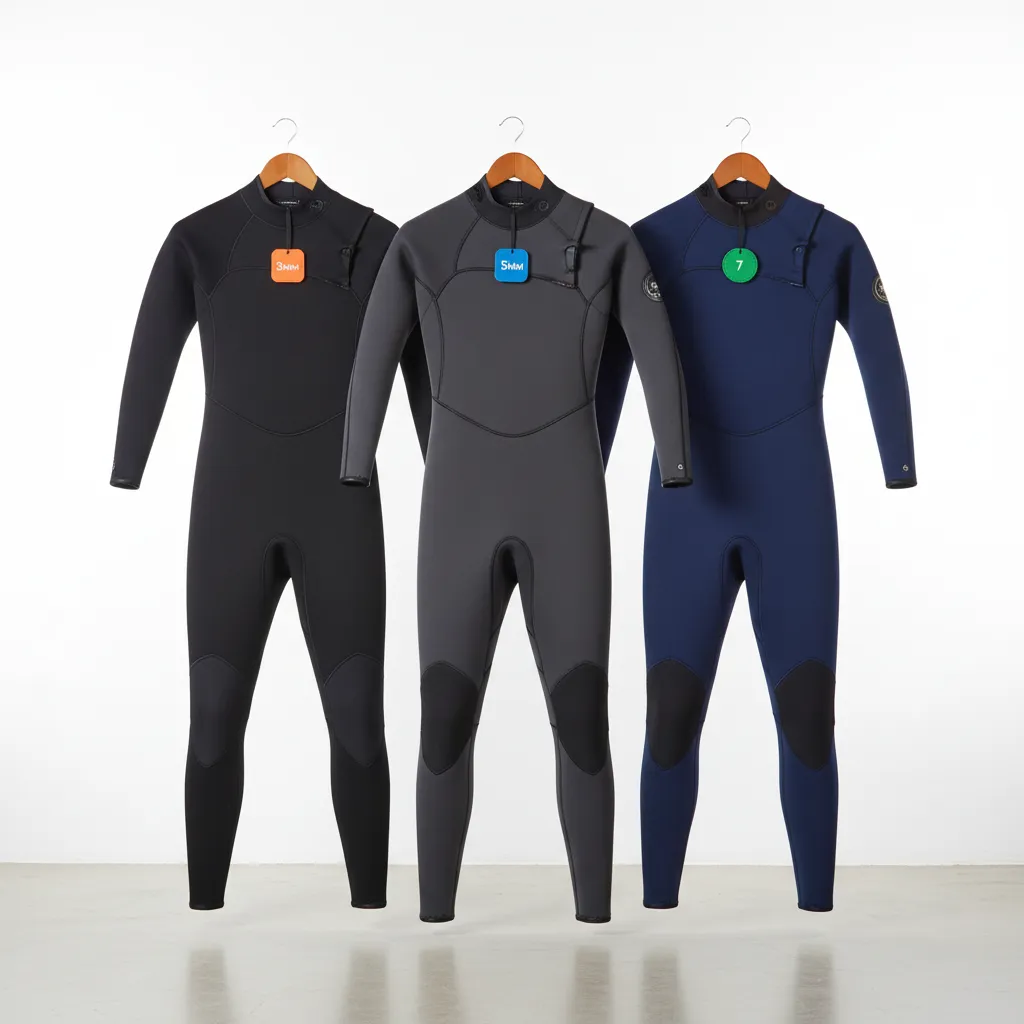
Choosing the right wetsuit thickness can make or break your dive. Too thin and you'll be shivering within minutes; too thick and you'll overheat on the surface and struggle with buoyancy. This guide maps every water temperature to the ideal neoprene thickness.
Water Temperature to Wetsuit Thickness Chart
The single most important factor in choosing wetsuit thickness is water temperature. Here's the definitive guide used by dive professionals worldwide:
| Water Temp | Recommended Thickness | Suit Type | Typical Destinations |
|---|---|---|---|
| 28°C+ / 82°F+ | Rash guard or 1-2mm | Lycra / shorty | Thailand, Maldives, Caribbean summer |
| 24-28°C / 75-82°F | 3mm | Full suit or shorty | Red Sea, Great Barrier Reef, Philippines |
| 18-24°C / 64-75°F | 5mm | Full suit | Mediterranean summer, Canary Islands, California |
| 10-18°C / 50-64°F | 7mm | Full suit + hood | UK summer, Pacific Northwest, South Africa |
| Below 10°C / 50°F | Drysuit | Drysuit + undergarment | Nordic countries, UK winter, Great Lakes |
These are starting points. Your personal cold tolerance, body composition, dive duration, and depth all influence the right choice.
Wetsuit Types Explained
Shorty (2-3mm)
Covers the torso with short arms and legs. Perfect for tropical waters above 26°C where you want sun protection and light thermal insulation without overheating.
Full Suit (3-7mm)
Full-length arms and legs. The workhorse for most dive conditions worldwide. Back-zip models are easiest to get into; chest-zip models seal better and reduce flushing.
Semi-Dry (5-7mm)
Features tighter seals at the wrists, ankles, and neck to minimise water exchange. A good middle ground between a standard wetsuit and a drysuit for cooler waters.
Neoprene Quality Matters
Not all neoprene is created equal. Standard neoprene is petroleum-based and varies widely in quality. Premium Yamamoto neoprene (made from limestone-derived calcium carbonate) is lighter, more flexible, warmer, and more durable. A high-quality 3mm Yamamoto suit can outperform a cheap 5mm suit in warmth and comfort.
Look for suits with sealed and glued seams (GBS - glued and blind-stitched) rather than flatlock stitching. GBS seams don't create through-holes that let water in.
Fit Is Everything
A perfectly fitting 3mm suit will keep you warmer than a loose-fitting 5mm suit. Water trapped in a wetsuit heats up from your body - if it constantly flushes out and gets replaced by cold water, you lose heat rapidly. Key fit points:
- No gaps at the lower back, armpits, or behind the knees
- Snug at wrists and ankles without cutting off circulation
- Able to move your arms overhead without the suit riding up
- Neck seal should be firm but not choking
Accessories for Extra Warmth
Your head loses heat fastest, so a hooded vest (typically 2-3mm) worn under your main suit dramatically extends your comfort range. In cooler water, add neoprene gloves (2-5mm) and boots (3-5mm). For tropical diving, a UV-protective rash guard prevents sunburn and jellyfish stings without adding buoyancy.
Women-Specific Fits
Many manufacturers now offer women-specific wetsuits with tailored proportions - shorter torso, wider hips, and narrower shoulders. These make a significant difference in comfort and thermal protection compared to wearing a unisex suit sized down.
Extending Your Wetsuit's Life
- Rinse thoroughly with fresh water after every dive day
- Dry inside-out in shade - UV degrades neoprene
- Hang on a wide hanger or fold over a rail (never use wire hangers)
- Store flat or loosely rolled - never compressed
- Use wetsuit shampoo monthly to remove salt buildup and restore flexibility
A well-maintained wetsuit lasts 3-5 years of regular use. Budget suits may compress and lose warmth after 1-2 seasons. Investing in quality neoprene saves money long-term. Check our essential dive equipment guide for more gear advice.
Key Takeaways
- 1Match thickness to water temperature: rash guard for 28°C+, 3mm for 24-28°C, 5mm for 18-24°C, 7mm for 10-18°C, drysuit below 10°C
- 2Fit matters more than thickness - a snug 3mm outperforms a loose 5mm every time
- 3Yamamoto limestone neoprene is warmer, lighter, and more durable than standard petroleum-based neoprene
- 4A hooded vest is the single best upgrade for extending your wetsuit's effective temperature range
- 5Rinse with fresh water, dry in shade, and store properly to get 3-5 years from your suit
Frequently Asked Questions
Can I use a 3mm wetsuit in cold water if I get cold easily?
No - if you run cold, you should actually go thicker than the chart suggests, not thinner. Add a hooded vest under your suit for an easy warmth boost, or step up to the next thickness category. Hypothermia is a real risk and ruins the dive long before it becomes dangerous.
Should I buy or rent a wetsuit?
Your wetsuit is the single most important piece of personal gear to own. Rental suits are often worn out (compressed neoprene = less warmth), may not fit well, and can be unhygienic. A good-quality 3mm or 5mm suit that fits you perfectly will transform your comfort underwater.
What's the difference between a semi-dry and a drysuit?
A semi-dry suit is a thick wetsuit (5-7mm) with enhanced seals that minimise water entry. You still get a thin layer of water against your skin. A drysuit keeps you completely dry using waterproof seals and a separate undergarment for insulation. Drysuits require additional training but are essential for water below 10°C.