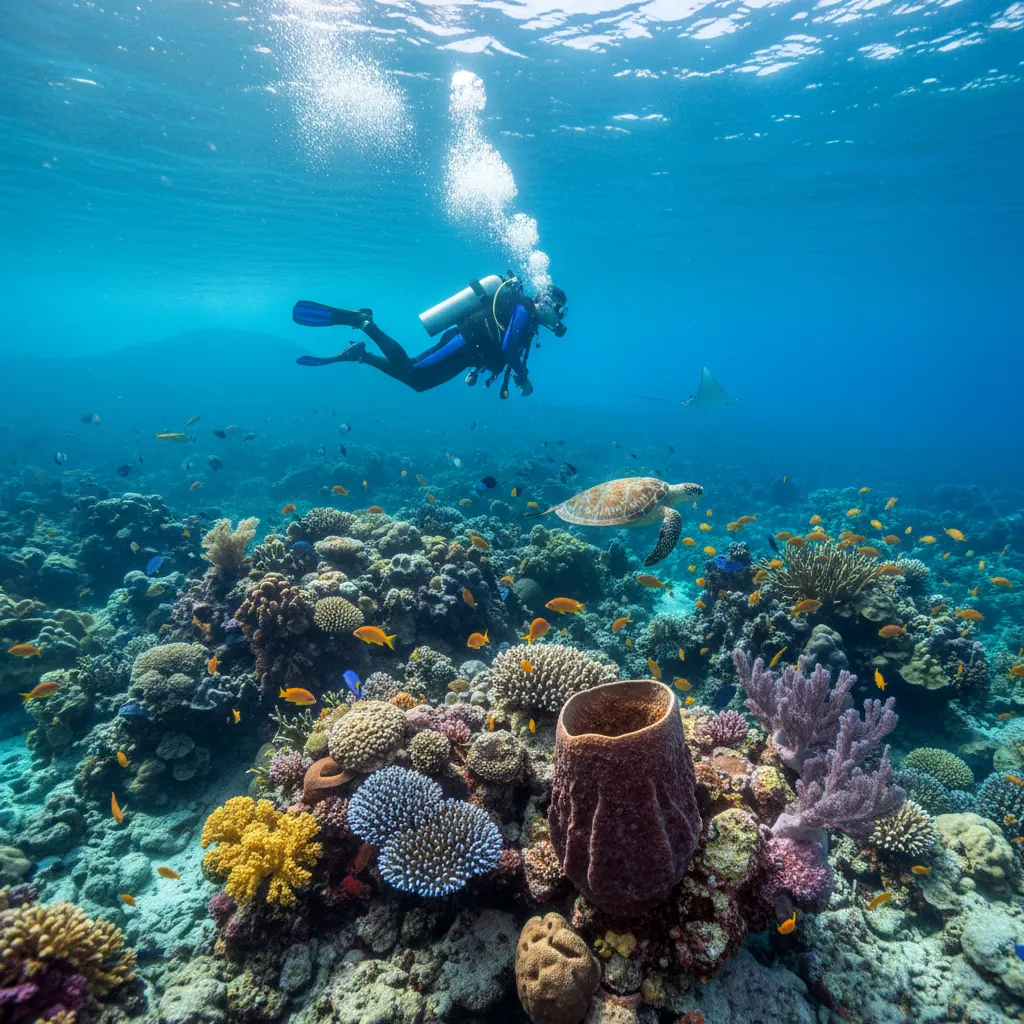
Diving in Caribbean Coast
Why dive here
Caribbean Coast offers some of Guatemala's richest diving, with 447+ marine species recorded in the area - including barracuda, eagle rays, nurse sharks, orcas and seahorses. Water ranges 27-31°C, warmest June, August, September.
Guatemala's Caribbean Coast is a different beast from its Pacific side, a laid-back corner where the jungle meets the sea. We’re talking about diving just off Livingston, easily accessible and generally pretty calm. Forget about dramatic pelagic encounters; here, it’s all about the reef’s intimate details. We love finding the little guys tucked away: the Ridged Cactus Coral, like miniature underwater brains, sheltering tiny Dwarf Blennies peering out. Keep an eye out for Reinhardt’s Lanternfish, their subtle glow in dimmer light, or a well-camouflaged Reef Scorpionfish blending into the seabed. The Roughtail Stingrays are usually pretty relaxed, often just resting in the sand. You’ll find some old wrecks too, nothing massive, but they add a bit of structure for the Glassy Sweepers and the occasional Cowfish. It’s beginner-friendly diving, currents are usually mild, and you can really take your time exploring the nooks and crannies. We’d suggest going in the dry season, roughly November to May, for the best visibility.
Caribbean Coast Dive Site Map
Dive sites and dive centres in Caribbean Coast
Caribbean Coast Dive Sites
19 dive sites in Caribbean Coast
BB-17
BB-17 is a manageable wreck dive, a sunken barge resting at 12m. It's classified as dangerous due to its condition, so we approach it with respect and proper training. The structure itself is breaking down, offering good opportunities to peer into shadowed spaces where various fish have made their homes. This site is best for divers keen on wreck exploration without extreme depth or penetration.
CHAVIN
We’ve always been a bit torn on the Caribbean side of Guatemala. It’s got a different rhythm, sure, but then you drop onto the Chavin and everything makes sense. This isn’t some pristine, picture-postcard reef; it’s a proper wreck dive, dark and moody, sitting flat at 9 metres. The Chavin, a 78-meter motor vessel, went down in 1974. Forty-odd years later, she’s a home for everything that swims by. The hull is still surprisingly intact, a massive steel shadow on the sandy bottom. You can peer into the deeper sections, though penetration isn't advised given her 'dangerous wreck' classification – a nice reminder to stick to what’s safe. Our favourite part is the bow, especially on a sunny day when the light penetrates just enough to illuminate the school of horse-eye jacks often circling there. They're surprisingly bold. We’d suggest going early in the morning. The visibility tends to be better before the afternoon chop, and you get that quiet, almost eerie feeling of having the wreck to yourself. It’s a fantastic site for newer wreck divers, or anyone who just loves the historical aspect. You won’t find riotous colours, but you will find atmosphere, scale, and a healthy dose of Caribbean grit.
Gladden Spit
Gladden Spit, on Guatemala's Caribbean coast, offers a pretty decent reef dive. You'll find a mix of corals here, with some nice examples of maze coral, massive starlet, and the delicate lettuce coral. It’s a good spot for seeing plenty of the common Caribbean reef fish – think French grunts schooling, yellowtail parrotfish grazing, and angelfish flitting between the coral heads. We think it suits divers looking for a relaxed, straightforward exploration of a healthy regional reef rather than something high-octane. Visibility is generally good, making for an enjoyable, unhurried dive.
Gladden Spit
Gladden Spit, on Guatemala's Caribbean coast, offers a pretty decent reef dive. You'll find a mix of corals here, with some nice examples of maze coral, massive starlet, and the delicate lettuce coral. It’s a good spot for seeing plenty of the common Caribbean reef fish – think French grunts schooling, yellowtail parrotfish grazing, and angelfish flitting between the coral heads. We think it suits divers looking for a relaxed, straightforward exploration of a healthy regional reef rather than something high-octane. Visibility is generally good, making for an enjoyable, unhurried dive.
HERCULES
The Hercules is our top pick for wreck diving on Guatemala’s Caribbean coast, hands down. We’ve done this dive multiple times and it always delivers a solid experience at a comfortable depth. This old tug, sunk way back in 1974, now sits upright and relatively intact on a sandy bottom at just 12 metres. It’s an ideal spot for newer wreck divers or anyone looking for a relaxed exploration. We love the Hercules for its accessibility. You can spend a good chunk of your bottom time circling the exterior, spotting the prop, and peering into the superstructure. Inside, we’ve often seen big schools of glassy sweepers hanging in the darker spaces, occasionally joined by a lone snapper or two. Keep an eye out for the resident moray eels peeking from crevices. The wreck has become a proper artificial reef, draped in sponges and soft corals, attracting a surprising amount of fish life given the general murk of the Caribbean side here. Visibility averages around 10-15 metres on a good day, but the shallow depth means there’s always enough ambient light to really appreciate the wreck's structure. It’s a great photo opportunity, especially if you can catch it with a shaft of sunlight cutting through the water.
HYBUR 8
We love a good wreck, and the HYBUR 8, just off Guatemala's Caribbean coast, really delivers. This old schooner went down in 1990, so it’s had plenty of time to become a proper artificial reef, but it’s still very much a ship. You can drop onto the deck at 15 metres, often finding schools of jacks circling the masts. Inside, where the holds once carried cargo, now you’ll often find nurse sharks resting on the bottom, or big groupers eyeing you from the shadows. What makes the HYBUR 8 stand out is how accessible it is. It’s a relatively shallow wreck, so you get great bottom time, and the light penetration often picks out the details of the bow and stern. Our favourite part is finning through the superstructure, feeling the cool water shift as you pass through open doorways, with tangs and parrotfish grazing on the corals that have started to encrust the metal. It’s perfect for divers who appreciate the history of a wreck but also want to see it thriving with new life. Look for the barracuda that usually hang out near the deeper side, just off the stern.
JUSTO RUFINO BARRIOS II
Justo Rufino Barrios II is a bit of a local legend, sitting upright in a shallow patch off the Caribbean coast. We love a wreck that tells a story, and this old ferry certainly does, going down in ’89 after some engine trouble and a panicked passenger shift. You can practically feel the history as you descend, the light filtering down onto the deck at just ten metres, making it an ideal spot for an extended bottom time. This isn’t a grand, intact vessel you’ll penetrate deeply, but the open passenger areas are great for poking around, and the bow still feels substantial. Schools of glassy sweepers often pulse around the superstructure, and we’ve regularly seen large snappers lurking in the shadows. Look closely at the metalwork; it’s draped in sponges and small anemones, and we’ve often spotted lobsters tucked into crevices. It’s a gentle dive, perfect for photographers or anyone who likes to take their time exploring a piece of the past without deep-water anxieties.
KARINA I
The Karina I, resting in a shallow 10 metres, is a proper time capsule. We love how accessible this wreck is; it's practically an open invitation to explore. This steamship, driven aground by Tropical Storm Laura back in '71, feels more like an old friend than a forgotten vessel. You can still make out the superstructure, a ghostly silhouette against the blue, and the hull is draped in sponges and soft corals, a living tapestry. Even though it’s shallow, there’s plenty to poke around in. Light filters through gaps, illuminating schools of snapper that dart through the holds. Keep an eye out for moray eels tucked into crevices, their heads peeking out, curious but shy. We'd suggest going in the morning; the water often has a glassy calm then, and the early light really makes the colours pop. It's a relaxed dive, ideal for anyone who appreciates a bit of history and the way nature reclaims what’s been lost.
Laughing Bird Caye
Laughing Bird Caye is a faroe, a unique ringed reef system sitting on the continental shelf, just like an atoll but closer to shore. Dropping down here, you'll find the reef walls are surprisingly steep, enclosing a calm central lagoon. It’s a great spot for seeing the typical Caribbean cast of characters – think parrotfish munching on coral, snappers schooling up, and perhaps a curious hawksbill turtle cruising by. We'd suggest this site for divers who appreciate unusual reef structures and a relaxed dive where you can take your time to explore.
Laughing Bird Caye Slope
The Laughing Bird Caye Slope is a solid spot to get your fins wet, especially if you’re new to diving or knocking out some course work. We often bring our Open Water students here for confined water dives, and it’s a good choice for Discover Scuba Diving too. The main draw is the fish nursery; you’ll see plenty of juvenile snapper and grunts zipping around the shallows, which is always fun for newer divers. While it’s not going to blow your mind with massive schools or dramatic drop-offs, it’s a perfectly pleasant introduction to the Caribbean’s smaller inhabitants.
MISS TAMMY
The Miss Tammy isn’t a deep dive, that's for sure. At a mere three metres, it's more of a snorkel site, but we love it for its story and accessibility. This old tugboat went down in 1992, flipped while helping a Dutch freighter dock. It’s a bit of history right there in the shallows. What we really enjoy is how much of the boat is still intact. You can fin right over the deck, see the wheelhouse, even peer down into some of the open hatches. The shallowness means sunlight dapples everything, illuminating the schools of tiny fish that flit in and out of the rust-coloured metal. We've seen puffers hiding in crevices and small snappers zipping around the prop. It’s an ideal spot for new divers to get a feel for wreck diving without the pressure of depth, or for photographers wanting to play with natural light. Go on a sunny afternoon; the light play through the water is gorgeous.
Pompion Wall
Pompion Wall offers a nice slice of Caribbean diving off Guatemala’s coast. The wall itself kicks off around 45 feet, dropping pretty steeply, which makes for some easy depth management. Up top, we’ve often spotted schools of reef fish holding formation, and sometimes a passing barracuda in the deeper blue. Deeper, around 60-70 feet, the wall reveals more interesting finds in its many nooks and crannies: lobsters peeking out, the occasional green moray eel, and we've even watched hawksbill turtles foraging here. It’s a comfortable wall dive, good for those who like to take their time exploring the crevices.
Show all 19 dive sites in Caribbean Coast
Caribbean Coast Dive Centres
2 dive shops and operators in Caribbean Coast
Ocean Wildlife in Caribbean Coast
447 species recorded in Caribbean Coast
Caribbean Coast Daylight & Sunrise/Sunset
Sunrise and sunset times for Caribbean Coast, calculated from coordinates
Today - Sunday 11 October
Sunrise
05:45
Sunset
17:36
Daylight
11h 51m
Golden Hour
17:08
First light (dawn) at 05:23 · Last light (dusk) at 17:58
Monthly Averages
| Month | Sunrise | Sunset | Daylight |
|---|---|---|---|
| Jan | 06:25 | 17:40 | 11h 15m |
| Feb | 06:20 | 17:56 | 11h 36m |
| Mar | 06:03 | 18:04 | 12h 1m |
| Apr | 05:39 | 18:08 | 12h 29m |
| May | 05:24 | 18:16 | 12h 52m |
| JunLongest | 05:22 | 18:27 | 13h 5m |
| Jul | 05:29 | 18:30 | 13h 1m |
| Aug | 05:38 | 18:19 | 12h 41m |
| Sep | 05:42 | 17:57 | 12h 15m |
| OctNow | 05:46 | 17:34 | 11h 48m |
| Nov | 05:57 | 17:20 | 11h 23m |
| DecShortest | 06:13 | 17:24 | 11h 10m |
Times are approximate local times based on longitude. Actual times may vary slightly depending on the exact timezone observed in Caribbean Coast.
Where to Stay near Caribbean Coast
Prices from Booking.com. We may earn a commission at no extra cost to you.
Marine Protected Areas near Caribbean Coast
3 protected areas near Caribbean Coast - please respect local regulations when diving
Punta de Manabique
Punta de Manabique
Río Dulce
Getting to Caribbean Coast
Placencia
San Pedro Sula
Belize City
Plan & book
Ways to dive Caribbean Coast, from day trips to liveaboards.
Day trips & courses
via GetYourGuideGuided dives, courses and snorkel trips with instant booking.
Find dive trips in Caribbean CoastPlaces to stay
via Booking.comHotels and dive resorts near Caribbean Coast.
Search stays in Caribbean CoastDive insurance
Most travel insurance excludes or limits scuba. Check what you need before you go.
Dive insurance explainedPartner links: we may earn a commission if you book, at no extra cost to you. How we make money