Diving in Peleliu & Angaur
Why dive here
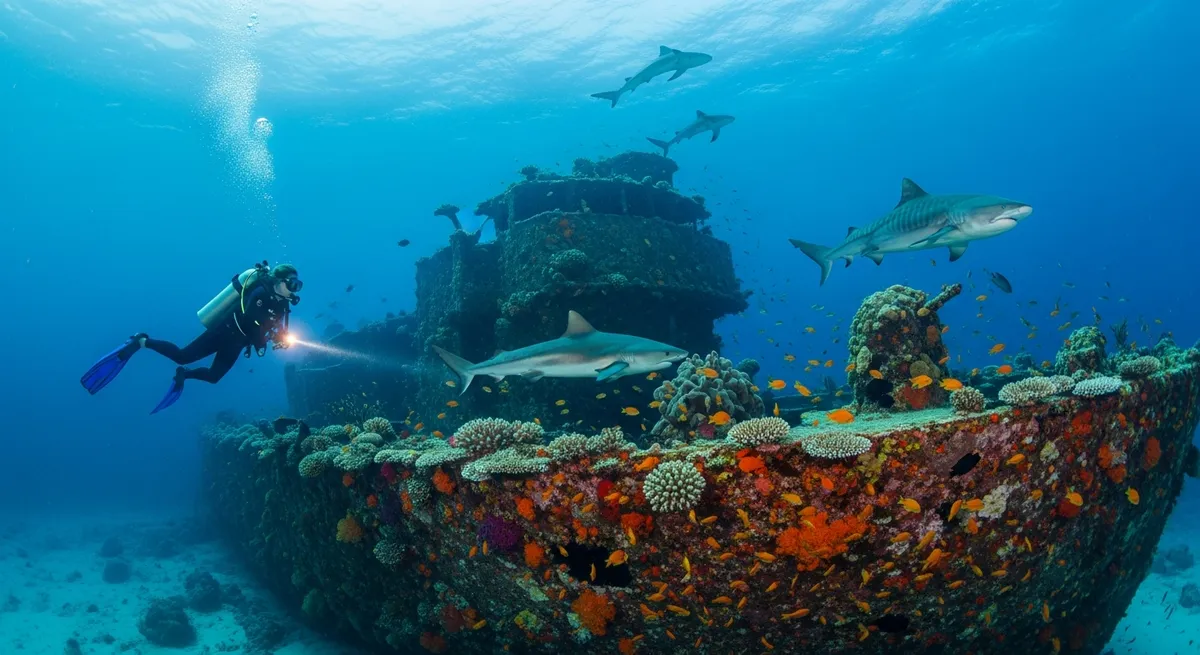
Peleliu & Angaur offers some of Palau's richest diving, with 559+ marine species recorded in the area - including barracuda, blacktip reef sharks, giant moray eels, grey reef sharks and octopuses. Water sits around 29°C.
Peleliu and Angaur diving. This isn't for the faint of heart, but boy, do we love a good drift dive, and these channels deliver. Think serious current, the kind that whips you along, making you feel truly part of the ocean’s rhythm. It’s here you’ll find the big stuff: packs of grey reef sharks patrolling the drop-offs, barracuda swirling in massive schools, and yes, the occasional bull shark making a dramatic appearance from the blue. We’d suggest planning your dives around the tides; a good guide makes all the difference in navigating these waters safely. The visibility can be incredible, sometimes over 30 metres, letting you spot those shy Malabar groupers lurking in the deeper pockets. Our favourite site often involves a hook-in, just to hang back and watch the parade of pelagics go by, the sound of the current rushing past your ears almost deafening. This is raw, unadulterated Palau diving. It’s fast, exhilarating, and leaves you buzzing long after you’ve surfaced.
Peleliu & Angaur Dive Site Map
Dive sites and dive centres in Peleliu & Angaur
Peleliu & Angaur Dive Sites
3 dive sites in Peleliu & Angaur
Dongosaro
Dongosaro offers a relaxed drift over a sloping reef, good for newer divers or those looking for an easy second dive. You’ll typically see schooling fusiliers and snapper, with plenty of smaller reef fish darting between the soft corals. It's a nice site for practicing buoyancy and enjoying the flow of the current without much effort.
Lukes
Lukes is a site that delivers consistently, and it’s one we always try to squeeze in when we’re down south. Forget the high-octane pelagic action of Peleliu Express for a moment. Lukes is all about the details, the macro, the tiny hidden treasures tucked into every cranny. We usually drop in along a gentle slope, maybe 15 metres or so, and just let our eyes adjust. The gorgonians here are impressive, big fans that sweep gently in the mild current, providing perfect camouflage for things like pale dwarfgobies and those delicate blennies. Look closely around the base of the corals; we’ve spotted enigmatic morays peeking out, their patterns blending perfectly with the rock. The reef itself feels healthy, vibrant with sapphire demoiselles flitting about and parrotfish grazing loudly in the background. It’s a photographer’s dream if you’re into the smaller stuff. Give yourself time; don't rush through. If you love a slow, meditative dive where every coral head might hold a secret, Lukes is your spot. We often find ourselves lingering for what feels like ages in one small area, just watching the miniature world unfold.
Peleliu Express
Peleliu Express delivers exactly what the name suggests: a fast-paced drift along a dramatic wall. We’re talking proper express train speeds here, so you need to be comfortable with getting swept along. The reward is a constant parade of pelagics, with grey reef sharks often patrolling the wall, and eagle rays gliding through the blue. You'll see schools of barracuda too, holding their formation against the current. It’s an exhilarating ride, best suited for experienced divers who appreciate big current and big fish action.
Peleliu & Angaur Dive Centres
No dive centres listed in Peleliu & Angaur yet. Browse all dive centres.
Ocean Wildlife in Peleliu & Angaur
559 species recorded in Peleliu & Angaur
Peleliu & Angaur Daylight & Sunrise/Sunset
Sunrise and sunset times for Peleliu & Angaur, calculated from coordinates
Today - Sunday 11 October
Sunrise
05:53
Sunset
17:54
Daylight
12h 1m
Golden Hour
17:26
First light (dawn) at 05:32 · Last light (dusk) at 18:15
Monthly Averages
| Month | Sunrise | Sunset | Daylight |
|---|---|---|---|
| Jan | 06:22 | 18:09 | 11h 47m |
| Feb | 06:23 | 18:18 | 11h 55m |
| Mar | 06:13 | 18:18 | 12h 5m |
| Apr | 05:59 | 18:14 | 12h 15m |
| May | 05:51 | 18:15 | 12h 24m |
| JunLongest | 05:52 | 18:22 | 12h 29m |
| Jul | 05:58 | 18:26 | 12h 28m |
| Aug | 06:01 | 18:21 | 12h 20m |
| Sep | 05:57 | 18:07 | 12h 10m |
| OctNow | 05:53 | 17:52 | 11h 59m |
| Nov | 05:56 | 17:46 | 11h 50m |
| DecShortest | 06:09 | 17:54 | 11h 45m |
Times are approximate local times based on longitude. Actual times may vary slightly depending on the exact timezone observed in Peleliu & Angaur.
Where to Stay near Peleliu & Angaur
Prices from Booking.com. We may earn a commission at no extra cost to you.
Marine Protected Areas near Peleliu & Angaur
40 protected areas near Peleliu & Angaur - please respect local regulations when diving
Palau National Marine Sanctuary
Domestic Fishing Zone
Coastal State Waters
Lagon sud des îles Chelbacheb
Rock Island Southern Lagoon Management Area
Koror Southern Lagoon
Ngarchelong Subsistence Fishing Zone
Ngaremeduu Bay Network
Ngaremeduu Bay Conservation Area
Ngemelis Island Complex
Ebiil Channel Conservation Zone
Ngerukewid Island Wildlife Preserve
Showing 12 largest of 40
Getting to Peleliu & Angaur
Babelthuap Island
Plan & book
Ways to dive Peleliu & Angaur, from day trips to liveaboards.
Day trips & courses
via GetYourGuideGuided dives, courses and snorkel trips with instant booking.
Find dive trips in Peleliu & AngaurPlaces to stay
via Booking.comHotels and dive resorts near Peleliu & Angaur.
Search stays in Peleliu & AngaurDive insurance
Most travel insurance excludes or limits scuba. Check what you need before you go.
Dive insurance explainedPartner links: we may earn a commission if you book, at no extra cost to you. How we make money