Central & South Pacific
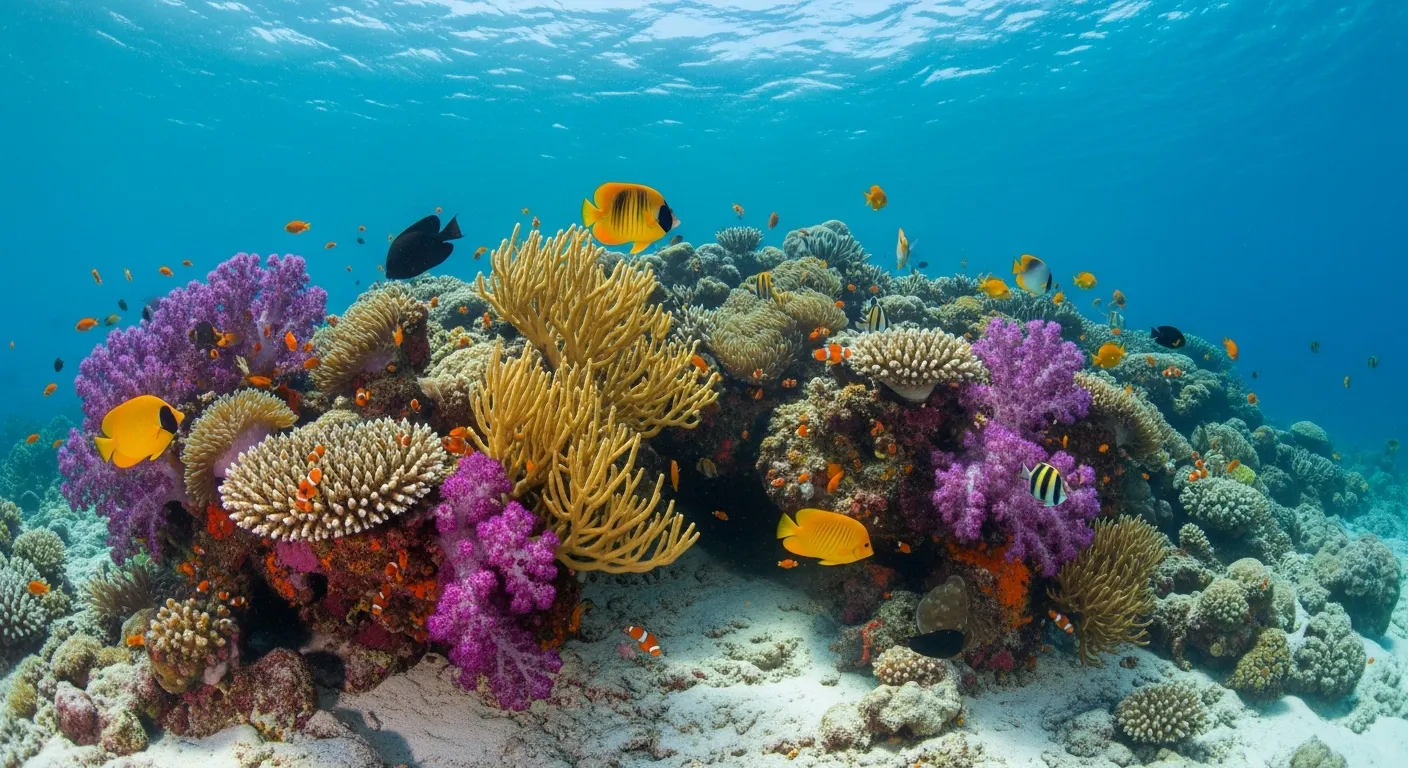
Remote and pristine, the Pacific islands offer some of the most spectacular diving on the planet. From Palau's jellyfish lakes to Fiji's soft coral capital, from French Polynesia's shark dives to Papua New Guinea's untouched reefs, this region is a diver's paradise.
Countries & Territories
Explore diving destinations in Central & South Pacific

Cook Islands
The Cook Islands might not be the first place that springs to mind for a dive trip, but that’s exactly why we love it. Rarotonga, in particular, offers some surprisingly dramatic wall dives and swim-throughs just a stone’s throw from shore, without the crowds you’ll find elsewhere. Think visibility that regularly pushes 30 meters, even 40 on a good day, opening up those deep blue chasms and revealing reef sharks cruising the current. Our pick for a standout experience would be drifting one of the many outer reef passages, keeping an eye out for the endemic species like Thomas’ Triplefin, or spotting a giant Black Teatfish on the sand. The dry season, roughly May to October, brings the calmest conditions.
Fiji
Fiji. Just saying the name makes you feel the warmth, right? We've clocked some serious bottom time here over the years, and it consistently delivers on the promise of vibrant, healthy reefs. If you’re into soft corals, the Somosomo Strait between Taveuni and Vanua Levu is your holy grail - the colours are just absurd when the current is running, schools of fusiliers so thick they block the light, and it’s a drift diver’s dream. Beyond the soft stuff, Bligh Water offers some serious pelagic action and deep pinnacles, while a trip down to Kadavu to explore the Great Astrolabe Reef feels wonderfully remote and untouched. For something completely different, the shark feed in Beqa Lagoon is an adrenaline shot, a dozen bull sharks cruising past within touching distance. Visibility is generally excellent, though the rainy season from November to April can bring some localised murkiness. We find May to October offers the most consistent conditions, with comfortable water temperatures year-round. It’s not just the diving, though; the Fijian hospitality makes every trip feel like coming home.
French Polynesia
French Polynesia feels like the South Pacific’s grand dame of pelagic encounters. We've spent weeks here and still feel like we’ve only scratched the surface of its shark and dolphin-filled passes. Head to Fakarava or Rangiroa for the big animal action, especially if you’re comfortable with current; the drift dives through their atoll passes are genuinely thrilling. Beyond the famous shark walls, we’ve found some surprising macro critters if you slow down and look for them amongst the reef sharks. July to October offers the best chance to spot humpback whales around Moorea, a nice bonus to some already stellar diving. It’s not a budget destination, but for sheer scale of pelagics, it’s hard to beat.

Kiribati
Kiribati is diving's final frontier, an expedition into the truly unknown. With zero dive centres, this isn't a trip you book, it's a trip you create - think liveaboard charters or self-sufficient operations from your own vessel. We'd point intrepid divers towards the Phoenix Islands Protected Area, a colossal marine reserve where the sheer scale of untouched reef is genuinely humbling. Expect encounters with pelagics like sperm whales cruising through pristine blue, and a bizarre collection of reef fish you'll struggle to find anywhere else, like the prickly spotted drupe or the snakehead cowrie. This is a journey for the self-reliant diver seeking true isolation and the kind of underwater discovery that feels like a first.

Marshall Islands
The Marshall Islands isn't for a casual dive trip, but for those willing to go the distance, it’s an experience that truly stands apart. Bikini Atoll, of course, is the big draw, a deep dive into history with its fleet of WWII warships sunk during nuclear tests. Dropping onto the USS Saratoga, seeing the sheer scale of it, really puts things into perspective; we’d suggest multiple dives here to properly take it all in. Beyond the wrecks, Majuro and Arno Atolls offer healthy reefs, a stark contrast to the atoll’s past. Expect strong currents and deep dives, so advanced certification is a must. We find the dry season, roughly May to October, offers the calmest conditions for reaching these remote sites.

Micronesia
Micronesia isn't just a place you *go* diving, it's a place you *experience* diving, particularly if you’ve got a soft spot for history. Chuuk Lagoon, formerly Truk, is obviously the headline act; we've spent weeks there finning through ghostly WWII wrecks, seeing everything from Sake bottles to gas masks perfectly preserved. It’s an underwater museum unlike anywhere else. But beyond the wrecks, islands like Yap bring something completely different, offering reliable manta ray encounters - often up close in cleaning stations - alongside those fascinating mandarin fish twilight dives. We find the dry season, roughly November to April, usually offers the calmer conditions and best visibility, making those deeper wreck penetrations or open-ocean manta encounters a bit more comfortable.

Niue
Niue isn't just a dive trip, it's an exercise in slow, quiet exploration. This raised coral atoll, just one dive operator on the whole island, promises a distinctly uncrowded experience on the West Coast, where its dramatic geological features truly shine. We’ve seen visibility stretch beyond 100 meters here, an almost unnerving clarity that lays bare the intricate cave systems and sun-dappled chasms. Drifting through formations like Snake Gully, where sea snakes often coil in crevices, or exploring the cathedral-like rooms of Chimney Cave, you really feel the island's unique character. Spinner dolphins often make an appearance, too, a playful bonus in these incredibly clear waters. If you’re after quiet, unhurried diving with spectacular topography, we’d suggest heading here between May and October, when the water is calmest.
Palau
Palau is a place where you really feel the ocean's power. We go for the pelagics, the sheer numbers of sharks, and those legendary drift dives. Head to Ngemelis for Blue Corner - hook in, watch the show of grey reefs and whitetips patrol, and then feel that exhilarating rush as the current picks you up. German Channel over in Peleliu is our pick for mantas, especially if you catch it during a rising tide; the visibility can be a bit variable but the encounters are consistently good. It's a year-round destination, but for calmer surface conditions and fewer divers, we lean towards the shoulder seasons, April-May or September-October.
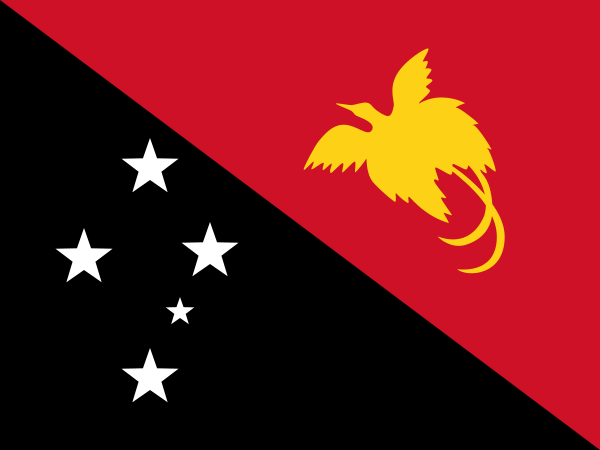
Papua New Guinea
Papua New Guinea, it’s fair to say, isn’t for the casual diver. This is serious diving, a place where you earn your stripes and are rewarded with some truly unique encounters. We love Milne Bay for its muck diving, a weird and wonderful world of creatures like Rama Rao's scorpionfish and cone shell hermit crabs, often just a fin kick from shore. For vibrant reefs and bigger pelagics, Kimbe Bay and the Bismarck Sea deliver, sometimes with those big schools of fusiliers so thick they block the light. We usually aim for the drier months, roughly May to November, to dodge the worst of the rain, but honestly, PNG always brings the goods.

Samoa
Samoa really shines for divers who appreciate dramatic topography and a laid-back island vibe. The volcanic origins give you some seriously cool swim-throughs and lava tubes, especially around Upolu, which is also home to most of the dive operators. We’d suggest focusing your time there for sheer convenience, though Savai'i has its moments if you’re up for a bit more adventure. Look for Blacktip reef sharks patrolling the outer reefs, and keep an eye out for humpback whales passing through from July to October, a truly special encounter if you’re lucky. Visibility is consistently good, usually 20-30 metres, and the water stays a comfortable 27-29°C year-round. It's a place where you can really slow down and enjoy the reef without feeling rushed.
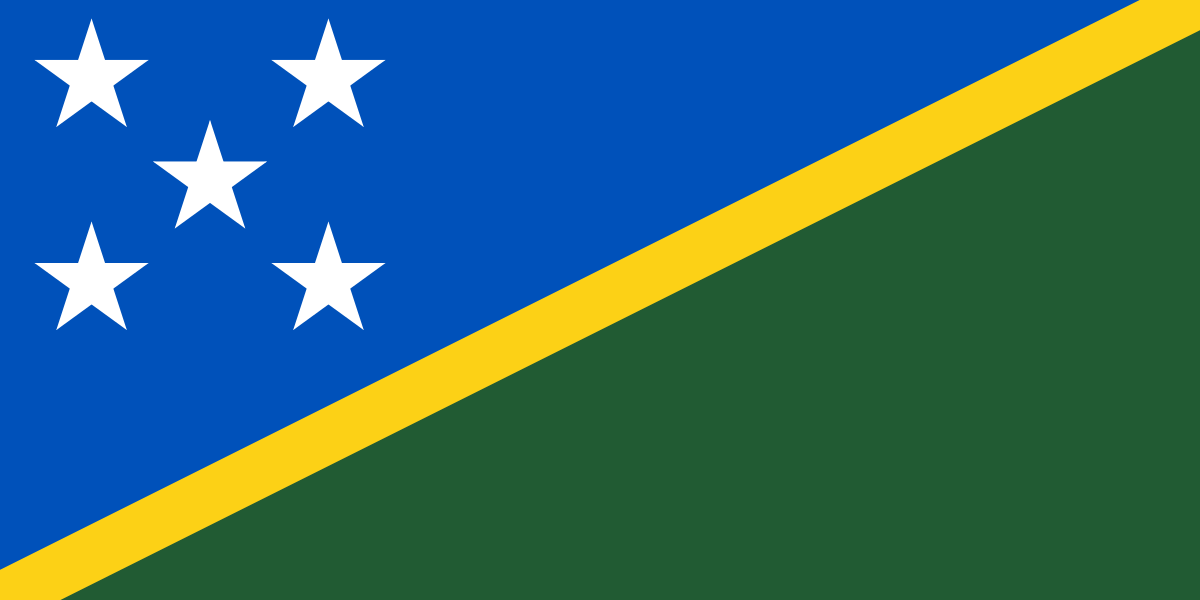
Solomon Islands
The Solomon Islands, for us, feel like stepping back in time, both underwater and on land. It’s less about manicured resorts and more about raw, untouched diving, often with a profound sense of history bubbling just beneath the surface. We always point divers towards Iron Bottom Sound for the sheer density of World War II wrecks - it’s a sombre, incredible experience to glide past these war relics. For vibrant reef diving, the Marovo Lagoon in the Western Province is exceptional, a place where the coral seems to grow with an almost wild abandon, dotted with the occasional banded maori wrasse. We’ve found the diving consistently good year-round, but avoiding the rainy season from November to April makes for easier travel between islands, especially if you’re planning on hopping around to explore places like the Florida Islands or Gizo.

Tonga
Tonga’s main draw is pretty obvious: humpback whales. From July to October, these giants migrate to the warm, shallow waters to calve and mate, and swimming alongside them is genuinely humbling. We’d suggest heading to Vava’u for the most consistent encounters, though Ha'apai offers a more remote, tranquil experience away from the crowds. Beyond the whales, the diving here is all about dramatic topography - think intricate caves and sharp drop-offs rather than sprawling reefs. Visibility is usually good, and you'll spot plenty of reef fish like Redfin Butterflyfish and Spangled Emperors, but it’s the sheer thrill of a close-up whale encounter that makes Tonga a truly special destination.

Tuvalu
Tuvalu isn't just remote, it's practically undiscovered for divers. With no dive centres, you're looking at a true frontier experience, usually via liveaboard or by organising your own boat and gear. The real draw here is Funafuti Atoll, where the channel dives are excellent for encounters with grey reef sharks. We’ve seen healthy staghorn and montipora corals, and the sheer number of Batavian parrotfish grazing in the shallows is impressive. If you want genuine solitude and the feeling of diving somewhere few others ever will, Tuvalu delivers.

Vanuatu
Vanuatu throws a curveball at your typical South Pacific dive trip. It’s not just about healthy reefs and clear water, though it has plenty of that. For us, Vanuatu stands out because it offers a truly unique mix: monumental wreck diving, accessible volcanoes, and those incredible freshwater blue holes. You’re heading straight to Espiritu Santo, no question. This is where you’ll spend days, maybe even a week, exploring the SS President Coolidge. It’s a massive troop transport, completely penetrable, and you’ll find jeeps, cannons, and even a statue inside. It's a proper adventure. While you're there, don’t miss Million Dollar Point, where the US military dumped their surplus gear after WWII; it’s a bizarre, fascinating dive. Beyond Santo, Port Vila on Efate offers a handful of decent reef dives, but it’s more for a short stopover before or after the main event. We’d suggest aiming for the dry season, roughly May to October, when the trade winds keep things comfortable and visibility tends to be at its best. Keep an eye out for the anchor trunkfish and the vibrant bluefin filefish on the reefs, they’re always a pleasure to spot.