Lava Fields
Protected Area
Manase
Why dive here
With 191+ marine species recorded in the area - including tiger sharks, whitetip reef sharks, lionfish, napoleon wrasse and pufferfish - Lava Fields offers some of Savai'i's richest reef diving. Water ranges 28-30°C, warmest January, March, April.
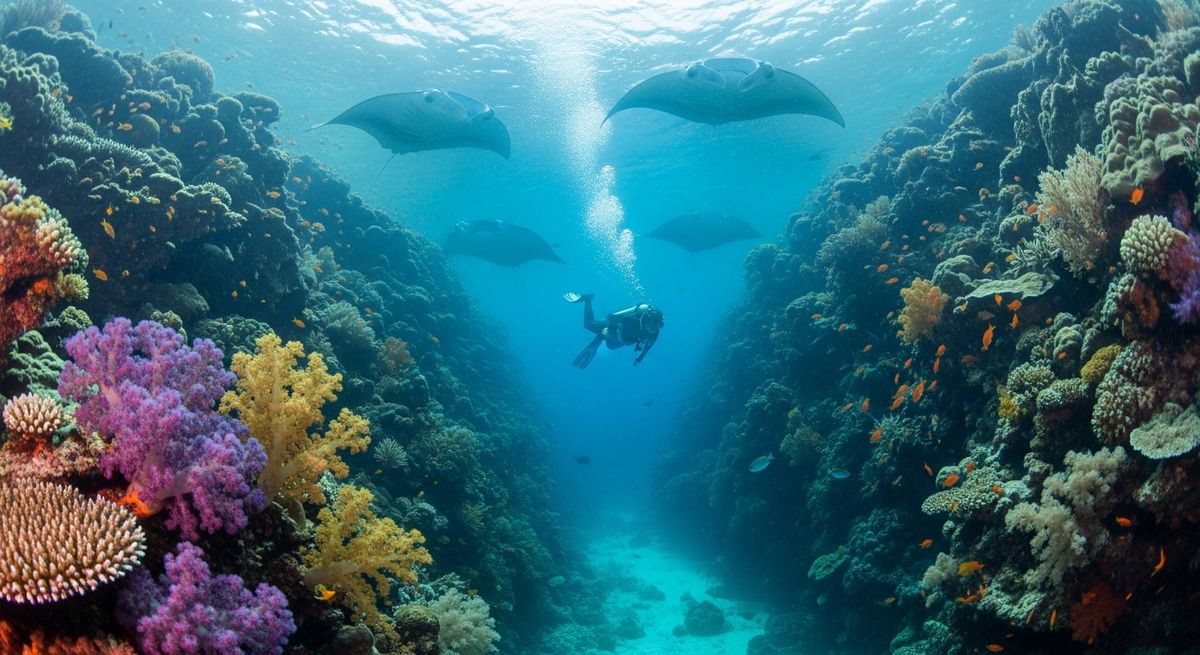
The Lava Fields are exactly what they sound like – a sprawling underwater landscape shaped by the 1905 eruption, now softened by a century of ocean life. We love how the dark, undulating basalt rock creates these natural canyons and swim-throughs, all just a few metres deep. It’s like diving through a submerged, ancient maze. Our favourite part has to be the light play. Sunlight filters down through the shallow water, bouncing off the sandy patches and illuminating the bowl corals that have colonised every available surface. Keep an eye out for the giants here: huge spider conches slowly traversing the sand, and we’ve spotted humpbacked conches settled in the crevices too. Blackfish often dart between the rocks, and it's a calm spot, perfect for new divers to practice their buoyancy without worrying about deep drop-offs or strong currents. The coral hind and silver squirrelfish are pretty common, but it's the sheer architectural beauty of the lava formations that really makes this place special. We’d suggest going in the morning; the water tends to be clearest, and the low sun casts long, dramatic shadows.
Typical Lava Fields Dive Profile
Illustrative profile based on site depth and type. Actual dive profiles vary - always follow your dive computer and training.
Nearest Dive Centres to Lava Fields
Dive shops near Lava Fields
View all dive centres in Savai'iReviews for Lava Fields
Conditions
Ocean conditions, forecast and tides for Lava Fields
Lava Fields Ocean Conditions
Monthly averages for Lava Fields, sourced from Open-Meteo marine data - nearest station: Open-Meteo marine grid (-13.54, -172.35) (5km away)
October Averages
Sea Temperature
29°C
83°F · Range: 27.7–29.4°C
Air Temperature
26°C
78°F
Wind Speed
7.9 m/s
15.4 knots
Atmospheric Pressure
1011.9 hPa
Based on 4 years of monitoring data · Data sources: Open-Meteo marine data
Plan & book
Ways to dive Savai'i, from day trips to liveaboards.
Day trips & courses
via GetYourGuideGuided dives, courses and snorkel trips with instant booking.
Find dive trips in Savai'iPlaces to stay
via Booking.comHotels and dive resorts near Savai'i.
Search stays in Savai'iDive insurance
Most travel insurance excludes or limits scuba. Check what you need before you go.
Dive insurance explainedPartner links: we may earn a commission if you book, at no extra cost to you. How we make money
Where to Stay near Lava Fields
Prices from Booking.com. We may earn a commission at no extra cost to you.