LADY ERA
Protected Area
Batture Port-Cartier Water Fowl Gathering Area
Why dive here
With 142+ marine species recorded in the area - including blue sharks, blue whales, dolphins, dwarf minke whales and great white sharks - LADY ERA offers some of New Brunswick & Bay of Fundy's richest wreck diving. Water ranges -1-13°C, warmest July, August, September.
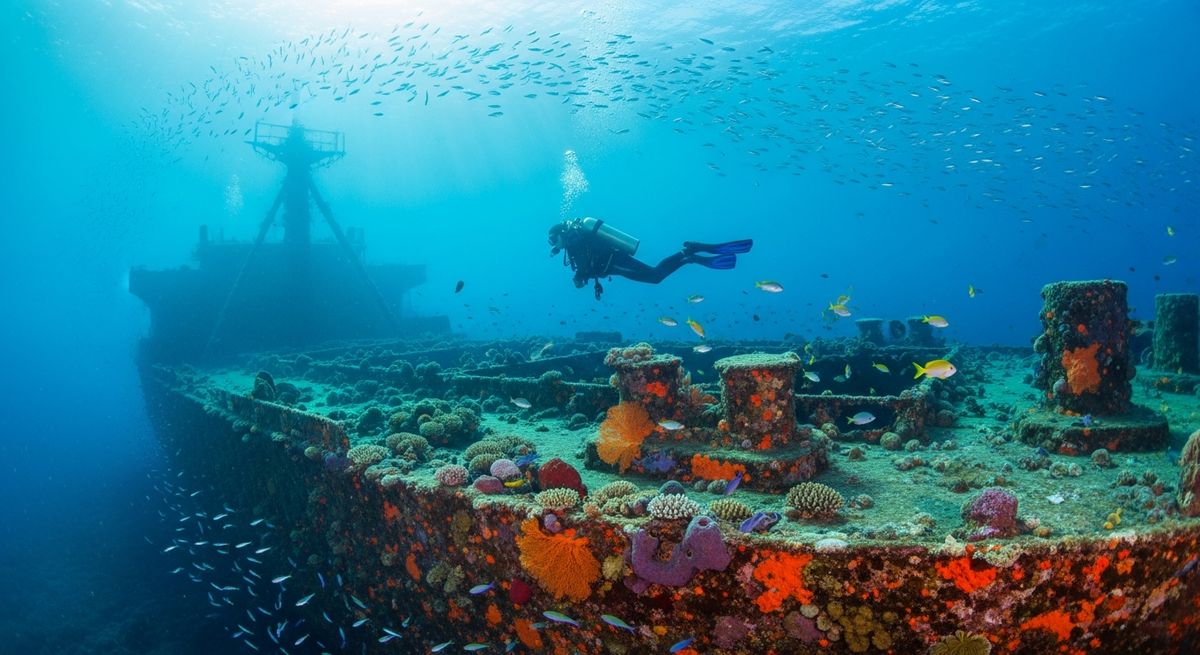
The Lady Era is a wreck dive, but it's not what you'd typically expect. She’s beached, essentially, hard aground in the shallows of the Bay of Fundy, and that's precisely why we love her. At a max depth of 2 metres, you’re looking at a snorkel or a very, very shallow dive, and yes, the current can be a real factor here, so pick your slack tide carefully. What you get is this massive, broken hull, all 139 metres of her, exposed to the elements and slowly being reclaimed. It’s less about penetration and more about exploring the mangled superstructure from above. Think rusticles in incredible shades of orange and brown, and barnacles forming thick, crusty layers on every surface. We've seen sculpins tucked into crevices, their eyes watching you warily, and on a good day, the water clarity lets you pick out crabs scuttling across the plates. It’s an unusual wreck, for sure, perfect for photographers keen on the raw, decaying beauty of a ship left to the sea, or for those who simply want a different kind of interaction with history. Come at low slack, when the current eases and the sun can really illuminate the colours.
Typical LADY ERA Dive Profile
Illustrative profile based on site depth and type. Actual dive profiles vary - always follow your dive computer and training.
Safety Notes
Wreck site - avoid penetration without wreck diving certification. Watch for sharp metal and entanglement hazards.
Cold water this month (avg 9°C). Drysuit or thick wetsuit (7mm+) recommended.
Reviews for LADY ERA
Conditions
Ocean conditions, forecast and tides for LADY ERA
LADY ERA Ocean Conditions
Monthly averages for LADY ERA, sourced from Open-Meteo marine data - nearest station: Open-Meteo marine grid (49.1, -66.69) (33km away)
October Averages
Sea Temperature
9°C
48°F · Range: 5.3–12.9°C
Air Temperature
11°C
52°F
Wind Speed
5.5 m/s
10.7 knots
Atmospheric Pressure
1016.3 hPa
Based on 4 years of monitoring data · Data sources: Open-Meteo marine data
Plan & book
Ways to dive New Brunswick & Bay of Fundy, from day trips to liveaboards.
Day trips & courses
via GetYourGuideGuided dives, courses and snorkel trips with instant booking.
Find dive trips in New Brunswick & Bay of FundyPlaces to stay
via Booking.comHotels and dive resorts near New Brunswick & Bay of Fundy.
Search stays in New Brunswick & Bay of FundyDive insurance
Most travel insurance excludes or limits scuba. Check what you need before you go.
Dive insurance explainedPartner links: we may earn a commission if you book, at no extra cost to you. How we make money
Where to Stay near LADY ERA
Prices from Booking.com. We may earn a commission at no extra cost to you.