BUNGALU
Protected Area
Pulau Maratua-Karang Muaras
Why dive here
With 118+ marine species recorded in the area - including manta rays, mobula rays (devil rays), orcas, sea turtles and sperm whales - BUNGALU offers some of Derawan Islands's richest wreck diving.
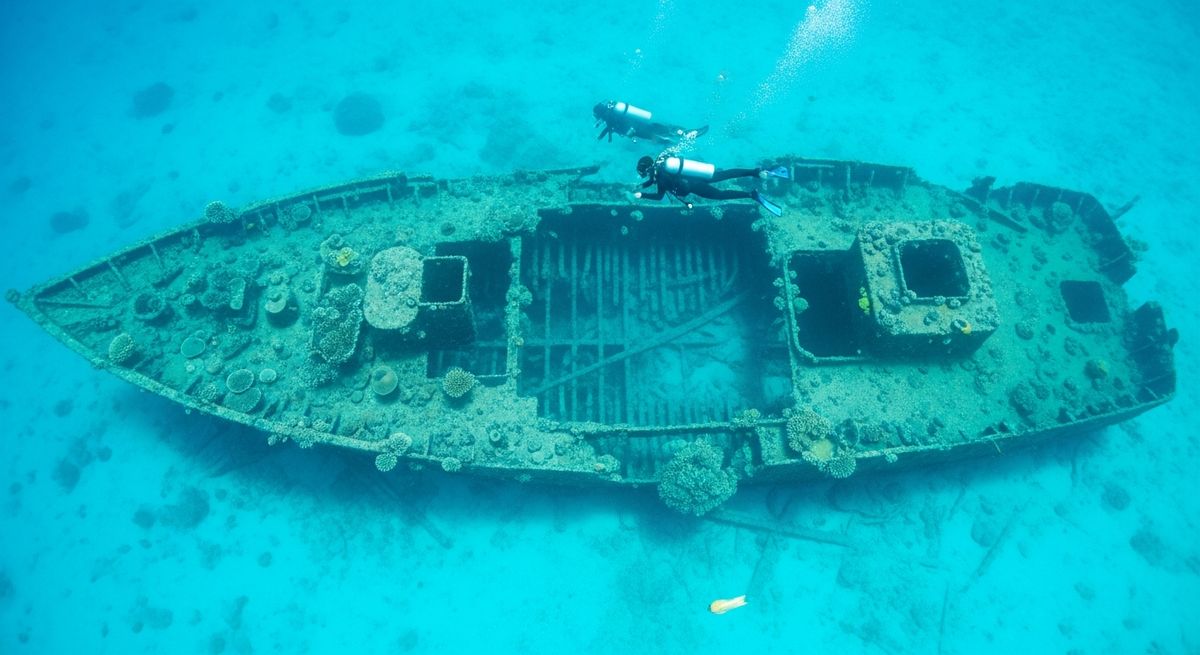
Bungalu offers a proper wreck dive, not just a pile of scattered debris. What we love about it is the sheer intactness of the motor vessel, especially for a wreck that’s been down a while. You can penetrate some sections, if you’re comfortable and properly trained, swimming through the hull where the light filters in through portholes, illuminating schools of glassfish. It’s got that slightly spooky, ‘shipwrecked’ feel that we often look for. The wreck sits in clear, calm water, making it accessible for newer wreck divers or those wanting to hone their buoyancy in a more controlled environment. Look closely in the nooks and crannies for resident scorpionfish and lionfish, perfectly camouflaged against the encrusted metal. Our tip: go early to catch the best light for photography, and keep an eye out for larger pelagics cruising past in the blue, sometimes drawn in by the structure. It’s a compelling piece of history, now a thriving artificial reef.
Safety Notes
Wreck site - avoid penetration without wreck diving certification. Watch for sharp metal and entanglement hazards.
BUNGALU Wreck History
Vessel Type
cargo ship
Cause
grounding
The BUNGALU is less of a dive site and more of a picturesque landmark in the stunning Derawan Archipelago of Indonesia. This motor vessel rests at a depth of zero meters, meaning it is aground on a reef or beach, fully exposed to the elements. The story of how this local vessel met its end is unclear, but it most likely fell victim to a navigational error or a storm, running aground and becoming permanently stranded. Over time, the tropical sun and saltwater have weathered its structure, creating a hauntingly beautiful scene against the backdrop of turquoise water and white sand beaches. While not a traditional scuba dive, the BUNGALU offers fantastic opportunities for snorkelers and photographers to explore a shipwreck in a completely different light, observing how nature both dismantles and reclaims a man-made object at the boundary of land and sea.
Nearest Dive Centres to BUNGALU
Dive shops near BUNGALU
View all dive centres in Derawan IslandsReviews for BUNGALU
Conditions
Ocean conditions, forecast and tides for BUNGALU
Plan & book
Ways to dive Derawan Islands, from day trips to liveaboards.
Day trips & courses
via GetYourGuideGuided dives, courses and snorkel trips with instant booking.
Find dive trips in Derawan IslandsPlaces to stay
via Booking.comHotels and dive resorts near Derawan Islands.
Search stays in Derawan IslandsDive insurance
Most travel insurance excludes or limits scuba. Check what you need before you go.
Dive insurance explainedPartner links: we may earn a commission if you book, at no extra cost to you. How we make money
Where to Stay near BUNGALU
Prices from Booking.com. We may earn a commission at no extra cost to you.