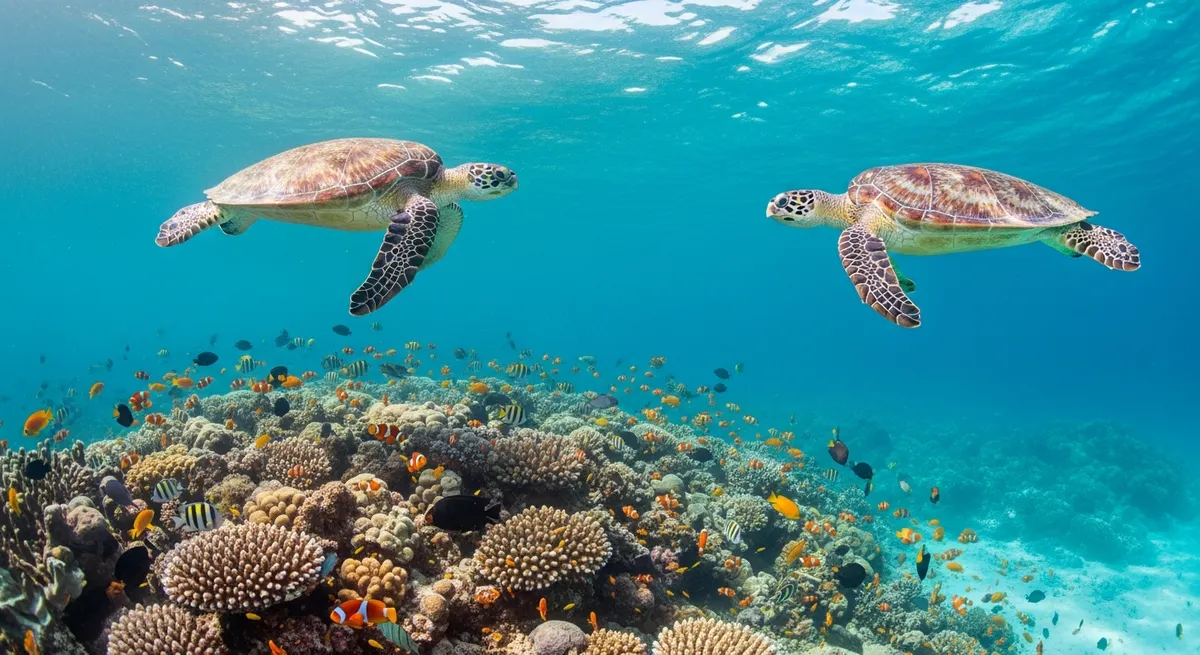
Diving in Perhentian Islands
Why dive here
Perhentian Islands offers some of Malaysia's richest diving, with 153+ marine species recorded in the area - including sea turtles, sperm whales, whale sharks and pufferfish. Water ranges 28-31°C, warmest May, June, August.
The Perhentians are a classic Southeast Asian stop, relaxed and easy-going, perfect for a no-fuss dive trip. We love the easy access to the fringing reefs, usually just a short boat ride from the beach. You’ll find some lovely reef patches here, with plenty of staghorn corals providing shelter for schools of fusiliers and rabbitfish. Look out for blacktip reef sharks cruising the shallows, especially around dawn or dusk, and the green turtles are always a joy to swim alongside. Our pick for a quiet morning dive is often the Pinnacles, where the topography adds a nice change of pace from the shallower reef flats. Visibility can vary, particularly after heavy rain, but generally, it’s a pleasant 10-20 metres. We'd suggest aiming for late spring through summer, when the seas are calmest and the plankton blooms haven't peaked too much. It's a great spot for newer divers, with gentle currents on most sites, though some of the deeper pinnacles offer a bit more for intermediate divers to explore. Don’t expect ripping drifts, but do expect a laid-back vibe and some very approachable marine life.
Perhentian Islands Dive Site Map
Dive sites and dive centres in Perhentian Islands
Perhentian Islands Dive Sites
106 dive sites in Perhentian Islands
Angel Diver
Angel Diver in the Perhentians can be a gentle drift over a sandy bottom, speckled with small coral heads. We often see green turtles here, lazily grazing on the seagrass beds, alongside plenty of curryfish and pinkfish flitting about. Keep an eye out for black sea cucumbers and occasional stonefish tucked into the substrate. While it doesn't boast dramatic drop-offs, it's a pleasant, relaxed dive, perfect for a chill afternoon or for newer divers looking to build confidence in mild currents.
Anti Gravity Divers
Anti Gravity Divers is actually the name of a dive shop, a PADI 5 Star spot on Perhentian Besar. From their boats, they'll take you out to a range of local sites. We’ve found the diving in the Perhentians can be a bit hit or miss, but usually, it's a relaxed affair. You’ll probably see Green Turtles munching on seagrass, and plenty of nudibranchs if you look closely. Keep an eye out for Narrow-barred Spanish mackerel in the blue. It’s a good spot for newer divers, or those looking to finish a course, with generally gentle conditions. We wouldn't go expecting huge pelagics, though a Whale Shark has been known to cruise by.
BATTY 3
Batty 3 is an unexpected find in the Perhentians, a much deeper dive than most come here for. This old barge, sunk in 1969, sits upright at 52 metres, making it a serious tech dive, not a casual jaunt. We love the way it just appears out of the blue, a dark silhouette on the sand, almost perfectly preserved by the depth and lack of strong currents. The hull is coated in sponges and colourful soft corals, like a forgotten art installation. Look for the resident batfish that drift around the superstructure, often curious about divers, and we’ve seen some decent-sized groupers lurking in the shadows of the cargo holds. Penetration is possible for trained wreck divers, but the silt can be thick, so buoyancy is key. Our advice? Hit this site in the morning for the best chance of decent visibility before any thermoclines set in. It’s a quiet, contemplative dive, a real contrast to the shallower, busier reefs, and a fantastic option for experienced divers looking for something a bit different.
Batu Berendam
Batu Berendam is a solid choice when you want a straightforward dive without too much fuss. Dropping to a maximum of 22 metres, it’s a good intermediate site that usually has comfortable conditions. We've spent plenty of time here spotting yellowtail snappers schooling around the larger bommies, and there’s always a chance of finding a turtle munching away on the corals. It's a relaxed spot, ideal for an afternoon dive, particularly if you're looking to log some bottom time without a challenging current.
Batu Bulan
Batu Bulan sits at a comfortable 14 metres, making it a good spot for newer divers or those looking for a relaxed afternoon. We’ve drifted along here often, spotting plenty of damselfish and parrotfish grazing on the reef. It’s a gentle introduction to the Perhentians’ calmer side, ideal for getting back into the swing of things. Don't expect dramatic drop-offs, just a pleasant, easy dive.
Batu Chaping
Batu Chaping is one of the Perhentian sites we often suggest for divers who’ve moved past their Open Water. The reef sits around 18 metres, a comfortable depth where you can still get a good bottom time. You’ll find a mix of hard and soft corals here, with plenty of resident parrotfish nibbling away and the occasional turtle gliding by. We’ve had some pleasant dives here, encountering schools of yellowtail snappers and, if you’re lucky, a passing reef shark in the blue. It’s generally a relaxed drift, making it a good choice for an intermediate diver looking for something a bit more interesting than the shallower spots without being too challenging.
Batu Chipor
Batu Chipor is a solid reef dive in the Perhentians, good for a relaxed current drift. You'll find a healthy mix of hard and soft corals, often with barracuda circling above and plenty of reef fish schooling among the bommies. It's a forgiving site, well-suited for newer divers or anyone looking for an easy second dive. Expect decent visibility most of the year.
Batu Kapal
Batu Kapal, or 'Ship Rock', gets its name from that main pinnacle, which really does look like a ship breaking the surface. It’s off the northwest of Pulau Pisang, and we’ve always found it a solid, easy dive. The main draw here is the topography itself, a series of pinnacles dropping to 18 metres, with some nice walls on the west and north sides. Look closely at those walls for enormous gorgonian fans and some truly massive barrel sponges. It’s a great spot for beginners, with generally mild currents, and you'll often find a decent variety of reef fish darting between the rocks.
Batu Kuching
Batu Kuching, or "Cat Rock" as some call it, sits off the Perhentian Islands and offers a relaxed dive, perfect for those new to the area. Dropping to a gentle 19 meters, it's pretty forgiving. We often find juvenile reef sharks tucked under the coral heads here, along with the usual suspects like parrotfish and schools of fusiliers. It’s a comfortable site for new divers finding their fins or anyone wanting a chill afternoon dive without too much fuss.
Batu Layar
Batu Layar, off the Perhentian Islands, is one of those easy-going boat dives that just ticks the boxes. You'll find yourself drifting past bommies covered in soft corals, often seeing a few reef sharks patrolling the deeper sections. It's a great spot for newer divers looking to build confidence without strong currents, or for anyone wanting a relaxed dive with a good chance of spotting turtles and barracudas.
Batu Layar
Batu Layar is one of those Perhentian sites that reliably delivers a chill dive. We’ve found the reef slopes gently, offering a relaxed drift along a mix of sand and coral patches. You’ll spot plenty of the usual suspects here: Brown Sandfish doing their thing, occasional Blackfish, and we’ve often seen Narrow-barred Spanish mackerel darting through. Keep an eye out for Stonefish camouflaged on the bottom, too. It’s a good spot for a second dive of the day, or if you’re looking for something calm.
Batu Nisan
Batu Nisan sits off the Perhentian Islands, a site we’ve found good for a relaxed dive. We typically see things like schooling yellowtail snappers, often some blue-spotted rays resting on the sand, and the occasional turtle gliding past. It's a mellow spot, good for newer divers getting comfortable or anyone wanting an easy second dive after something more challenging. Expect decent visibility on calm days.
Show all 106 dive sites in Perhentian Islands
- Batu Nisan Laut
- Bidong Jetty
- Big Seamount
- Black Coral Garden
- Blue Lagoon
- Corn Wreck
- Cosmic Divers
- D'Lagoon
- Holy Sand
- Kampung Beach Front
- Kapal Polis
- Karang Selat
- K.K Bay
- KK Beach
- Ko Losin
- LAGUNA P7
- Laluan Naga
- Lekker Divers
- Mak Cantik
- Maritime Wreck
- Matahari Divers
- MERCURY
- Mini Seamount
- Oh Lala Divers
- Ombak Divers
- Paku Kechil
- Panglima Abu
- Panorama Diver
- Pasir Kerangi
- Pasir Muck Dive
- Pasir Tani Wreck
- Police Wreck
- Pulau Ekor Tebu
- Pulau Lima
- Pulau Paku Besar South
- Pulau Rawa
- Pulau Susu Dara
- Pulau Susu Dara Besar
- Pulau Yu Kecil
- Quiver Dive Team
- Redang - Black Coral
- Redang - Che Isa
- Redang - Paku Besar
- Redang - South Tip
- Redang - Tanjung Lebah
- Redang - Tanjung Tokong
- Redang - Terumbu Kili
- RIZQIN 9
- Romantic Beach
- San Choi Wreck
- Sandy Wreck
- SANG THAI DIAMOND
- Sea Bell
- Seabell Rock
- Seahorse Divers
- Sea Sight Divers
- Sea Voice Divers
- Serenggeh
- SETIA KILAS
- Shark Point
- Shavers rock
- Six Sisters
- Spice Divers
- Stingray Alley
- SUCCESS STAR
- Sugar Wreck
- Sugar Wreck
- T3
- TAKASAGO MARU (POSSIBLY)
- Tanjung Basi
- Tanjung Butong
- Tanjung Gua Kawah
- Tanjung Tengah
- Tanjung Tukas Laut
- Teluk Dalam
- Teluk Gadong - Perhentian
- Temple of the Sea
- Terumbu Dua
- Terumbu Tiga (T3)
- TIDATARA
- Tiga Ruang
- Tokong Burung
- Tokong Laut
- TORO MARU (PROBABLY)
- Tukas Laut
- Tumbu Kili
- Tuna Bay, Malaysia
- Turtle Bay
- Turtle Bay Divers
- Turtle Beach
- Turtle Point
- UNION STAR 17
- Unjang
- Vietnamese Wreck
Perhentian Islands Dive Centres
30 dive shops and operators in Perhentian Islands
Angel Diver
Anti Gravity Divers
Chomel Dive Center
Coral View Dive Center
Cosmic Divers
Dive Buddy Dive Center
Dive Redang Island Sdn Bhd
Diving Center PADI
Show all 30 dive centres in Perhentian Islands
- DM Scuba Dive Team
- Flora Bay Divers
- House Of Diving
- Laguna Dive Centre
- Langkawi Scuba
- Lekker Divers
- Matahari Divers
- Oceanaut Water Academy
- Oh Lala Divers
- Ombak Divers
- PADI diving centre
- Panorama Diver
- Perhentian Island Divers
- Quiver Dive Team
- Seahorse Divers
- Sea Sight Divers
- Sea Voice Divers
- Spice Divers
- The Barat Dive Center
- The Taaras Beach and Spa Resort
- Turtle Bay Divers
- YBD Dive Center
Ocean Wildlife in Perhentian Islands
153 species recorded in Perhentian Islands
Perhentian Islands Daylight & Sunrise/Sunset
Sunrise and sunset times for Perhentian Islands, calculated from coordinates
Today - Sunday 11 October
Sunrise
05:56
Sunset
17:57
Daylight
12h 1m
Golden Hour
17:29
First light (dawn) at 05:35 · Last light (dusk) at 18:18
Monthly Averages
| Month | Sunrise | Sunset | Daylight |
|---|---|---|---|
| Jan | 06:24 | 18:13 | 11h 49m |
| Feb | 06:26 | 18:22 | 11h 56m |
| Mar | 06:16 | 18:21 | 12h 5m |
| Apr | 06:02 | 18:17 | 12h 15m |
| May | 05:55 | 18:18 | 12h 23m |
| JunLongest | 05:56 | 18:24 | 12h 28m |
| Jul | 06:02 | 18:28 | 12h 26m |
| Aug | 06:05 | 18:24 | 12h 19m |
| Sep | 06:01 | 18:10 | 12h 9m |
| OctNow | 05:56 | 17:55 | 12h 0m |
| Nov | 05:59 | 17:50 | 11h 51m |
| DecShortest | 06:11 | 17:58 | 11h 47m |
Times are approximate local times based on longitude. Actual times may vary slightly depending on the exact timezone observed in Perhentian Islands.
Where to Stay near Perhentian Islands
Prices from Booking.com. We may earn a commission at no extra cost to you.
Marine Protected Areas near Perhentian Islands
20 protected areas near Perhentian Islands - please respect local regulations when diving
Rantau Abang Fisheries Prohibited Areas
Pulau Redang Marine Park
Pulau Perhentian Besar Marine Park
Pulau Perhentian Kecil Marine Park
Pulau Tenggol Marine Park
Rantau Abang Turtle Sanctuary
Pulau Lang Tengah Marine Park
Pulau Nyireh Marine Park
Pulau Susu Dara Marine Park
Pulau Yu Besar Marine Park
Pulau Pinang Marine Park
Pulau Yu Kecil Marine Park
Showing 12 largest of 20
Getting to Perhentian Islands
Kota Baharu
Ipoh
Penang
Plan & book
Ways to dive Perhentian Islands, from day trips to liveaboards.
Day trips & courses
via GetYourGuideGuided dives, courses and snorkel trips with instant booking.
Find dive trips in Perhentian IslandsPlaces to stay
via Booking.comHotels and dive resorts near Perhentian Islands.
Search stays in Perhentian IslandsDive insurance
Most travel insurance excludes or limits scuba. Check what you need before you go.
Dive insurance explainedPartner links: we may earn a commission if you book, at no extra cost to you. How we make money