Tress cuevas
Why dive here
With 87+ marine species recorded in the area - including clownfish, lionfish and pufferfish - Tress cuevas offers some of Anilao's richest wreck diving. Water ranges 27-31°C, warmest May, June, July.
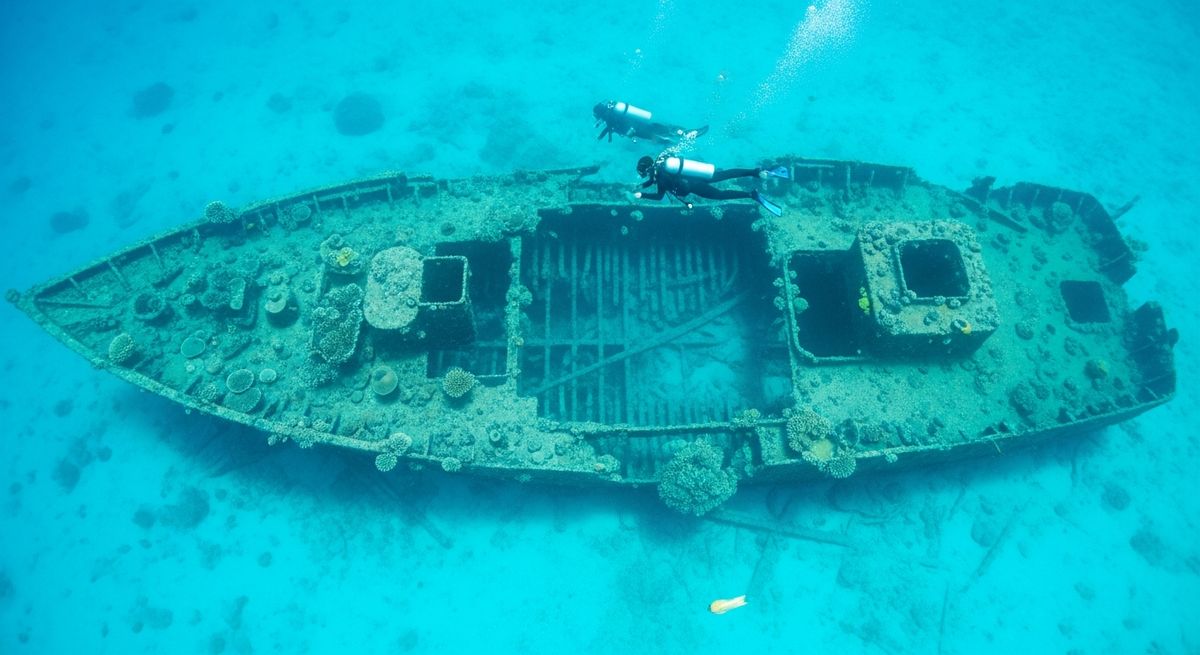
Tingloy Island’s Tres Cuevas isn’t what most people think of as a wreck dive, not in the classic sense anyway. Instead, it's the remnants of a small Japanese landing craft, likely scuttled or sunk during WWII. We love it because it’s more like an artificial reef, a jumble of metal plates and twisted girders that have become completely absorbed by the ocean. You drop onto the main section, usually in gentle current, and immediately see the hull plates, now covered in colourful soft corals and sponges. Schools of damselfish flutter around the edges, and we often spot lionfish tucked into crevices. The wreck isn't deep, maybe 12 to 18 meters, making it a comfortable dive for advanced open water divers looking for something a bit different. Our favourite part is exploring the small swim-throughs formed by the collapsed structure – keep an eye out for moray eels here. It’s an easy, interesting dive, a real slice of history reclaimed by nature, perfect for an afternoon exploration when you want a relaxed pace.
Safety Notes
Wreck site - avoid penetration without wreck diving certification. Watch for sharp metal and entanglement hazards.
Nearest Dive Centres to Tress cuevas
Dive shops near Tress cuevas
The Asri Dive and Leisure Resort
Buceo Filipinas-Anilao-Planet Dive
Dive 7000
Freedive Tribe PH HQ
Casa Escondida Anilao Resort and Dive Center
Halo Dive
Reviews for Tress cuevas
Conditions
Ocean conditions, forecast and tides for Tress cuevas
Tress cuevas Ocean Conditions
Monthly averages for Tress cuevas, sourced from Open-Meteo marine data + Copernicus Marine (EU) - nearest station: Open-Meteo marine grid (13.6, 120.95) (3km away)
October Averages
Sea Temperature
30°C
85°F · Range: 28.8–30.6°C
Current Speed
11.66 cm/s
Direction: NE (59°)
Chlorophyll-a
0.055 mg/m³
Very clear (oligotrophic)
Salinity
31.9 PSU
Based on 4 years of monitoring data · Data sources: Open-Meteo marine data + Copernicus Marine (EU)
Plan & book
Ways to dive Anilao, from day trips to liveaboards.
Day trips & courses
via GetYourGuideGuided dives, courses and snorkel trips with instant booking.
Find dive trips in AnilaoPlaces to stay
via Booking.comHotels and dive resorts near Anilao.
Search stays in AnilaoDive insurance
Most travel insurance excludes or limits scuba. Check what you need before you go.
Dive insurance explainedPartner links: we may earn a commission if you book, at no extra cost to you. How we make money
Where to Stay near Tress cuevas
Prices from Booking.com. We may earn a commission at no extra cost to you.