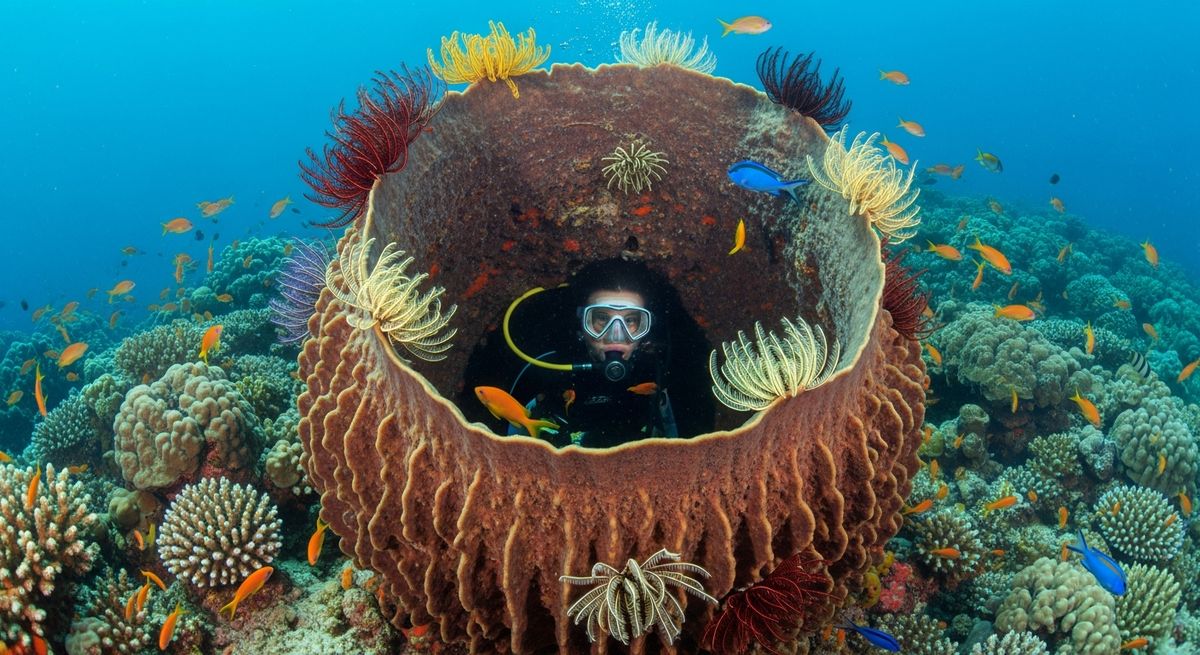
Bicol - Donsol & Sorsogon

Look, Donsol is synonymous with whale sharks, and that's usually the main draw. But if you’re already making the trip down to Bicol, you’d be missing out not to explore what the wider region offers. Ticao Island, just a boat ride away, is where we go when we’re feeling lucky, specifically to spots like "Big Boys' Alley" for a shot at oceanic manta rays, thresher sharks, or even hammerheads from March to June. We’ve had some truly epic dives there, feeling pretty small in the grand scheme of things. And for those who prefer the smaller stuff, the reefs around San Miguel Island deliver with their impressive macro scene. We'd say Bicol is a good bet for divers who appreciate both the pelagic and the tiny, and don't mind a bit of boat travel.

Location
Donsol & Sorsogon, Philippines, Southeast Asia
Coordinates
12.800000, 123.700000
Type
reef
Maximum Depth
5-20m

Marine Protected Area: Castilla Fish Sanctuary and Marine Reserve

Best Time to Dive in Donsol & Sorsogon

The warmest water temperatures in Donsol & Sorsogon occur in January, averaging 27.1°C. The coolest conditions are in December at 27.1°C.

Monthly Water Temperatures

  • January: 27.1°C (air: 25.7°C)
  • February: 27.1°C (air: 25.7°C)
  • March: 27.1°C (air: 26.4°C)
  • April: 27.1°C (air: 27.2°C)
  • May: 27.1°C (air: 28.0°C)
  • June: 27.1°C (air: 27.5°C)
  • July: 27.1°C (air: 27.4°C)
  • August: 27.1°C (air: 27.6°C)
  • September: 27.1°C (air: 27.6°C)
  • October: 27.1°C (air: 27.1°C)
  • November: 27.1°C (air: 26.9°C)
  • December: 27.1°C (air: 26.3°C)

Nearby Dive Sites in Donsol & Sorsogon

Marine Life in Donsol & Sorsogon

Home to 139 recorded species including 119 reef fish, 14 sea snails & nudibranchs, 3 seagrass & algae, 1 sharks & rays, 1 sea cucumbers, 1 clams & mussels.

Notable Species

Recommended Packing List for Bicol

Based on average water temperature of 27.1°C.

  • Shorty or Rashguard - warm 27°C water needs minimal exposure protection
  • Mask - essential for every dive
  • Fins
  • BCD - buoyancy compensator
  • Regulator - your most safety-critical piece of gear
  • Dive Computer - tracks depth, time, and NDL
  • Surface Marker Buoy (SMB) - essential for boat pickups
  • Dive Torch - useful for crevices and colour at depth
  • Underwater Camera - capture your diving memories

Frequently Asked Questions

What are the typical diving depths at Bicol's popular dive sites?
The specific typical diving depths for Bicol's popular dive sites are not detailed in our current information. However, as these are primarily reef dives with an "intermediate" difficulty, divers can anticipate a variety of depths suitable for exploring diverse underwater environments. We recommend consulting local dive centers for precise depth profiles at specific locations.
What kind of marine life and underwater features can divers expect to see in Bicol?
Divers in Bicol can expect an incredible array of marine life, from "big stuff" to intricate macro creatures. Ticao Island is renowned for oceanic manta rays, especially from March to June, and "Big Boys' Alley" where hammerheads, threshers, tiger sharks, and whale sharks are known to appear. For those interested in smaller wonders, San Miguel Island offers incredible Filipino macro life, while Donsol is famous for its whale shark encounters. The dive sites are primarily reef environments, providing diverse habitats.
How challenging are the dive sites in Bicol, and are there options for beginner divers?
The dive sites in Bicol are generally classified as "intermediate" in difficulty. While this suggests some sites might be more suitable for experienced divers, there are often options or specific areas within intermediate regions that can accommodate beginners or those with entry-level certifications. It's always advisable for beginner divers to consult with local dive operators to find sites best suited to their skill level.
When is the best time of year to go diving in Bicol for optimal conditions and marine encounters?
Based on the available data, the optimal time for encountering oceanic manta rays in Bicol, particularly around Ticao Island, is from March to June. While specific details about general optimal diving conditions are not provided, this period offers a prime opportunity for these magnificent marine encounters. For broader information on diving seasons, you might consult a when to dive guide.
What scuba diving certifications are required or recommended for diving in Bicol?
Given that the dive sites in Bicol are rated as "intermediate" in difficulty, divers would typically benefit from having at least an Advanced Open Water certification or equivalent. This level of certification prepares divers for a wider range of conditions and depths that might be encountered in intermediate sites. While Open Water divers might find suitable sites, an advanced certification is recommended for a more comprehensive experience.
What are the typical water currents and visibility conditions like at Bicol's dive spots?
Our current data does not provide specific details regarding the typical water currents or visibility conditions at Bicol's dive spots. As conditions can vary greatly depending on the season and specific site, it is always recommended to check with local dive operators for the most up-to-date information before planning your dives.