Ban Pla Aow TongTom (Artificial)/ บ้านปลา อ่าวท้องตม
Protected Area
Mu ko Chumphon
Why dive here
With 158+ marine species recorded in the area - including blacktip reef sharks, blue-spotted stingrays, mobula rays (devil rays), whale sharks and pufferfish - Ban Pla Aow TongTom (Artificial)/ บ้านปลา อ่าวท้องตม offers some of Gulf of Thailand's richest wreck diving. Water ranges 28-31°C, warmest April, May, June.
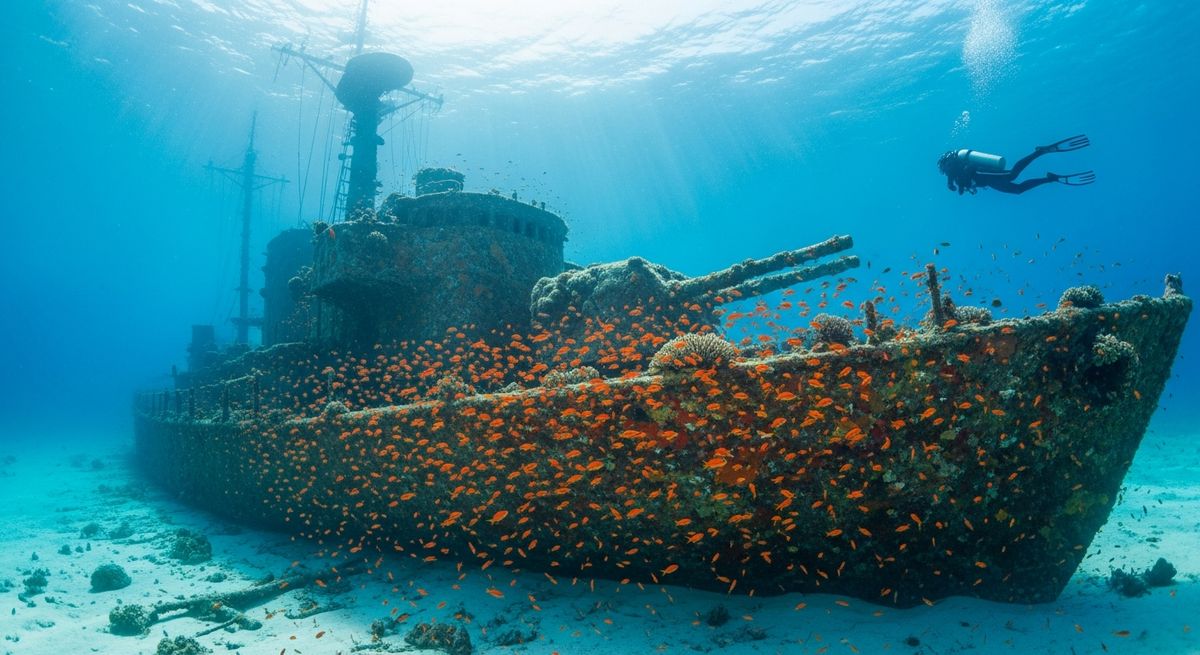
When we talk about easy, relaxed wreck diving in the Gulf, Ban Pla Aow TongTom really stands out. It's an artificial reef, originally a fishing boat scuttled to create new habitat, and it’s done its job beautifully. The wreck itself sits shallow, only 10 metres down, making it perfect for newer divers or those who just want a long, leisurely bottom time. We love drifting over the main deck, spotting the resident batfish that school so densely they almost obscure the superstructure. Look closely at the hull and you’ll find nudibranchs inching their way across the metal, and we’ve often seen small lionfish tucked into crevices, waiting for an easy meal. It’s not a huge wreck, but there’s enough to explore for a good 40 minutes, especially if you take your time to peer into the cabins. The visibility here can be decent, especially in the calmer months from May to September, though it’s never going to be Red Sea clear. We’d suggest going early in the morning before any boat traffic stirs things up too much. It’s a gentle site, a truly pleasant dive that reminds you how quickly nature reclaims what man leaves behind.
Typical Ban Pla Aow TongTom (Artificial)/ บ้านปลา อ่าวท้องตม Dive Profile
Illustrative profile based on site depth and type. Actual dive profiles vary - always follow your dive computer and training.
Safety Notes
Wreck site - avoid penetration without wreck diving certification. Watch for sharp metal and entanglement hazards.
Ban Pla Aow TongTom (Artificial)/ บ้านปลา อ่าวท้องตม Wreck History
Vessel Type
unknown
Cause
scuttled
Known locally as the "Fish House," the Ban Pla Aow TongTom is not a historic shipwreck but a purpose-built artificial reef. Deliberately sunk in the calm, clear waters of the Gulf of Thailand, its primary mission is to foster marine biodiversity and create a new habitat for aquatic life. The name itself translates to "Fish House in Tong Tom Bay," a perfect description of its function as a bustling underwater apartment complex for a myriad of sea creatures.
Resting at a shallow depth of just 10 meters, this site is a paradise for novice divers, underwater photographers, and anyone looking for a long, relaxed dive. The structure has been incredibly successful in its mission, now teeming with schools of snapper, fusiliers, and batfish. Look closer in the nooks and crannies to find moray eels, scorpionfish, and a variety of colorful nudibranchs. Its easy accessibility and abundant life make it a highlight for divers exploring the coastal waters near Chumphon.
Nearest Dive Centres to Ban Pla Aow TongTom (Artificial)/ บ้านปลา อ่าวท้องตม
Dive shops near Ban Pla Aow TongTom (Artificial)/ บ้านปลา อ่าวท้องตม
View all dive centres in Gulf of ThailandReviews for Ban Pla Aow TongTom (Artificial)/ บ้านปลา อ่าวท้องตม
Conditions
Ocean conditions, forecast and tides for Ban Pla Aow TongTom (Artificial)/ บ้านปลา อ่าวท้องตม
Ban Pla Aow TongTom (Artificial)/ บ้านปลา อ่าวท้องตม Ocean Conditions
Monthly averages for Ban Pla Aow TongTom (Artificial)/ บ้านปลา อ่าวท้องตม, sourced from Open-Meteo marine data - nearest station: Open-Meteo marine grid (10.15, 99.7) (6km away)
October Averages
Sea Temperature
30°C
86°F · Range: 29.1–31°C
Air Temperature
27°C
81°F
Wind Speed
4.83 m/s
9.4 knots
Atmospheric Pressure
1009.7 hPa
Based on 4 years of monitoring data · Data sources: Open-Meteo marine data
Plan & book
Ways to dive Gulf of Thailand, from day trips to liveaboards.
Day trips & courses
via GetYourGuideGuided dives, courses and snorkel trips with instant booking.
Find dive trips in Gulf of ThailandPlaces to stay
via Booking.comHotels and dive resorts near Gulf of Thailand.
Search stays in Gulf of ThailandDive insurance
Most travel insurance excludes or limits scuba. Check what you need before you go.
Dive insurance explainedPartner links: we may earn a commission if you book, at no extra cost to you. How we make money
Where to Stay near Ban Pla Aow TongTom (Artificial)/ บ้านปลา อ่าวท้องตม
Prices from Booking.com. We may earn a commission at no extra cost to you.