Diving in Atauro Island
Why dive here
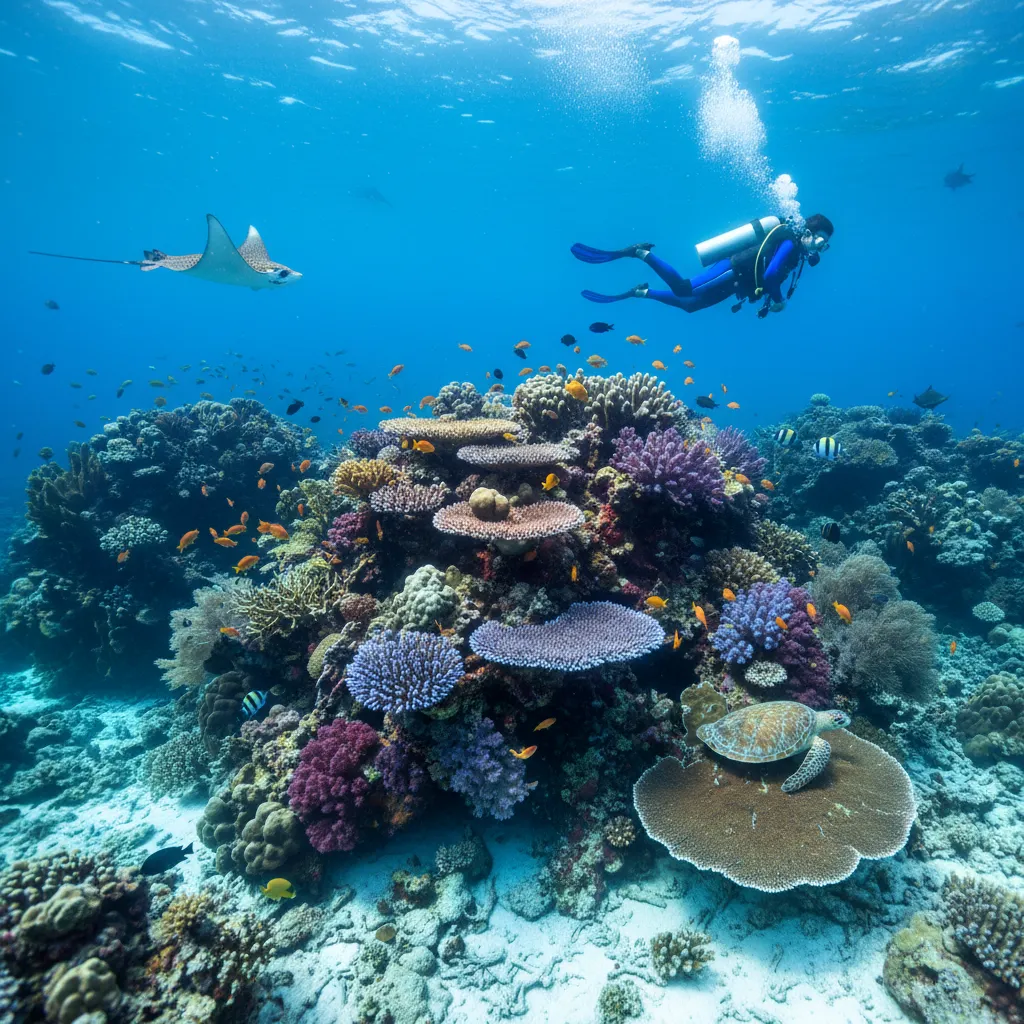
Atauro Island offers some of Timor-Leste's richest diving, with 253+ marine species recorded in the area - including barracuda, blue-spotted stingrays, giant moray eels, sea turtles and sperm whales. Water sits around 30°C.
Atauro Island, sitting pretty in the Banda Sea, really punches above its weight. We love the feeling of remoteness here, like you’ve stumbled onto a well-kept secret. The walls are what we come for, particularly the north and east sides, dropping into deep blue, often with a slight current to keep things interesting. You'll drift past monumental staghorn coral formations and schools of fusiliers so thick they sometimes block the light. During the drier months, roughly May to November, the visibility is often phenomenal, 30 metres plus, making those wall dives even more dramatic. Keep an eye out for the Cleaner Mimic wrasse darting between corals, and the vibrant Midnight Angelfish - they’re everywhere. The sheer number of species here is staggering, a real testament to Timor-Leste's commitment to marine conservation. We’d suggest staying a few days on the island itself; the evenings are quiet, just the sound of the ocean, and it gives you more time to explore those less-frequented sites.
Atauro Island Dive Site Map
Dive sites and dive centres in Atauro Island
Atauro Island Dive Sites
5 dive sites in Atauro Island
Adara
Adara feels like Atauro’s showpiece, and for good reason. From the moment you roll in, you’re looking at a reef wall that drops beyond 30 metres, absolutely plastered with hard corals. Not just a few patches, but vast, healthy tables and branching formations. We love to take our time here, drifting along with the wall on our left, scanning the blue for the bigger pelagics that sometimes cruise past. It’s the fish life that really sets Adara apart. We’ve seen more butterflyfish species here than almost anywhere else, with the Redfin and Cross-hatch standing out. Keep an eye out for enormous schools of Bicolour Parrotfish too, chomping their way across the reef, and the more unusual Japanese Parrotfish. Down deeper, around 20 metres, the light gets beautiful, filtering through the soft corals, and that's often where we spot the Indian Ocean oriental sweetlips hanging out under ledges. It’s an intermediate dive, currents can pick up, but that usually brings in more action.
Alor
Okay, so you’re looking at Atauro, specifically the Alor site. It's not one of those mega-famous spots, which, for us, is half the appeal. What you’ll find here are healthy reefs, a good spread of critters, and crucially, fewer divers bumping elbows with you. We’ve had some truly tranquil dives here, just following the contours of the reef, spotting everything from the usual reef fish to some cool nudibranchs if you keep your eyes peeled. If you appreciate a relaxed pace and aren’t chasing that one specific bucket-list animal, Alor offers a solid, unhurried dive experience.
Barry's Place
Barry's Place is where we head when we want to slow down and really look. It’s a muck dive, pure and simple, but don't let the "mud" put you off. This isn't a colourful reef; it’s a treasure hunt across silty slopes and isolated rubble patches, perfect for intermediate divers who appreciate the small stuff. We find the 5-25m depth range just right for long bottom times. Visibility can vary, particularly after rain, but we've still found plenty to keep us occupied even in murkier conditions. Our favourite find here, without fail, are the pygmy seahorses, tucked away on tiny gorgonian fans – you'll need a good guide and a sharp eye. Nudibranchs are everywhere, in every colour and shape imaginable, and we’ve spent entire dives just tracking their trails. Keep an eye out for cuttlefish, too; they often materialise from the gloom. It's a site that rewards patience and a keen interest in macro life. Bring your macro lens and prepare to get properly lost in the details.
Kal's Dream
Kal's Dream, off Atauro, has seen some talk from the liveaboard crowd lately, saying it’s not quite what it used to be. Still, we’ve found it reliably delivers a vibrant dive. You’ll usually find yourself surrounded by a good number of fish species, schooling up over decent coral formations. It’s a colourful spot, uncrowded, which is a big part of its charm. If you’re looking for a relaxed dive with consistent fish action and few other divers, it’s a solid pick.
Whale Shark Alley
Whale Shark Alley, off Atauro, isn’t just a name. It’s a promise, often delivered. We’re talking about a serious channel here, dropping sharply from ten metres down to forty, a deep blue highway for the big fellas. During migration season, typically around October to December, the chances of a whale shark encounter spike dramatically. It's not guaranteed, nothing in diving ever is, but we’ve seen them cruise through with mouths agape, filters working overtime. This site suits advanced divers. The current can be fierce, sweeping you along, so good buoyancy and comfort in drift conditions are essential. Even without a whale shark, the sheer volume of fish here is impressive. Schools of beautiful fusiliers shimmer so thick they momentarily block the light, a silver curtain parting to reveal parrotfish and surgeonfish going about their business. Look closely in the nooks and crannies of the channel walls for smaller residents like Diana's Hogfish or the vibrant Sunburst Butterflyfish. We always find ourselves staring into the blue here, a sense of anticipation hanging in the water. It’s a proper deep channel dive, and when the sharks show up, it's pure magic.
Atauro Island Dive Centres
2 dive shops and operators in Atauro Island
Ocean Wildlife in Atauro Island
253 species recorded in Atauro Island
Atauro Island Daylight & Sunrise/Sunset
Sunrise and sunset times for Atauro Island, calculated from coordinates
Today - Sunday 11 October
Sunrise
05:19
Sunset
17:34
Daylight
12h 15m
Golden Hour
17:06
First light (dawn) at 04:58 · Last light (dusk) at 17:55
Monthly Averages
| Month | Sunrise | Sunset | Daylight |
|---|---|---|---|
| Jan | 05:33 | 18:06 | 12h 33m |
| Feb | 05:43 | 18:05 | 12h 22m |
| Mar | 05:44 | 17:54 | 12h 9m |
| Apr | 05:42 | 17:38 | 11h 56m |
| May | 05:44 | 17:29 | 11h 45m |
| JunShortest | 05:51 | 17:30 | 11h 39m |
| Jul | 05:55 | 17:36 | 11h 41m |
| Aug | 05:50 | 17:40 | 11h 50m |
| Sep | 05:34 | 17:37 | 12h 3m |
| OctNow | 05:18 | 17:34 | 12h 17m |
| Nov | 05:10 | 17:39 | 12h 29m |
| DecLongest | 05:17 | 17:53 | 12h 36m |
Times are approximate local times based on longitude. Actual times may vary slightly depending on the exact timezone observed in Atauro Island.
Where to Stay near Atauro Island
Prices from Booking.com. We may earn a commission at no extra cost to you.
Marine Protected Areas near Atauro Island
6 protected areas near Atauro Island - please respect local regulations when diving
Behau
Lamsanak
Suco de Vila
Batugadé
Lagoa Tasitolu
Area Mangal Hera
Getting to Atauro Island
Dili
Oecussi-Ambeno
Suai
Plan & book
Ways to dive Atauro Island, from day trips to liveaboards.
Day trips & courses
via GetYourGuideGuided dives, courses and snorkel trips with instant booking.
Find dive trips in Atauro IslandPlaces to stay
via Booking.comHotels and dive resorts near Atauro Island.
Search stays in Atauro IslandDive insurance
Most travel insurance excludes or limits scuba. Check what you need before you go.
Dive insurance explainedPartner links: we may earn a commission if you book, at no extra cost to you. How we make money