Diving with Saltwater Crocodiles
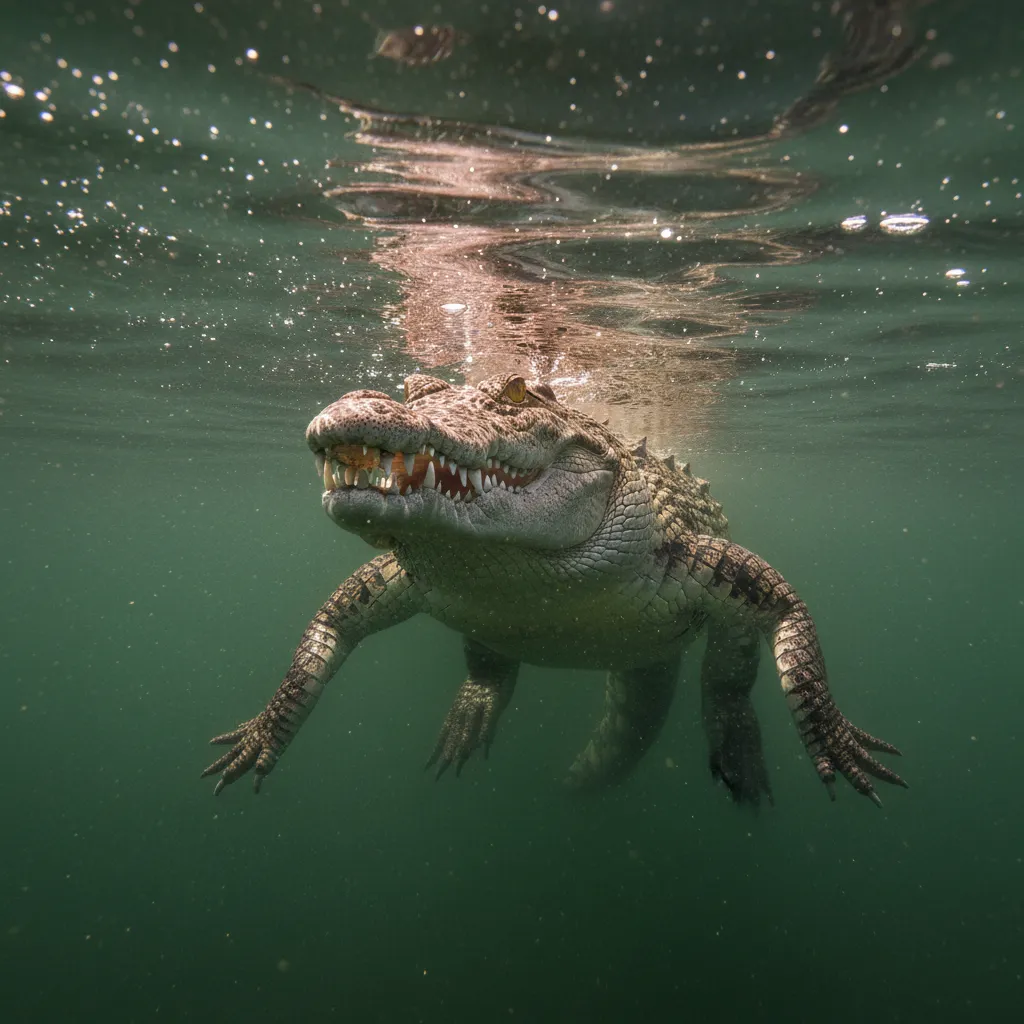
Diving with crocodiles is the ultimate adrenaline encounter in the underwater world - an experience that sits at the extreme edge of wildlife diving and demands a combination of expert guidance, iron nerves, and profound respect for one of Earth's most formidable apex predators. The saltwater crocodile (Crocodylus porosus), the largest living reptile on the planet, can exceed six metres in length and weigh over a tonne. In the warm, gin-clear waters of Cuba's Jardines de la Reina and Mexico's Banco Chinchorro, the closely related American crocodile (Crocodylus acutus) has become the star of a carefully managed ecotourism industry that proves these ancient reptiles can coexist with respectful human observers. Unlike their freshwater relatives, American crocodiles in these protected marine environments have become remarkably tolerant of divers, and decades of responsible interaction have established protocols that allow extraordinary close-range encounters. The experience of hovering in shallow water as a three-metre crocodile glides silently toward you, its prehistoric silhouette filling your field of vision, its slit-pupil eyes locking onto yours with an intelligence that predates the dinosaurs, is unlike anything else in diving. These animals have survived virtually unchanged for 200 million years, and to share their world - even briefly - is a humbling reminder of nature's enduring power. Crocodile diving is not for everyone, but for those with the courage and curiosity to try it, it ranks among the most extraordinary wildlife encounters available to any diver on Earth.
Best Time to See Saltwater Crocodiles
Jardines de la Reina, Cuba: the crocodile diving season runs from approximately November to July, coinciding with the liveaboard season. Encounters are most reliable from December to April when crocodiles are frequently seen in the mangrove channels. Water temperatures range from 24-29 degrees Celsius. Access is exclusively by liveaboard, and spaces book up well in advance due to strict visitor limits in the marine park. Banco Chinchorro, Mexico: encounters are possible year-round but most operators run trips from November to June, avoiding the hurricane season. The best conditions are typically from February to May with calm seas and good visibility in the lagoon. Water temperatures are 25-29 degrees Celsius. Day trips depart from Mahahual or Xcalak. Palau: saltwater crocodile sightings are opportunistic and not offered as a dedicated dive experience. Crocodiles are occasionally encountered in mangrove areas and river mouths. Northern Australia has the world's largest saltwater crocodile population but no organised dive-with-crocodiles tourism due to the higher-risk nature of encounters with this larger, more aggressive species.
How to Dive with Saltwater Crocodiles
Jardines de la Reina (Gardens of the Queen) in Cuba is the birthplace of crocodile diving and remains the gold standard destination. This remote, pristine marine park - accessible only by liveaboard - is home to a population of American crocodiles that have been interacting with divers since the early 2000s under the guidance of pioneering operators. Encounters typically occur in shallow mangrove channels and lagoons in 1-3 metres of water, often while snorkelling rather than scuba diving. The crocodiles here are wild but habituated to human presence, and experienced guides who know individual animals by sight manage every encounter. Banco Chinchorro Atoll in Mexico, a remote biosphere reserve off the southern Yucatan coast, is the other premier destination. American crocodiles patrol the shallow lagoon inside the atoll, and specialised operators run day trips from Mahahual or Xcalak. Encounters are conducted in waist-deep water with snorkel gear under strict guide supervision. Palau in the western Pacific is one of the few places where saltwater crocodiles (Crocodylus porosus) have been encountered underwater, though these sightings are opportunistic rather than part of an organised dive program. The critical constant across all crocodile diving is expert local guidance - this is emphatically not something you attempt independently. Operators spend years building relationships with specific animals and developing safety protocols. Group sizes are kept very small, typically 2-4 divers, and every aspect of the encounter is managed by the guide.
Is it Safe to Swim with Saltwater Crocodiles?
Crocodile diving carries inherent risk that must be acknowledged honestly. Both saltwater and American crocodiles are apex predators fully capable of killing humans, and fatal attacks on people occur every year in various parts of the world. The relative safety of organised crocodile diving encounters in Cuba and Mexico is the result of decades of careful protocol development, habituated animal populations, expert guides, and strict operational standards - not because crocodiles are inherently safe to be around. Always follow your guide's instructions without exception. Never approach a crocodile from behind or above, which mimics a predatory approach. Do not make sudden movements, splash on the surface, or create vibrations that could trigger a feeding response. Never dive alone with crocodiles. The encounters happen in very shallow water specifically so that divers can stand up and exit quickly if an animal's behaviour changes. Guides carry safety equipment and know how to read crocodilian body language - subtle cues like jaw gaping, body inflation, or rapid tail movements indicate agitation. If your guide signals to exit the water, do so immediately and without hesitation. Crocodile diving should only be attempted with established, reputable operators with extensive track records. This is one area of wildlife diving where cutting corners on cost or experience could have fatal consequences.
Conservation Status
Saltwater crocodiles were hunted to the brink of extinction across much of their range during the 20th century for their valuable skin. Strict protection and farming programs have allowed populations to recover dramatically in Australia, where they are now abundant across northern coastal regions. The American crocodile, once endangered in the United States, has recovered in southern Florida and maintains healthy populations throughout the Caribbean and Central America. However, both species face ongoing threats from habitat loss - particularly destruction of coastal mangrove forests that serve as critical nursery habitat - human-wildlife conflict as expanding coastal development brings people into crocodile territory, and illegal hunting in parts of Southeast Asia and Africa. Jardines de la Reina's protected status as a marine park has been instrumental in maintaining the healthy crocodile population that supports its ecotourism industry, demonstrating that live crocodiles are worth far more to local economies than dead ones. The revenue generated by crocodile diving in Cuba and Mexico provides direct economic incentives for conservation, funding park management and providing livelihoods for local communities. Every diver who has a safe, transformative encounter with a wild crocodile becomes an ambassador for the conservation of these misunderstood apex predators and the mangrove ecosystems they depend on.
Recommended Equipment
A wide-angle or fisheye lens is essential for crocodile photography - encounters happen at very close range in shallow water, and you need the widest possible field of view to capture the animal's full body. A dome port produces dramatic over-under split shots showing the crocodile half-submerged - these are the iconic crocodile diving images. Strobes are important for illuminating the textured, armoured skin and bringing out the golden-green eye colour, but use them judiciously - avoid rapid continuous firing directly into the animal's eyes. For video, a wide-angle action camera (GoPro or similar) on a pole provides a low-profile, non-threatening camera presence and allows you to get the camera close while keeping your body at a comfortable distance. Most encounters occur in snorkel gear rather than scuba - the shallow depth, the need for quick exits, and the fact that bubble noise can alter crocodile behaviour all favour snorkelling. A full-length rash guard or thin wetsuit provides sun protection and a psychological (if not physical) barrier. Avoid wearing shiny jewellery or watches that could attract curiosity from the crocodiles.
Browse dive equipmentFrequently Asked Questions
Is it safe to dive with crocodiles?
Organised crocodile diving with reputable operators in Cuba and Mexico has an excellent safety record spanning over two decades. The encounters use habituated American crocodile populations, expert guides who know individual animals, strict protocols, and shallow-water settings that allow rapid exit. However, crocodiles are apex predators and inherent risk exists. This activity should only be attempted with established operators, never independently.
Where can you dive with crocodiles?
The two premier destinations are Jardines de la Reina (Gardens of the Queen) in Cuba, accessed by liveaboard, and Banco Chinchorro Atoll in Mexico, accessed by day trip from Mahahual or Xcalak. Both feature American crocodiles (Crocodylus acutus) that have become habituated to human presence through years of carefully managed ecotourism.
What species of crocodile do divers encounter?
The American crocodile (Crocodylus acutus) is the species encountered at organised dive destinations in Cuba and Mexico. It is generally considered less aggressive than the saltwater crocodile (Crocodylus porosus) found in Australia and Southeast Asia, though it is still a large, powerful predator that demands respect. Adult American crocodiles in these locations typically range from 2-4 metres in length.
Do you scuba dive or snorkel with crocodiles?
Most crocodile encounters are conducted while snorkelling in very shallow water (1-3 metres deep). This is by design - shallow water allows divers to stand up and exit quickly if needed, and the absence of scuba bubbles creates a calmer interaction. Some operators offer shallow scuba encounters in specific conditions, but snorkelling is the standard and often preferred approach.
How close do you get to the crocodiles?
Under expert guide supervision, encounters can be remarkably close - sometimes within 1-2 metres. The crocodiles in Cuba and Mexico are habituated to human presence and often approach divers of their own accord. Guides manage the distance and will signal divers to move back if an animal shows any signs of agitation. The close-range encounters produce extraordinary photography opportunities.