Snorkeling in the Rip
Why dive here
With 108+ marine species recorded in the area - including barracuda, blacktip reef sharks, grey reef sharks, manta rays and mobula rays (devil rays) - Snorkeling in the Rip offers some of Christmas Island's richest drift diving. Water ranges 27-29°C, warmest February, March, April.
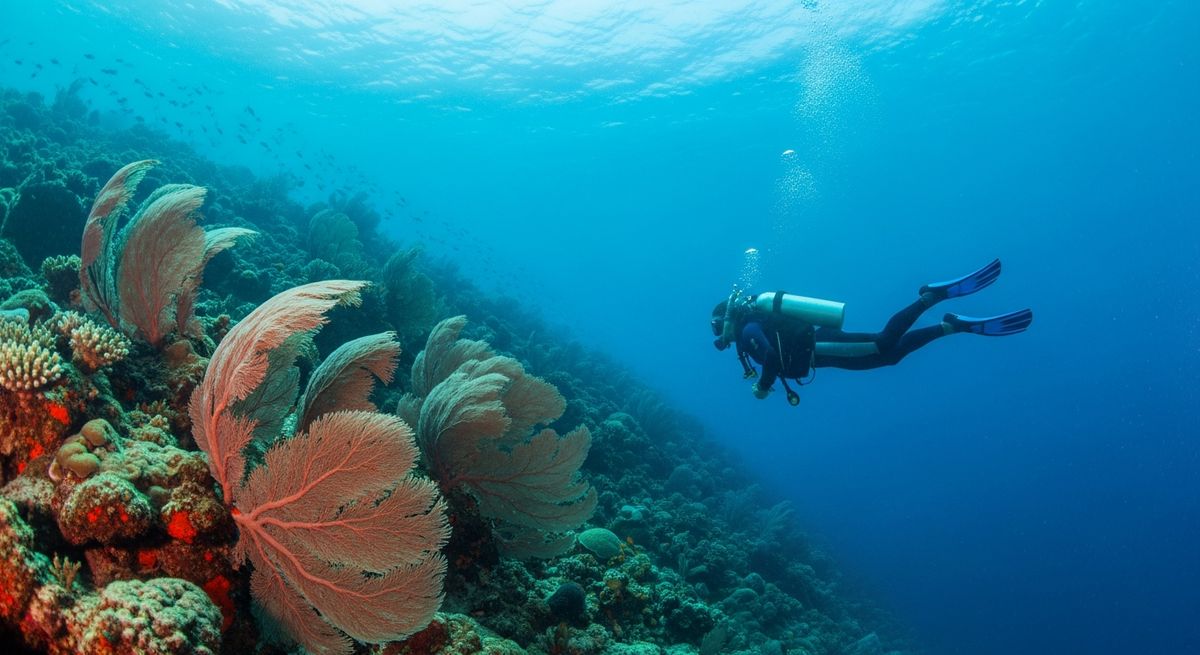
The Rip on Christmas Island isn't a deep dive, it's a surface spectacle. We love it because it’s where the island's unique geology really puts on a show, right at eye-level. You get these massive, ancient coral bommies, smoothed by millennia of surge, creating a kind of labyrinth. Sunlight filters through the gaps, illuminating schools of parrotfish and cardinalfish zipping between the shadows. It's an ideal spot for anyone who enjoys drifting and observing the intricate world just beneath the surface. We always find ourselves lingering around the bigger mushroom-shaped corals, watching the Spotted Groupers eye us from their ledges. The currents can get a bit frisky here, so pick a calmer day, ideally when the tide isn't ripping too hard. Keep an eye out for the Red-footed Boobies fishing overhead; they’re pretty fearless and will often dive right near you. It's not about big pelagics here, but about the sheer density and diversity of reef life in a dynamic, shallow environment – a genuine privilege to witness up close.
Safety Notes
Drift dive - carry a surface marker buoy (SMB) and stay with your group. Brief the current direction before entry.
Strong currents typical this month (avg 33 cm/s). Good buoyancy control essential.
Reviews for Snorkeling in the Rip
Conditions
Ocean conditions, forecast and tides for Snorkeling in the Rip
Snorkeling in the Rip Ocean Conditions
Monthly averages for Snorkeling in the Rip, sourced from Open-Meteo marine data + Copernicus Marine (EU) - nearest station: Open-Meteo marine grid (-10.45, 105.65) (0km away)
October Averages
Sea Temperature
27°C
81°F · Range: 25.6–28.3°C
Current Speed
32.89 cm/s
Direction: W (289.5°)
Chlorophyll-a
0.213 mg/m³
Clear water
Salinity
34.19 PSU
Based on 4 years of monitoring data · Data sources: Open-Meteo marine data + Copernicus Marine (EU)
Plan & book
Ways to dive Christmas Island, from day trips to liveaboards.
Day trips & courses
via GetYourGuideGuided dives, courses and snorkel trips with instant booking.
Find dive trips in Christmas IslandPlaces to stay
via Booking.comHotels and dive resorts near Christmas Island.
Search stays in Christmas IslandDive insurance
Most travel insurance excludes or limits scuba. Check what you need before you go.
Dive insurance explainedPartner links: we may earn a commission if you book, at no extra cost to you. How we make money
Where to Stay near Snorkeling in the Rip
Prices from Booking.com. We may earn a commission at no extra cost to you.