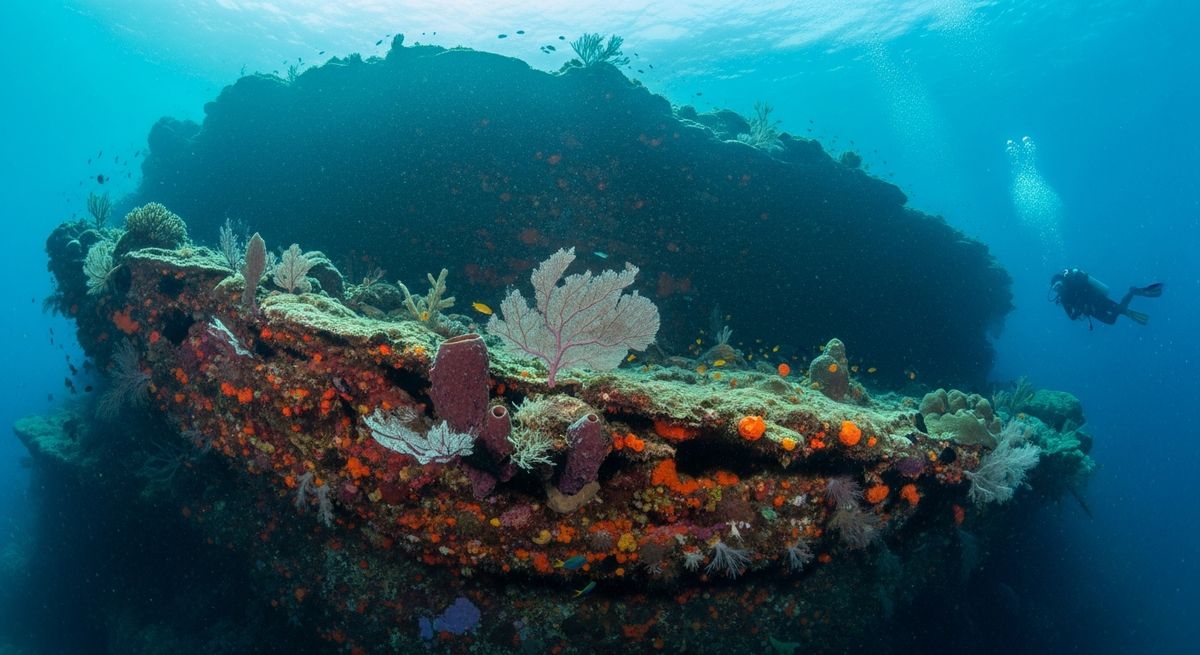
Craters Edge - Soufriere-Scotts Head Marine Reserve

We’ll be honest, Hillarys Marina Wall isn’t going to blow anyone away with vibrant corals or dramatic drop-offs, but we think it’s a brilliant little spot for a relaxed shallow dive. If you head in near the boat ramp, you’ll find the wall pretty quickly. It’s mostly rocks and seagrass, and yes, sometimes the visibility drops thanks to all that suspended seagrass, but don’t let that put you off. Our favourite thing about Hillarys is how sheltered it is. Even on a choppy day outside the marina, it’s usually calm here, making it perfect for beginners or anyone wanting an easy dive without much fuss. We’ve had some surprisingly good encounters here: Southern Eagle Rays gliding over the sand, playful octopus peeking from rocky crevices, and those big shoals of baitfish shimmering when the light hits them just right. We’d suggest going early in the morning before the boat traffic picks up; it just feels a bit more peaceful then. Keep an eye out for the European fan-worms too, they add a splash of colour to the rocks. It’s a great spot for an hour underwater, pottering around the wall, seeing what’s lurking in the weed.

Location
Soufriere-Scotts Head Marine Reserve, Dominica, Caribbean
Coordinates
15.216700, -61.377500
Type
wall

Marine Protected Area: Soufriere/Scott's Head

Best Time to Dive in Soufriere-Scotts Head Marine Reserve

The warmest water temperatures in Soufriere-Scotts Head Marine Reserve occur in January, averaging 27.2°C. The coolest conditions are in December at 27.2°C.

Monthly Water Temperatures

  • January: 27.2°C (air: 24.7°C)
  • February: 27.2°C (air: 24.5°C)
  • March: 27.2°C (air: 24.7°C)
  • April: 27.2°C (air: 25.5°C)
  • May: 27.2°C (air: 26.6°C)
  • June: 27.2°C (air: 26.8°C)
  • July: 27.2°C (air: 26.6°C)
  • August: 27.2°C (air: 26.9°C)
  • September: 27.2°C (air: 27.3°C)
  • October: 27.2°C (air: 27.0°C)
  • November: 27.2°C (air: 26.1°C)
  • December: 27.2°C (air: 25.2°C)

Nearby Dive Sites in Soufriere-Scotts Head Marine Reserve

Nearest Dive Centres to Craters Edge

Marine Life in Soufriere-Scotts Head Marine Reserve

Home to 271 recorded species including 215 reef fish, 24 hard corals, 14 whales & dolphins, 3 other, 3 sea urchins, 3 sharks & rays.

Notable Species

Recommended Packing List for Craters Edge

Based on average water temperature of 27.2°C.

  • Shorty or Rashguard - warm 27°C water needs minimal exposure protection
  • Mask - essential for every dive
  • Fins
  • BCD - buoyancy compensator
  • Regulator - your most safety-critical piece of gear
  • Dive Computer - tracks depth, time, and NDL
  • Surface Marker Buoy (SMB) - essential for boat pickups
  • Dive Torch - useful for crevices and colour at depth
  • Underwater Camera - capture your diving memories

Frequently Asked Questions

What is the typical depth range for diving at The Crater dive site in Mauritius?
The data provided describes Craters Edge in Dominica, not The Crater in Mauritius. At Craters Edge, divers can expect a maximum depth of 25m, exploring a spectacular pinnacle that is the last divable point of a volcanic crater.
What kind of marine life and coral formations can divers expect to see at The Crater dive site?
The provided data is for Craters Edge in Dominica, not The Crater in Mauritius. At Craters Edge, divers can expect to see a vibrant array of marine life, including schools of bar jacks, yellowtail snappers, creole wrasse, horse eye jacks, and occasionally tuna. Black margates and barracuda are also common, alongside walls full of sponges and gorgonians. For more details on marine species, visit our wildlife database.
Is The Crater dive site suitable for beginner divers, or is it considered challenging?
The data provided pertains to Craters Edge in Dominica, not The Crater in Mauritius. Craters Edge is considered an intermediate difficulty dive site, offering a thrilling experience for divers with appropriate certification and experience.
When is the best time of year to dive at The Crater in Mauritius for optimal conditions?
The data provided describes Craters Edge in Dominica, not The Crater in Mauritius. The provided context does not include information on the best time of year to dive at Craters Edge for optimal conditions. For general guidance on dive seasons, you might consult our when to dive section.
What scuba diving certifications are required to dive at The Crater in Mauritius?
The data provided is for Craters Edge in Dominica, not The Crater in Mauritius. While specific certification requirements are not detailed, given its intermediate difficulty, divers should possess certifications beyond entry-level, such as Advanced Open Water or equivalent, to safely enjoy this site.
What are the typical current and visibility conditions at The Crater dive site?
The data provided describes Craters Edge in Dominica, not The Crater in Mauritius. At Craters Edge, divers can typically expect excellent visibility, averaging 24m. The provided information does not specify typical current conditions for this site.