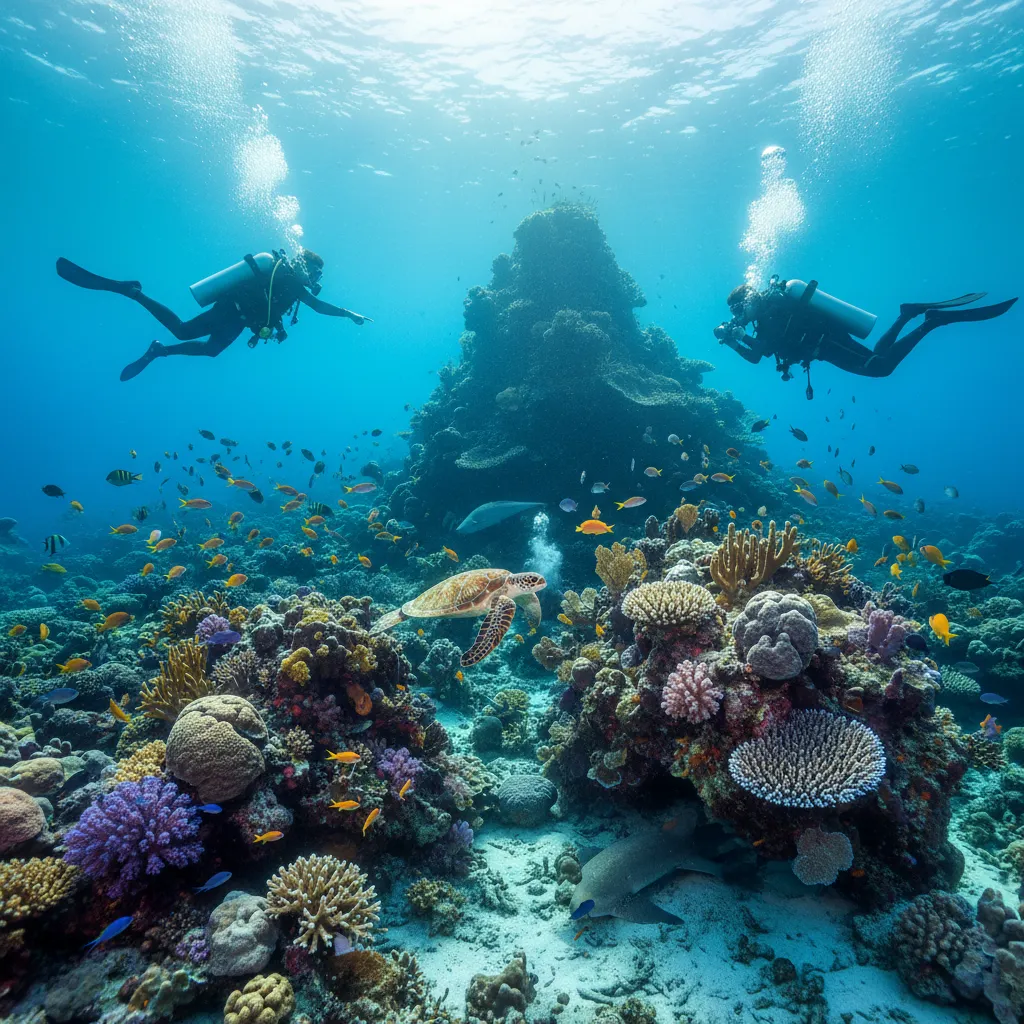
Diving in Soufriere-Scotts Head Marine Reserve
Why dive here
Soufriere-Scotts Head Marine Reserve offers some of Dominica's richest diving, with 266+ marine species recorded in the area - including barracuda, dolphins, dwarf minke whales, humpback whales and nurse sharks. Water ranges 27-30°C, warmest August, September, October.
Dominica's Soufriere-Scotts Head Marine Reserve is just… different. We love how the island’s volcanic geology extends right into the sea here, creating a dramatic topography of pinnacles, sheer walls, and even a few bubbly hot springs. It’s got a real frontier feel, less manicured than some other Caribbean spots, which really appeals to us. Our favourite dives often involve exploring the dramatic drop-offs around Scotts Head, where the Atlantic meets the Caribbean. You’ll feel the subtle shift in current, then descend into a world of towering volcanic structures draped in coral, often with visibility stretching 20-30 meters. Keep an eye out for Apricot Bass tucked into crevices, and we’ve seen countless Banded Blennies darting among the rocks. The muck diving, particularly closer to Soufriere, is fantastic for macro lovers. We’d suggest going early in the morning for the best chance to spot Speckled Worm Eels or the elusive Diamond Lizardfish poking out of the sand. Strong currents aren't common inside the reserve, but always check conditions if you're venturing further out.
Soufriere-Scotts Head Marine Reserve Dive Site Map
Dive sites and dive centres in Soufriere-Scotts Head Marine Reserve
Soufriere-Scotts Head Marine Reserve Dive Sites
24 dive sites in Soufriere-Scotts Head Marine Reserve
Addie
Addie is less of a dive and more of an interactive history lesson, sitting right at the surface. This old hulk, a beached fishing vessel, is perfect for a snorkel or even just wading out to explore. The exposed parts of the wreck are covered in an interesting mix of small corals and sponges, with juvenile fish darting in and out of the rusted metal. It’s a gentle spot, ideal for kids or anyone looking for a relaxed surface experience after a deeper dive nearby, or just a quiet afternoon discovering a different kind of marine habitat.
Champagne
Champagne is an interesting spot, a little different from your usual Caribbean reef. The bubbles are definitely the draw, fizzing up from volcanic vents in the shallows around 5m. It's a surreal feeling, swimming through warm water that tickles like soda. Beyond the novelty, the reef itself has some decent pockets of coral, and if you head out onto the sand flats, we've had good luck finding things like flying gurnards and various nudibranchs. We’ve even spotted squid hanging in the shallows near the bubbles before. It's an easy dive, good for a relaxed afternoon, and the bubbles make for a rather pleasant safety stop.
Champagne Reef
Champagne Reef, off Dominica's southwest coast, delivers exactly what the name promises: warm, effervescent bubbles rising through the reef. It’s a gentle dive, topping out around 15 metres, making it perfect for newer divers or those who just want to chill out and enjoy something a bit different. We’ve seen yellowhead jawfish darting in and out of their burrows here, and the black coral looks particularly striking against the volcanic rock. While you’re unlikely to spot a whale shark, the sheer novelty of swimming through naturally warmed, bubbling water makes this a fun, easygoing dive.
Condo
Condo offers a solid dive, especially if you appreciate the little things. It’s essentially a massive volcanic rock, supposedly blasted there when Dominica formed, now sitting on a sandy slope. We like exploring the countless nooks and crannies in the rock itself; it’s a reliable spot for spotting lobsters and various crabs peeking out. Then you’ve got the expansive sandy flats surrounding it, home to garden eels swaying in the slight current. Maximum depth is about 22m, so it’s a relaxed profile. Keep an eye out for stingrays gliding over the sand and schools of grunts hanging around the rock.
Craters Edge
Craters Edge is exactly what it sounds like, the very tip of an old volcanic caldera, jutting out into deeper water. We like it for the sheer volume of schooling fish that gather here; think bar jacks, yellowtail snapper, and creole wrasse moving like a single organism. Keep an eye out for larger pelagics like tuna or barracuda cruising by, especially on the deeper side. Down to 25 meters, it’s a dive that rewards looking up and out into the blue, though the wall itself has some interesting sponges and gorgonians if you manage to pull your gaze away from the action. It's a fairly easy drift, a good pick if you enjoy a lively reef with plenty of movement.
Danglebens Pinnacles
Danglebens Pinnacles gives you three distinct formations pushing up from a sandy seabed, each one draped in big barrel sponges and some really photogenic gorgonians. We’ve found seahorses tucked away here more than once, so keep those eyes peeled. Dropping to 30 meters, it’s a good intermediate dive, but currents can pick up, so watch the conditions. It's a solid choice for macro fans and those who appreciate dramatic reef structure over sprawling gardens.
Danglebens Pinnacles
Danglebens Pinnacles gives you that classic Caribbean volcanic topography. We’re talking five distinct pinnacles, dropping down from about 12 meters. It’s open water right from the start, so a surface current isn't uncommon, but once you're down, the structure provides some shelter. We often spot schools of bait fish shimmering over the reef, which in turn draws in the barracudas and the occasional turtle. It's a site where you can really appreciate the sponge life, and if you’re into hamlets, especially the hybrids, this is a prime spot.
Dive Dominica
Dropping in at Dive Dominica, you’re right in the heart of the Soufriere-Scotts Head Marine Reserve. We’ve found it to be a pretty reliable spot for spotting schooling horse-eye jacks, often hanging out in the bluer water just off the reef. If you’re lucky, you might even catch a glimpse of one of the larger pelagics passing through, like a melon-headed whale, though that's always a bit of a lottery. The topography here is interesting, with some nice swim-throughs and plenty of little ledges to peer under for candy basslets and the occasional cowfish. It's a solid dive for those who appreciate consistent reef activity and a chance at bigger marine life without extreme currents.
L’Abym North
L'Abym North continues the dramatic wall known from its southern sibling, but with a gentler feel. It’s a great spot for critters, the macro life here often steals the show. We’ve found seahorses tucked into crevices and frogfish blending with sponges on the wall, along with hamlets patrolling their territory. This site is quite protected, close to shore, making it comfortable for all experience levels, with a maximum depth of around 20 metres. Visibility usually sits around 22 metres, making it easy to spot the occasional turtle gliding past.
Lost Horizon
Lost Horizon, in Dominica's Soufriere-Scotts Head Marine Reserve, is one we always enjoy, though it takes a little more effort. Forget about a mooring here, as it's been gone for years. Your boat will drop you, and you'll kick towards the Suburbs mooring, which isn't a bad way to start. It’s got a bit of everything, from schools of creole wrasse and black durgons swirling around you to horse-eye and bar jacks making their presence known. As you near the Suburbs, black margates and schoolmasters appear. Keep an eye out for yellowhead jawfish in the sand patches. We've found the coral here healthy, and the canyon a striking feature. Maximum depth is around 24m, and on a good day, visibility hits 8-10m, which is more than enough to appreciate the mix of life. It’s a good choice for divers who appreciate a site less frequently visited.
Missing Link
The Missing Link in Dominica’s Soufriere-Scotts Head Marine Reserve sits, quite literally, between Scotts Head Pinnacle and the Drop Off. It’s a good spot, one we often suggest for a solid, varied dive. We usually drift along the wall, letting the current do the work. You’ll find things like Sawcheek Cardinalfish tucked into crevices and, if you keep an eye on the blue, you might catch a glimpse of a dolphin species – we’ve seen Bridled Dolphins out here before. It's a manageable 20m max, and we often find Candy Basslets and Yellowhead Jawfish hanging out on the shelf. Visibility hovers around 23m, so you get a clear look. It’s a nice pick if you’re after a relaxed drift with chances for both small stuff and a bit of open-water action.
Mountain Top
Mountain Top is one of those Dominica dives that requires a bit of good fortune to access. You need calm seas, basically no wind or strong current, but when it lines up, it’s worth the wait. We’ve found the top of the seamount sits around 17 meters, and the lack of cover means you often find yourself swimming alongside big schools of horse-eye jacks and rainbow runners. It’s a great spot for seeing the bigger picture, with plenty of barracuda lurking, and if there’s a gentle current, the jacks are known to cruise right up close. The site drops to 26 meters, with visibility averaging 21 meters, making it a good choice for divers comfortable in open water with some mild current.
Show all 24 dive sites in Soufriere-Scotts Head Marine Reserve
Soufriere-Scotts Head Marine Reserve Dive Centres
1 dive shop and operator in Soufriere-Scotts Head Marine Reserve
Ocean Wildlife in Soufriere-Scotts Head Marine Reserve
266 species recorded in Soufriere-Scotts Head Marine Reserve
Soufriere-Scotts Head Marine Reserve Daylight & Sunrise/Sunset
Sunrise and sunset times for Soufriere-Scotts Head Marine Reserve, calculated from coordinates
Today - Sunday 11 October
Sunrise
05:57
Sunset
17:49
Daylight
11h 52m
Golden Hour
17:21
First light (dawn) at 05:35 · Last light (dusk) at 18:11
Monthly Averages
| Month | Sunrise | Sunset | Daylight |
|---|---|---|---|
| Jan | 06:36 | 17:54 | 11h 19m |
| Feb | 06:31 | 18:10 | 11h 38m |
| Mar | 06:15 | 18:16 | 12h 1m |
| Apr | 05:53 | 18:20 | 12h 28m |
| May | 05:38 | 18:27 | 12h 49m |
| JunLongest | 05:36 | 18:37 | 13h 1m |
| Jul | 05:43 | 18:41 | 12h 57m |
| Aug | 05:52 | 18:31 | 12h 39m |
| Sep | 05:55 | 18:09 | 12h 14m |
| OctNow | 05:58 | 17:47 | 11h 49m |
| Nov | 06:08 | 17:34 | 11h 26m |
| DecShortest | 06:24 | 17:38 | 11h 14m |
Times are approximate local times based on longitude. Actual times may vary slightly depending on the exact timezone observed in Soufriere-Scotts Head Marine Reserve.
Where to Stay near Soufriere-Scotts Head Marine Reserve
Prices from Booking.com. We may earn a commission at no extra cost to you.
Marine Protected Areas near Soufriere-Scotts Head Marine Reserve
3 protected areas near Soufriere-Scotts Head Marine Reserve - please respect local regulations when diving
Cabrits
Soufriere/Scott's Head
Indian River
Getting to Soufriere-Scotts Head Marine Reserve
Canefield
Fort-de-France
Pointe-à-Pitre
Plan & book
Ways to dive Soufriere-Scotts Head Marine Reserve, from day trips to liveaboards.
Day trips & courses
via GetYourGuideGuided dives, courses and snorkel trips with instant booking.
Find dive trips in Soufriere-Scotts Head Marine ReservePlaces to stay
via Booking.comHotels and dive resorts near Soufriere-Scotts Head Marine Reserve.
Search stays in Soufriere-Scotts Head Marine ReserveDive insurance
Most travel insurance excludes or limits scuba. Check what you need before you go.
Dive insurance explainedPartner links: we may earn a commission if you book, at no extra cost to you. How we make money