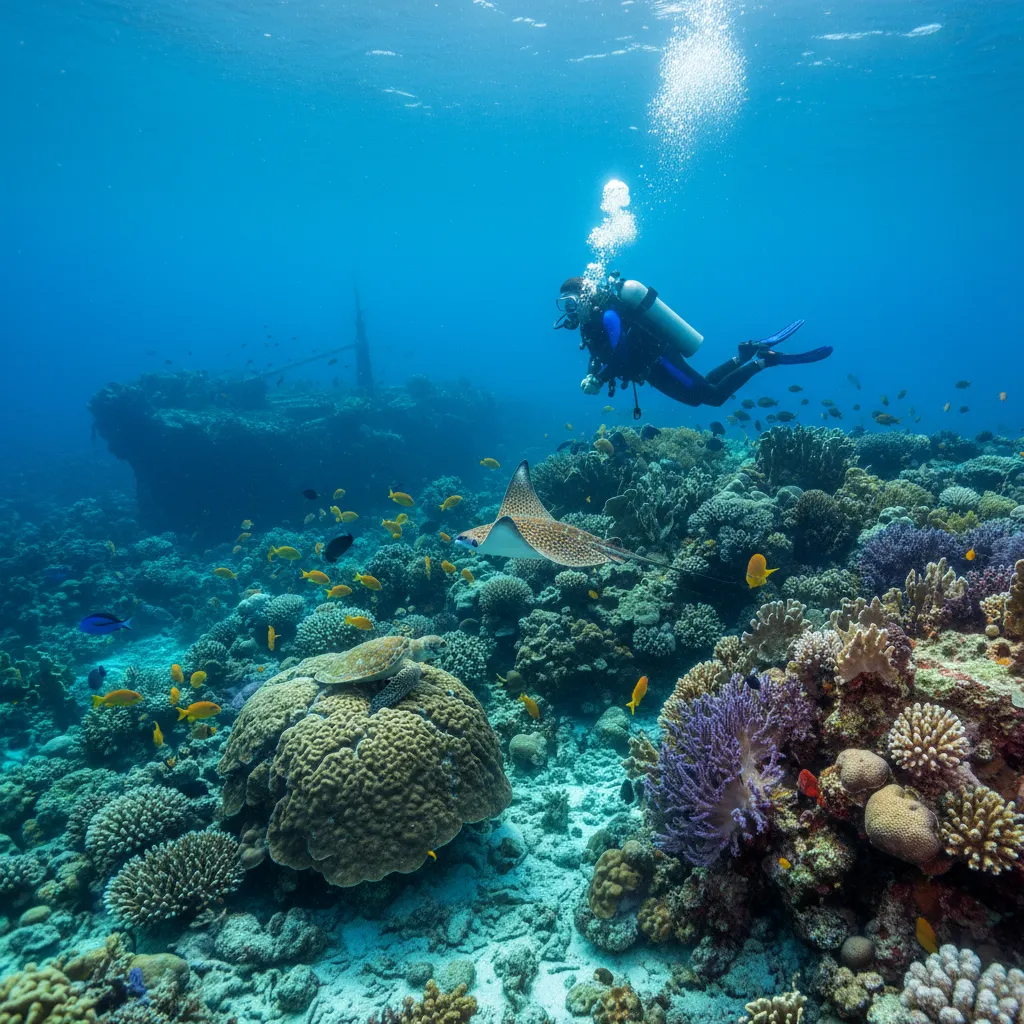
Diving in Montego Bay
Why dive here
Montego Bay offers some of Jamaica's richest diving, with 213+ marine species recorded in the area - including barracuda, orcas, sea turtles, frogfish and mantis shrimp. Water ranges 27-32°C, warmest July, August, September.
Montego Bay gets a bit of a bad rap sometimes, being a busy cruise port, but we think its diving is quietly solid. It’s not going to blow your mind with massive pelagics, but what you do get are a surprising number of small, colourful reef fish in a well-protected marine park. The reefs here are mostly gentle slopes, but there are some nice walls and even a wreck to mix things up. We particularly like the feeling of diving in a protected area; it just feels healthier, you know? Our favourite dives are often the shallower ones, where the light plays beautifully through the gorgonians. You’ll spot plenty of trumpetfish hanging vertically, trying to blend in, and the cheeky little dwarf wrasse darting between coral heads. We’ve had some fantastic encounters with schools of doctorfish, so thick they almost obscure the sun. Visibility usually holds up well, especially in the mornings before the boat traffic picks up. If you're staying in Montego Bay, this is a great option for consistent, pleasant reef diving without long boat rides. Just don’t expect dramatic drop-offs or roaring currents; it’s more about the calm enjoyment of a healthy Caribbean reef.
Montego Bay Dive Site Map
Dive sites and dive centres in Montego Bay
Montego Bay Dive Sites
5 dive sites in Montego Bay
Airport Reef
Airport Reef, Montego Bay, isn't chasing any depth records, but that's precisely why we love it. At a gentle 5-15m, it’s an ideal spot to warm up your fins or introduce a new diver to the Caribbean. The reef system here is a beautiful sprawl of hard corals, punctuated by smaller soft varieties, creating plenty of nooks and crannies. We've spent hours finning along its contours, spotting shy Spaghetti Eels poking from the sand and the surprisingly bold Conklin's Cardinalfish hovering in the shadows. Look closely in the feather plumes for tiny Masked Gobies or the peculiar Monogram Isopods tucked away. You’ll drift past schools of French Grunts, their silver scales flashing, and often find Trumpetfish hanging vertically, camouflaged against gorgonians. It’s a great site for macro enthusiasts who enjoy taking their time. We'd suggest aiming for a morning dive before the day boats arrive; the light is softer, and the reef feels quieter, more intimate. Don't expect dramatic drop-offs, but do expect a relaxed, richly detailed dive where you can truly slow down and observe.
Montego Bay
Montego Bay lies along the northwest coast of Jamaica. The reef is colorful and populated with a variety of fish and lots of lobster. This dive site is accessible from shore and a great site for beginning divers. Maximum depth: 18m. Average visibility: 19m. You will see typical Caribbean fish species such as angelfish, parrotfish, snapper, butterflyfish, triggerfish, and much more.
The Point
The Point is a solid Montego Bay dive, particularly if you’re into dramatic wallscapes. We usually drop in around 12 meters, right on the edge of the wall, and just drift down. The main event here is that sheer drop-off, plunging to 40 meters, studded with big barrel sponges and some really impressive boulder brain coral formations. It feels like swimming along the side of a submerged mountain range. Visibility is generally good, and we often spot French grunts hanging out in big schools near the top of the wall. Keep an eye out for those smaller critters too; we’ve had some great luck finding yellow jawfish peeking out of their burrows and the occasional dwarf blenny tucked into a crevice. It’s an intermediate dive, mainly because of the depth and the potential for a mild current, but it’s not particularly challenging. We’d suggest going in the morning; the light filtering down the wall is just something else. Definitely a standout for the geology alone.
VISCAYA
The Viscaya in Montego Bay is a wreck that really tells a story, even if it’s a short dive. This Spanish cruiser, sunk back in 1898 during the Spanish-American War, sits in just 5 metres of water. We love that it’s so shallow; it makes for a super relaxed dive, perfect for extending your bottom time and just soaking it all in. You won't find huge intact sections, but the scattered debris field gives you a real sense of its former scale. Large plates of hull, twisted metal, and the occasional rib jut out from the sandy seabed. Look closely and you’ll spot a surprising amount of life hunkering down – parrotfish graze on algae, often darting between the rusty plates, and we frequently see small schools of grunts schooling around the larger pieces. Our favourite part is looking for the tiny critters, like blennies peering out from crevices or little crabs scuttling amongst the growth. It’s a gentle exploration, a historical footnote you can glide right over. This site is brilliant for photographers who want to spend time composing shots without deep-water time limits, and it's a calm spot for newer divers to experience a wreck without any strong currents or intimidating depths.
Widowmaker's Cave
Forget what you think you know about Montego Bay diving. Widowmaker’s Cave isn’t just another pretty reef. This is a proper, exhilarating swim-through, starting around 15 metres and bottoming out at 25 metres. We love dropping down into that main chamber, feeling the temperature dip a touch, and watching the light shift from a bright Caribbean blue to a more muted, ethereal glow. Your eyes need a moment to adjust, then the sheer scale of the place hits you. Schools of silversides often swirl near the entrance, a shimmering curtain you push through. Look closely and you’ll spot lurking tarpon, huge, silver torpedoes just hanging in the darkness. We’ve seen everything from the tiny, shy conchfish to chunky butter hamlets tucked into crevices. Keep an eye out for morays too – the Caribbean chestnut is a regular. Navigating the cave system requires good buoyancy and a calm demeanour; it’s not for beginners. It’s a dive for those who appreciate the drama of an overhead environment, the thrill of exploration, and the unique marine life that thrives in these sheltered spaces.
Montego Bay Dive Centres
No dive centres listed in Montego Bay yet. Browse all dive centres.
Ocean Wildlife in Montego Bay
213 species recorded in Montego Bay
Montego Bay Daylight & Sunrise/Sunset
Sunrise and sunset times for Montego Bay, calculated from coordinates
Today - Sunday 11 October
Sunrise
06:04
Sunset
17:52
Daylight
11h 49m
Golden Hour
17:23
First light (dawn) at 05:42 · Last light (dusk) at 18:14
Monthly Averages
| Month | Sunrise | Sunset | Daylight |
|---|---|---|---|
| Jan | 06:47 | 17:53 | 11h 7m |
| Feb | 06:40 | 18:11 | 11h 31m |
| Mar | 06:20 | 18:20 | 12h 0m |
| Apr | 05:55 | 18:28 | 12h 33m |
| May | 05:37 | 18:38 | 13h 0m |
| JunLongest | 05:34 | 18:49 | 13h 15m |
| Jul | 05:42 | 18:52 | 13h 10m |
| Aug | 05:52 | 18:39 | 12h 47m |
| Sep | 05:59 | 18:15 | 12h 16m |
| OctNow | 06:05 | 17:49 | 11h 45m |
| Nov | 06:18 | 17:34 | 11h 16m |
| DecShortest | 06:35 | 17:36 | 11h 1m |
Times are approximate local times based on longitude. Actual times may vary slightly depending on the exact timezone observed in Montego Bay.
Where to Stay near Montego Bay
Prices from Booking.com. We may earn a commission at no extra cost to you.
Marine Protected Areas near Montego Bay
27 protected areas near Montego Bay - please respect local regulations when diving
Portland Bight Protected Area
Portland Bight Wetlands and Cays
Negril Environmental Protection Area
Negril Marine Park
Ocho Rios Marine Park Protected Area
Palisadoes- Port Royal Protected Area
Palisadoes- Port Royal
Black River Protected Area
Bluefields Bay
West Harbour-Peake Bay, Clarendon, Game Sanctuary
Montego Bay Marine Park
The Long Island, Clarendon, Game Sanctuary
Showing 12 largest of 27
Getting to Montego Bay
Manzanillo
Montego Bay
Santiago
Plan & book
Ways to dive Montego Bay, from day trips to liveaboards.
Day trips & courses
via GetYourGuideGuided dives, courses and snorkel trips with instant booking.
Find dive trips in Montego BayPlaces to stay
via Booking.comHotels and dive resorts near Montego Bay.
Search stays in Montego BayDive insurance
Most travel insurance excludes or limits scuba. Check what you need before you go.
Dive insurance explainedPartner links: we may earn a commission if you book, at no extra cost to you. How we make money