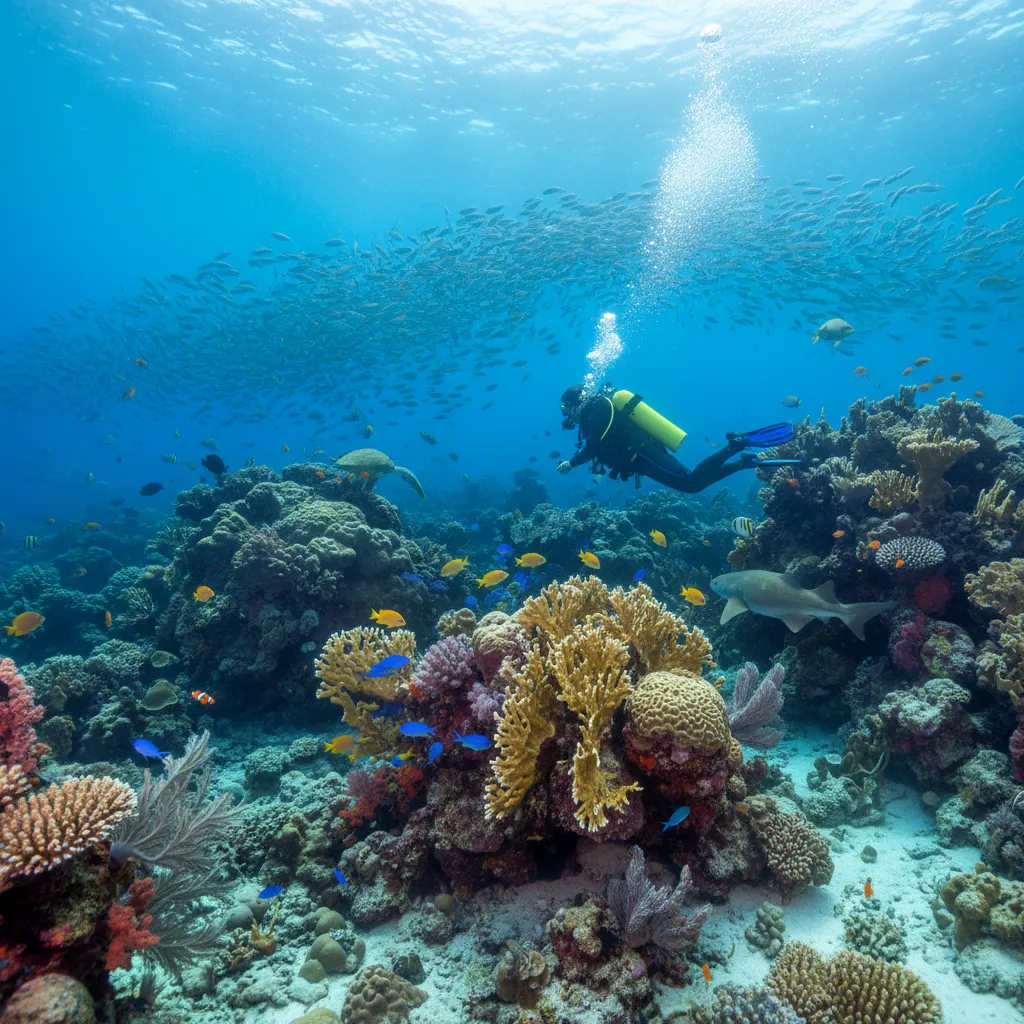
Diving in La Parguera
Why dive here
La Parguera offers some of Puerto Rico's richest diving, with 491+ marine species recorded in the area - including barracuda, blue sharks, dolphins, eagle rays and hammerhead sharks. Water sits around 27°C.
La Parguera feels like the Caribbean we used to know, before the big resorts took over. It’s a sleepy fishing village, and that vibe extends underwater. We love the immediate access to the wall, a dramatic drop-off just a short boat ride out. It starts in about 15 metres, then plunges down hundreds of feet. Along the wall, we often spot Atlantic spotted dolphins playing in the currents, and the resident lemon sharks make an appearance more often than not. Look closely, and you’ll find Northern neon gobies perched on coral heads, tiny flashes of electric blue. We’ve had incredible luck finding rosy blennies here too, tucked into crevices, their little eyes peeking out. The currents can pick up, especially further along the wall, so it’s worth checking the conditions with your dive operator before heading out. Our favourite time to dive is early morning before the winds kick up. Dive sites like ‘The Black Wall’ are particularly striking, with deep gorgonians and sponges creating a rich tapestry of colour against the blue. While the corals aren’t always pristine like some other Caribbean spots, the sheer abundance of fish, from schools of jacks to solitary hogfish, more than makes up for it. And you can’t leave La Parguera without a night snorkel in the bioluminescent bay; it’s a magical, glowing experience after dark.
La Parguera Dive Site Map
Dive sites and dive centres in La Parguera
La Parguera Dive Sites
8 dive sites in La Parguera
CATALINA S.
Catalina S. isn't your typical La Parguera dive, and we love it for that. Forget deep walls; this is a shallow wreck that delivers big on character. The Catalina S., an old cargo carrier, ran aground in 1962, leaving its skeleton spread across the rocks just west of San Juan Harbour. You're not penetrating deep here, the maximum depth is a mere meter, but that’s the beauty of it. What we really enjoy about Catalina S. is the way the wreck has become part of the reef. Hull plates lie scattered, creating nooks and crannies that are perfect for macro life. Look closely and you’ll find juvenile grunt, small blennies tucked into crevices, and often a nurse shark or two taking a nap under a larger section of twisted metal. It’s a photographer's dream in calm conditions, especially with the sun sparkling through the shallow water, illuminating the vibrant algae and sponges that have colonised the ship. We'd suggest going on a calm morning, the visibility is usually best then, and you’ll have the place largely to yourself. It’s a relaxed snorkel or a very shallow dive, making it great for newer divers or anyone looking for a chill afternoon exploring history.
Cerro Gordo Beach
Cerro Gordo Beach is a really easy dive, perfect if you’re just getting into the swing of things or want to brush up on skills. It’s pretty shallow, topping out around 11 meters, so you get plenty of bottom time to explore. We’ve seen a decent variety of smaller reef fish here, parrotfish nibbling on the bottom and the occasional crab scuttling past. Visibility can be a bit variable, especially after rain, but on a good day, it’s a calm, relaxing spot for a long, easy dive.
Enrique Reef
Enrique Reef is one of our favourite spots in La Parguera. It’s shallower, typically 5 to 15 metres, which means the light really punches through, illuminating the yellows of the smooth flower coral and the branching fingers. We love to drift over the wide fields of staghorn and elkhorn here, watching the smallmouth gobies perch on coral heads. It’s a great place to slow down. Keep an eye out for the shy yellow jawfish peeking from their burrows, and we’ve often spotted spotted trunkfish methodically picking at the reef. The Atlantic thread herring often school here, shimmering like liquid silver in the sun. This is a relaxed dive, perfect for newer divers or anyone who wants a long, unhurried bottom time to practice their photography. The lack of strong currents makes it an easy drift, letting you focus on the details of the reef. We often combine this with a night dive nearby, but for a daytime chill-out, Enrique takes some beating.
Los Tubos
Los Tubos is a shallow, gentle dive in La Parguera, perfect for beginners and snorkelers. The site averages around 10 meters, making it an easy drift over a sandy bottom dotted with small coral patches. We often see juvenile reef fish sheltering here, along with the occasional queen conch making its way across the sand. It’s a nice, relaxed introduction to the area.
Mar Chiquita
Mar Chiquita in La Parguera gives you a good look at the fringing reef, a fairly gentle wall dive that drops to around 18 meters. You’ll typically see schools of snapper and grunts hanging out, with the occasional eagle ray gliding past in the blue. It’s a solid choice for newer divers or those who prefer a relaxed drift along the reef.
Parguera s Wall
Parguera's Wall is a classic Caribbean wall dive off La Parguera, dropping sharply into the deep. You’ll find sponges and gorgonians clinging to the face, with schooling fish often patrolling the drop-off. It’s a solid choice for divers who enjoy drifting along a dramatic vertical reef structure, especially when the currents are mild. If you're looking for that deep blue feel, this site delivers.
The Wall
The Wall in La Parguera, it’s not just a dive, it’s a geological event. You drop in and there it is, a sheer drop-off into the Puerto Rico Trench. We love drifting along with that deep blue on our left shoulder, eyes scanning the wall’s nooks and crannies. This is where you find the shy ones: those tiny Island Gobies tucked into crevices, maybe even a Baird’s Dragonet if you’ve got a keen eye and a good guide. Keep an eye out for larger pelagics moving past in the blue, though the real show is often closer to the wall. We’ve seen Conger Eels peering out from their hideaways and the occasional Crosshatch Bass doing its thing. The Staghorn coral near the top is a good spot for critters too, plenty of Honey Damselfish darting about. We’d suggest going in the morning; the light plays beautifully on the coral heads at the shallower parts of the wall. Current can be a factor here, usually a gentle push, but it makes for an effortless drift. It’s an intermediate dive, really, for those who appreciate the drama of a deep wall and the thrill of spotting the smaller, rarer stuff.
TRANSCARIBBEAN
The Transcaribbean, now that’s a wreck with a story. Built in the heat of wartime, 1945, she ran aground near San Juan in ’63. Instead of hauling her out, they towed her down to La Parguera and intentionally sank her in just six metres. We love that – a wreck you can really take your time with, no decompression limits breathing down your neck. What we really enjoy about the Transcaribbean is her sheer size, even in shallow water. At nearly 140 metres long, you’re not just seeing a bit of scattered metal; you’re exploring a proper ship. The bow section is our favourite, still quite intact, with the chain locker a fantastic spot to peer into. We’ve seen tarpon cruise through the open holds, and the metal plates are just covered in sponges and anemones. Look closely in the nooks and crannies for schooling snapper and glassy sweepers. The best time to dive it is first thing in the morning before the day boats arrive, when the light filters down through the superstructure, creating these incredible, shifting patterns on the sand. It’s an easy dive, perfect for photographers or anyone who just wants to soak up the atmosphere of a grand old ship.
La Parguera Dive Centres
4 dive shops and operators in La Parguera
Ocean Wildlife in La Parguera
491 species recorded in La Parguera
La Parguera Daylight & Sunrise/Sunset
Sunrise and sunset times for La Parguera, calculated from coordinates
Today - Sunday 11 October
Sunrise
06:19
Sunset
18:09
Daylight
11h 49m
Golden Hour
17:40
First light (dawn) at 05:57 · Last light (dusk) at 18:31
Monthly Averages
| Month | Sunrise | Sunset | Daylight |
|---|---|---|---|
| Jan | 07:02 | 18:10 | 11h 8m |
| Feb | 06:55 | 18:28 | 11h 32m |
| Mar | 06:36 | 18:37 | 12h 0m |
| Apr | 06:11 | 18:43 | 12h 32m |
| May | 05:54 | 18:53 | 12h 59m |
| JunLongest | 05:51 | 19:04 | 13h 13m |
| Jul | 05:59 | 19:07 | 13h 8m |
| Aug | 06:09 | 18:55 | 12h 46m |
| Sep | 06:15 | 18:31 | 12h 16m |
| OctNow | 06:20 | 18:06 | 11h 45m |
| Nov | 06:33 | 17:50 | 11h 17m |
| DecShortest | 06:51 | 17:53 | 11h 3m |
Times are approximate local times based on longitude. Actual times may vary slightly depending on the exact timezone observed in La Parguera.
Where to Stay near La Parguera
Prices from Booking.com. We may earn a commission at no extra cost to you.
Marine Protected Areas near La Parguera
28 protected areas near La Parguera - please respect local regulations when diving
Isla de Mona Natural Reserve
La Parguera Natural Reserve
Cabezas de San Juan Natural Reserve
Punta Yegüas Natural Reserve
Bosque Natural de Boquerón Natural Reserve
Caja de Muertos Natural Reserve
Arrecifes de la Cordillera Natural Reserve
Río Espíritu Santo Natural Reserve
Punta Guaniquilla Natural Reserve
Bahías Bioluminiscentes de Vieques Natural Reserve
Arrecifes de Tourmaline Natural Reserve
Hacienda La Esperanza Natural Reserve
Showing 12 largest of 28
Getting to La Parguera
Arecibo
San Juan
Charlotte Amalie
Plan & book
Ways to dive La Parguera, from day trips to liveaboards.
Day trips & courses
via GetYourGuideGuided dives, courses and snorkel trips with instant booking.
Find dive trips in La PargueraPlaces to stay
via Booking.comHotels and dive resorts near La Parguera.
Search stays in La PargueraDive insurance
Most travel insurance excludes or limits scuba. Check what you need before you go.
Dive insurance explainedPartner links: we may earn a commission if you book, at no extra cost to you. How we make money