TRANSCARIBBEAN
Protected Area
Río Espíritu Santo Natural Reserve
Why dive here
With 491+ marine species recorded in the area - including barracuda, blue sharks, dolphins, eagle rays and hammerhead sharks - TRANSCARIBBEAN offers some of La Parguera's richest wreck diving. Water ranges 27-30°C, warmest August, September, October.
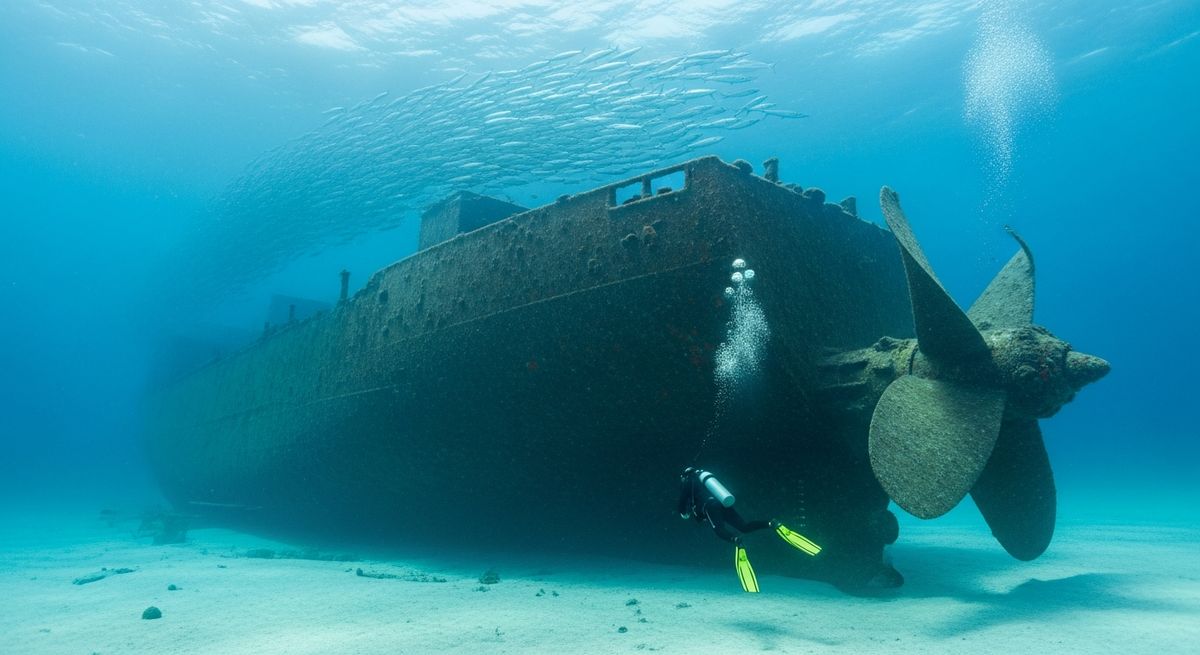
The Transcaribbean, now that’s a wreck with a story. Built in the heat of wartime, 1945, she ran aground near San Juan in ’63. Instead of hauling her out, they towed her down to La Parguera and intentionally sank her in just six metres. We love that – a wreck you can really take your time with, no decompression limits breathing down your neck. What we really enjoy about the Transcaribbean is her sheer size, even in shallow water. At nearly 140 metres long, you’re not just seeing a bit of scattered metal; you’re exploring a proper ship. The bow section is our favourite, still quite intact, with the chain locker a fantastic spot to peer into. We’ve seen tarpon cruise through the open holds, and the metal plates are just covered in sponges and anemones. Look closely in the nooks and crannies for schooling snapper and glassy sweepers. The best time to dive it is first thing in the morning before the day boats arrive, when the light filters down through the superstructure, creating these incredible, shifting patterns on the sand. It’s an easy dive, perfect for photographers or anyone who just wants to soak up the atmosphere of a grand old ship.
Typical TRANSCARIBBEAN Dive Profile
Illustrative profile based on site depth and type. Actual dive profiles vary - always follow your dive computer and training.
Safety Notes
Wreck site - avoid penetration without wreck diving certification. Watch for sharp metal and entanglement hazards.
Nearest Dive Centres to TRANSCARIBBEAN
Dive shops near TRANSCARIBBEAN
View all dive centres in La PargueraReviews for TRANSCARIBBEAN
Conditions
Ocean conditions, forecast and tides for TRANSCARIBBEAN
TRANSCARIBBEAN Ocean Conditions
Monthly averages for TRANSCARIBBEAN, sourced from Open-Meteo marine data - nearest station: Open-Meteo marine grid (18.47, -66.49) (25km away)
October Averages
Sea Temperature
30°C
87°F · Range: 29.3–31.2°C
Air Temperature
27°C
81°F
Wind Speed
5.18 m/s
10.1 knots
Atmospheric Pressure
1012.7 hPa
Based on 4 years of monitoring data · Data sources: Open-Meteo marine data
Plan & book
Ways to dive La Parguera, from day trips to liveaboards.
Day trips & courses
via GetYourGuideGuided dives, courses and snorkel trips with instant booking.
Find dive trips in La PargueraPlaces to stay
via Booking.comHotels and dive resorts near La Parguera.
Search stays in La PargueraDive insurance
Most travel insurance excludes or limits scuba. Check what you need before you go.
Dive insurance explainedPartner links: we may earn a commission if you book, at no extra cost to you. How we make money
Where to Stay near TRANSCARIBBEAN
Prices from Booking.com. We may earn a commission at no extra cost to you.