Diving in St. Kitts
Why dive here
St. Kitts offers some of St. Kitts & Nevis's richest diving, with 384+ marine species recorded in the area - including barracuda, dolphins, eagle rays, humpback whales and nurse sharks. Water sits around 27°C.
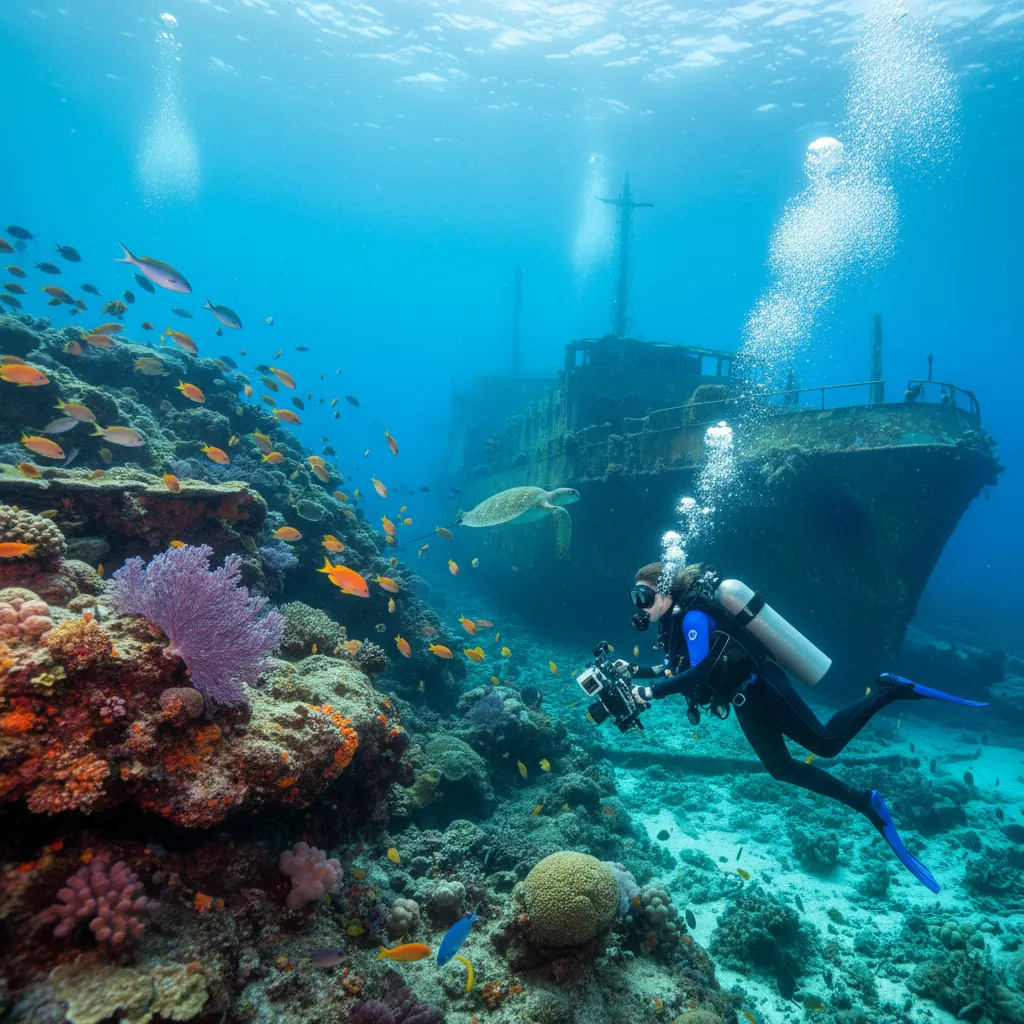
St. Kitts might not shout about its diving, but we’re here to tell you it’s a quiet contender in the Caribbean. We’re talking a real mix here: moody wrecks, ancient volcanic pinnacles, and patch reefs that feel like discovering your own secret garden. You’ll spend most of your time on the calmer Caribbean side, where visibility generally holds up well. Our absolute favourite has to be the wrecks, especially the MV River Taw. It’s a purposeful sinking, upright and largely intact, home to huge schools of Bluestriped Grunts and Black Margates that swirl through the holds. You’ll often spot a Dwarf Frogfish clinging to a gorgonian, perfectly camouflaged. We also really rate the coral-encrusted volcanic formations, like Black Coral Reef, where the deep cracks and crevices shelter shy creatures. Keep an eye out for Threadfin Dragonfish tucked into overhangs and Bearded Fireworms patrolling the coral heads. We usually suggest an early morning dive if you’re hoping to see reef sharks, before the day boats arrive. Currents here are generally manageable, making it a great spot for intermediate divers looking to stretch their skills on deeper wreck penetrations or longer drift dives along the walls.
St. Kitts Dive Site Map
Dive sites and dive centres in St. Kitts
St. Kitts Dive Sites
38 dive sites in St. Kitts
ALBERTINA
The *Albertina* is a properly historical wreck, a schooner that ran aground in 1969 after engine failure. At only 6 metres, it’s a brilliant, relaxed dive. We love that you can really take your time here, exploring the bow and stern sections, which are still largely intact. The shallow depth means ambient light floods the wreck, painting the corals and sponges in a soft, natural glow. What makes this site a standout for us is the way the *Albertina* has become a home. Look closely and you’ll spot yellowtail snapper darting between the broken timbers, or a wary moray eel peeking from a dark crevice. We’ve even seen nurse sharks napping under the main deck. It’s perfect for new wreck divers or anyone who just wants a beautiful, unhurried swim. Our tip: go in the late afternoon. The sun filtering through the water onto the wreck is just something else.
Anchor Point
Anchor Point is a gentle introduction to St. Kitts diving, perfect for those getting their fins wet or shaking off dive rust. We often bring our newer divers here, as the maximum depth of 18 meters keeps things relaxed. You'll likely drift over a sandy bottom peppered with small coral heads, keeping an eye out for southern stingrays tucked into the sand and schools of grunts hanging around the reef patches. It’s a comfortable, easy dive where the pace is slow, letting you really absorb the quiet Caribbean rhythm.
Anchors Aweigh
Anchors Aweigh, despite the charming misspelling, is a genuinely interesting spot off St. Kitts. The seabed here tells a story, peppered with anchors reportedly ditched by ships fleeing cannon fire from Brimstone Hill. You'll weave through a series of coral fingers and sandy channels, spotting those encrusted anchors, now fully integrated into the reef with sponges and corals growing right over them. It's a relaxed dive, good for poking around, and a solid choice when you're looking for something a bit different from your usual reef exploration.
Big Rock Market
Big Rock Market sits off St. Kitts, a good pick for newer divers looking for an easy, shallow dive. Dropping to a max of 20 meters, it's primarily a rocky reef, which means lots of nooks and crannies for smaller creatures to hang out in. We've often found queen angelfish here, along with the usual parrotfish munching away. It's not a site that will blow your mind with massive pelagics, but for a relaxed afternoon with good light, especially in the shallows, it certainly delivers. If you’re getting comfortable with your buoyancy and want to spend some time spotting the smaller stuff, it’s a solid choice.
Camps Reef
Camps Reef, off St. Kitts, offers a leisurely dive perfect for newer divers or those who prefer to take their time. We’ve found the volcanic reef structure here creates plenty of little nooks and crannies to explore, a good spot to poke around for lobsters or a shy crab. Keep an eye on the sandy channels too, we’ve often spotted stingrays settled there, sometimes a nurse shark taking a nap. The real quirk, though, is the hydrothermal vent, a little underwater campfire where warm water bubbles up – a strange, soothing feeling on your hands mid-dive.
CHARLES L BROWN
The *Charles L Brown* is easily one of our favourite Caribbean wrecks. It’s a purposeful sinking, a 100-meter long cable layer, now resting upright in 40 meters of water. We’ve found it’s best suited for experienced divers comfortable with deeper profiles and potential currents – this isn’t a shallow reef cruise. Dropping down, the sheer scale of the ship becomes apparent, an industrial skeleton against the blue. You’ll see the massive cable drums, still in place, slowly being encrusted with sponges and hard corals. We particularly love penetrating the bridge, where schools of glassy sweepers dart through the control room, and the cargo holds, which are now home to lurking nurse sharks and occasional eagle rays passing overhead. On a good day, with decent visibility, the bow section is genuinely impressive, standing tall from the seabed, often draped in schooling horse-eye jacks. Our top tip: aim for slack tide if you want to explore the deeper reaches without fighting a current.
Charles L. Brown, wreck
We’ve spent a fair bit of time exploring the wrecks around St. Kitts, and the *Charles L. Brown* consistently ranks high on our list. It’s a purposeful dive, an old cable-laying vessel scuttled back in the 80s, sitting upright on a sandy bottom at 26 metres. What we love about this one isn't just its history, but how gracefully it's become part of the reef. As you descend, the sheer size of it starts to emerge from the blue, a proper ship shape. The bow is often the first thing you pick out, then the vast open cargo holds. We’d suggest heading straight for those holds; they’re wide open, inviting you inside for a quiet swim-through experience. Sunlight dapples down, illuminating schools of snapper that swirl around the bulkheads. Look closely at the deck plating and superstructure for scorpionfish blending in, their camouflage practically perfect against the encrusting corals. Our favourite spot? Definitely the wheelhouse. It’s a little more broken up, but you can still piece together what it once was. You'll often find a lurking nurse shark tucked away underneath, or a big green moray peeking from a crevice. The *Charles L. Brown* is an intermediate dive, suitable for those with some experience navigating deeper sites and currents, which can pick up a bit on the surface. It’s a fantastic dive for photographers who appreciate the drama of a large, intact wreck, complete with its new, thriving ecosystem.
Chien Tong, wreck
The Chien Tong, a purpose-sunk Taiwanese fishing trawler, sits upright and largely intact at 24 metres. We love that it’s still very much a ship, not just a pile of rubble. You can often swim right into the wheelhouse, though some of the interior has started to collapse, so keep an eye on your buoyancy and your surroundings. It’s got a bit of a ghostly feel, especially when the light shifts, and those big open holds make for some dramatic swim-throughs. This wreck really shows how quickly the sea reclaims things. We’ve seen huge barracuda patrolling the deck, often hovering just above the bow, and often find nurse sharks resting underneath. Schools of snapper and grunts hang around the mast, and the hard corals are starting to get a good foothold on the superstructure. It’s a comfortable intermediate dive, great for wreck lovers who appreciate a bit of penetration without anything too technical. Our favourite time to dive it is late morning, when the sun is high and you get those beautiful shafts of light cutting through the holds.
CHRISTENA
The Christena ferry sits upright in 22 metres, a somber reminder of a tragic day in 1970. We find the whole experience incredibly poignant; it’s not just a dive, it’s a dive into history. The wooden superstructure is long gone, eaten away by time and ocean, but the steel hull remains remarkably intact, giving it a ghost-like quality. Our favourite part is navigating the open cargo holds, where schools of glassy sweepers often pulse and swirl, reflecting the ambient light. Look closely and you’ll spot resident lobsters tucked into shadowy crevices, and we’ve often seen nurse sharks cruising lazily around the perimeter. The Christena feels substantial, a decent-sized wreck to explore, and the depth keeps it comfortable for most advanced open water divers. Currents are generally mild here, making for a relaxed dive where you can really take your time to appreciate the wreck's scale and the life it now supports. It’s a compelling site, definitely one for wreck enthusiasts who appreciate a story with their dive.
Coconut Tree Reef
Coconut Tree Reef is a proper delight, especially for anyone just getting their fins wet in St. Kitts. We love how shallow it is, topping out at a modest 12 metres, which means you get heaps of bottom time to really soak it all in. The sun just beams down, illuminating these big, broad elkhorn coral formations, making them glow with an almost golden light. Keep your eyes peeled for the Atlantic yellow cowries; they’re often tucked into crevices, looking like polished jewels. We often see spotted trunkfish here, sort of waddling along, and the blue parrotfish are always busy crunching on the reef. It’s a gentle drift, usually, but sometimes you’ll get a slight push that just carries you along over the corals. Our favourite time to dive it is mid-morning, just after the sun has properly risen but before the heat of the day really sets in, when the light is still a bit soft. This site is perfect for beginners, or frankly, anyone who enjoys a relaxed, colourful dive without any fuss.
Coral Nursery
We always appreciate seeing conservation in action, and St. Kitts’ Coral Nursery is a prime example. Dropping to a gentle 16 meters, it’s an easy dive, perfect for newer divers or anyone wanting a relaxed second tank. You’ll find rows of coral fragments, mostly elkhorn and staghorn, attached to ropes and frames, slowly growing before they're transplanted to nearby reefs. It's a hopeful sight, often with small juveniles like damselfish darting between the branches, and we sometimes spot a curious trumpetfish hovering nearby. It’s not about big pelagics here; it's about the quiet work of reef restoration, and it’s genuinely interesting to observe.
Customs House
Customs House is a pretty relaxed dive, perfect for warming up or if you're newer to diving. Dropping down to about 25 metres, it's a gentle drift along a sloping reef, mostly sand and scattered coral heads. We often spot garden eels swaying in the sand patches, and there are usually a few southern stingrays buried, so keep an eye out. It’s not a dramatic wall, but the soft corals are healthy, and it’s a good spot to just cruise and watch for smaller reef fish.
Show all 38 dive sites in St. Kitts
- Diamond Rock
- Double Wreck
- DUNDALK
- Eutom?
- EUTOM
- Fort Bay Harbor
- Greer Gut
- HMS SOLEBAY
- Hole in the Corner
- Ladder Bay
- Ladder Labyrinth Red
- LIAMUIGA
- M.V. Corinthian
- MV River Taw Wreck
- Nags Head
- Ocean’s Paradise
- Paradise Reef
- RIVER TAW
- River Taw Wreck, Saint Kitts
- Roche Roube
- ROSAL
- SKOLD
- TALATA
- Teigland
- Tent Reef Deep
- The Pinnacles
St. Kitts Dive Centres
3 dive shops and operators in St. Kitts
Ocean Wildlife in St. Kitts
384 species recorded in St. Kitts
St. Kitts Daylight & Sunrise/Sunset
Sunrise and sunset times for St. Kitts, calculated from coordinates
Today - Sunday 11 October
Sunrise
06:04
Sunset
17:54
Daylight
11h 50m
Golden Hour
17:26
First light (dawn) at 05:42 · Last light (dusk) at 18:16
Monthly Averages
| Month | Sunrise | Sunset | Daylight |
|---|---|---|---|
| Jan | 06:46 | 17:57 | 11h 11m |
| Feb | 06:40 | 18:14 | 11h 34m |
| Mar | 06:21 | 18:22 | 12h 1m |
| Apr | 05:57 | 18:28 | 12h 31m |
| May | 05:41 | 18:37 | 12h 56m |
| JunLongest | 05:38 | 18:48 | 13h 10m |
| Jul | 05:46 | 18:51 | 13h 5m |
| Aug | 05:55 | 18:39 | 12h 44m |
| Sep | 06:00 | 18:16 | 12h 16m |
| OctNow | 06:05 | 17:52 | 11h 46m |
| Nov | 06:17 | 17:37 | 11h 20m |
| DecShortest | 06:34 | 17:40 | 11h 6m |
Times are approximate local times based on longitude. Actual times may vary slightly depending on the exact timezone observed in St. Kitts.
Where to Stay near St. Kitts
Prices from Booking.com. We may earn a commission at no extra cost to you.
Marine Protected Areas near St. Kitts
3 protected areas near St. Kitts - please respect local regulations when diving
Marine Management Area
St Marys
Sandy Point Reef
Getting to St. Kitts
Oranjestad
Basseterre
Sint Maarten
Plan & book
Ways to dive St. Kitts, from day trips to liveaboards.
Day trips & courses
via GetYourGuideGuided dives, courses and snorkel trips with instant booking.
Find dive trips in St. KittsPlaces to stay
via Booking.comHotels and dive resorts near St. Kitts.
Search stays in St. KittsDive insurance
Most travel insurance excludes or limits scuba. Check what you need before you go.
Dive insurance explainedPartner links: we may earn a commission if you book, at no extra cost to you. How we make money