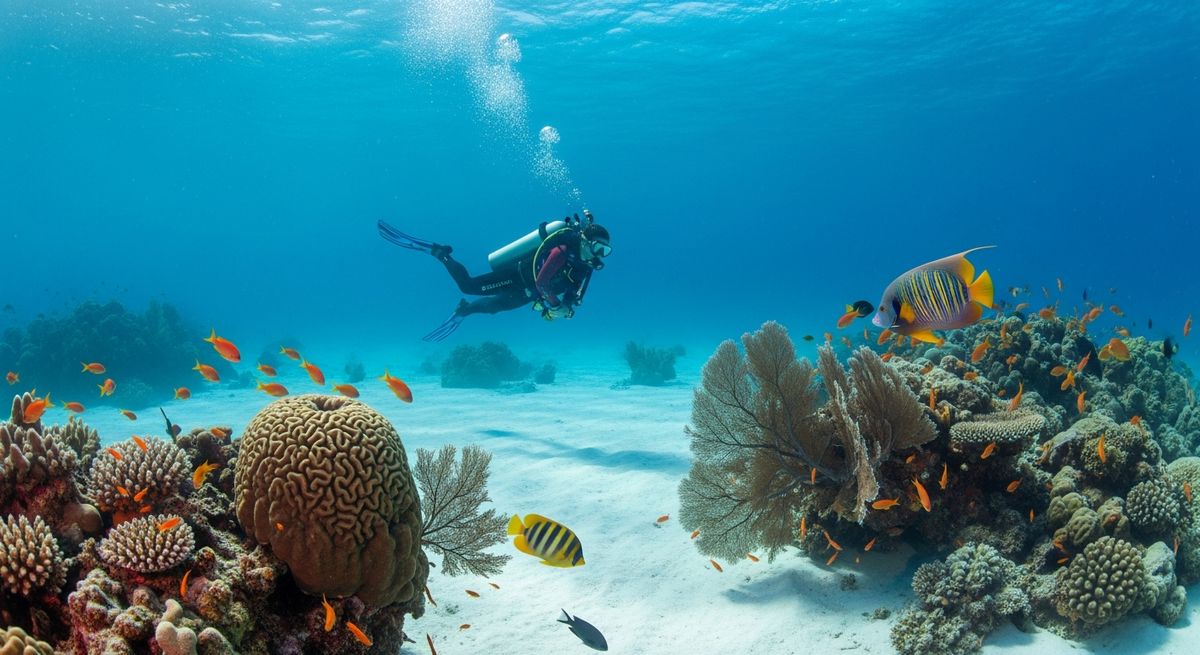
Diving and snorkeling point
Protected Area
Isla Guayabo
Why dive here
With 217+ marine species recorded in the area - including dolphins, humpback whales, orcas, sea turtles and pufferfish - Diving and snorkeling point offers some of Caribbean Coast's richest diving. Water ranges 29-31°C, warmest March, April, May.
Look, the Caribbean coast of Costa Rica isn't always the first place divers think of, but the Diving and Snorkeling Point is a pleasant surprise, especially if you’re just starting out or prefer a more relaxed pace. We love it for its gentle nature; it’s a perfect spot to ease into your vacation, get comfortable with your gear, or introduce someone new to the underwater world. The best way to experience it is to drift along slowly, letting the subtle current guide you. We’ve often found ourselves completely engrossed watching the Southern Blennies darting between the rocks, or the Panama sergeant majors schooling tightly. Visibility here can vary, but on a good day, it’s clear enough to spot the flashes of a Golden Croaker disappearing into a crevice or a group of Spottail Grunts meandering across the sand. Keep an eye out for the Foureye Rockskipper; they’re little characters. While you won't find dramatic drop-offs, the sheer number of smaller reef fish and the calm conditions make this a genuinely enjoyable, stress-free dive or snorkel. It’s definitely our pick for a chill morning exploring without the pressure.
Nearest Dive Centres to Diving and snorkeling point
Dive shops near Diving and snorkeling point
Okeanos Aggressor II
Cocos Island Aggressor
Dive Costa Rica
Ananda DNF S.A.
Reviews for Diving and snorkeling point
Conditions
Ocean conditions, forecast and tides for Diving and snorkeling point
Diving and snorkeling point Ocean Conditions
Monthly averages for Diving and snorkeling point, sourced from Open-Meteo marine data + Copernicus Marine (EU) - nearest station: Open-Meteo marine grid (9.78, -84.89) (48km away)
October Averages
Sea Temperature
29°C
85°F · Range: 27.9–31.1°C
Current Speed
5 cm/s
Direction: N (0°)
Chlorophyll-a
0.142 mg/m³
Clear water
Salinity
28.81 PSU
Based on 4 years of monitoring data · Data sources: Open-Meteo marine data + Copernicus Marine (EU)
Plan & book
Ways to dive Caribbean Coast, from day trips to liveaboards.
Day trips & courses
via GetYourGuideGuided dives, courses and snorkel trips with instant booking.
Find dive trips in Caribbean CoastPlaces to stay
via Booking.comHotels and dive resorts near Caribbean Coast.
Search stays in Caribbean CoastDive insurance
Most travel insurance excludes or limits scuba. Check what you need before you go.
Dive insurance explainedPartner links: we may earn a commission if you book, at no extra cost to you. How we make money
Where to Stay near Diving and snorkeling point
Prices from Booking.com. We may earn a commission at no extra cost to you.