Diving in Caribbean Coast
Why dive here
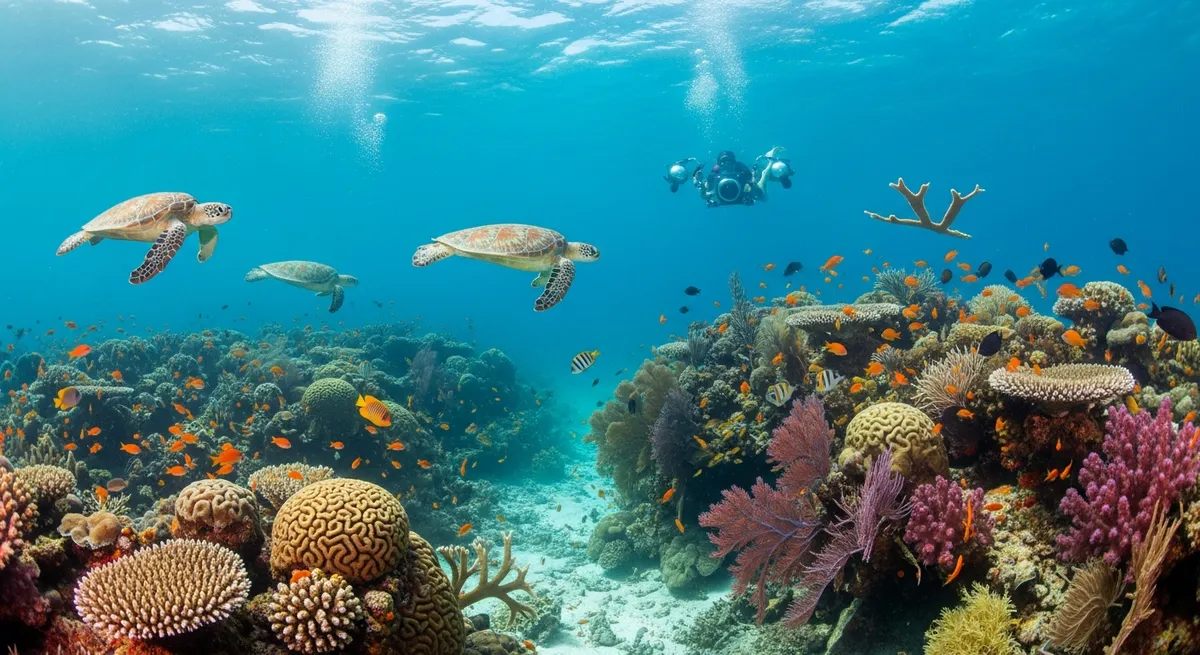
Caribbean Coast offers some of Costa Rica's richest diving, with 217+ marine species recorded in the area - including dolphins, humpback whales, orcas, sea turtles and pufferfish. Water ranges 29-31°C, warmest March, April, May.
The Caribbean side of Costa Rica, particularly around Cahuita National Park and the Gandoca-Manzanillo Wildlife Refuge, offers a much different vibe from the Pacific. It's slower, more laid-back, and the diving reflects that. We’re not talking dramatic pelagics here, but instead a collection of really charming, intimate reef and wall dives, often with nurse sharks lounging under ledges. Visibility can swing - one day it's 20 metres and gorgeous, the next a storm has stirred things up, so we always recommend asking local shops for current conditions. Our favourite dives are the fringing reefs in Cahuita, where the corals feel ancient, full of nooks. You’ll spend most of your bottom time peering into crevices, spotting shy creatures like the Spotted snake-eel or the brilliantly camouflaged Opossum Pipefish. Keep an eye out for the Graceful Mojarra schooling in the shallows, their silver scales flashing. We’ve found the currents here are generally mild, making it a good spot for newer divers, though some of the deeper walls do get a gentle push. It’s less about big fish and more about the smaller, intricate details; the Barnacle Blenny peeking out, the peculiar Rounded batfish fluttering by. It’s a quiet dive, perfect for photographers who love macro.
Caribbean Coast Dive Site Map
Dive sites and dive centres in Caribbean Coast
Caribbean Coast Dive Sites
93 dive sites in Caribbean Coast
Arco Iris, Brumel Island
Arco Iris, off Brumel Island, is a site we keep coming back to on Costa Rica's Caribbean side. It’s not about endless visibility, averaging 10m, but what you find within it. We love pushing past the initial drop, tracking the rock formation that snakes north from the island’s northwest face. This is where the action happens. Our favourite dives here are early morning, before the currents pick up too much. You often catch glimpses of white tip reef sharks patrolling the deeper edges, sometimes so close you hear their tails swish past. Keep an eye out for the smaller stuff too: the flash of a Rainbow Scorpionfish against the coral, or a curious Beaubrummel peeking from a crevice. We’ve spotted Bloody Frogfish here, clinging perfectly camouflaged. It’s a site that rewards slow, deliberate diving, especially for those who appreciate the hunt for the unusual alongside the larger marine life. Arco Iris is best for divers who enjoy a bit of current and thrive on discovery rather than wide-angle vistas.
Arco Iris, Brumel Island
Arco Iris, off Brumel Island, is a site we keep coming back to on Costa Rica's Caribbean side. It’s not about endless visibility, averaging 10m, but what you find within it. We love pushing past the initial drop, tracking the rock formation that snakes north from the island’s northwest face. This is where the action happens. Our favourite dives here are early morning, before the currents pick up too much. You often catch glimpses of white tip reef sharks patrolling the deeper edges, sometimes so close you hear their tails swish past. Keep an eye out for the smaller stuff too: the flash of a Rainbow Scorpionfish against the coral, or a curious Beaubrummel peeking from a crevice. We’ve spotted Bloody Frogfish here, clinging perfectly camouflaged. It’s a site that rewards slow, deliberate diving, especially for those who appreciate the hunt for the unusual alongside the larger marine life. Arco Iris is best for divers who enjoy a bit of current and thrive on discovery rather than wide-angle vistas.
Arrecife Conway
Arrecife Conway is a solid reef dive off Costa Rica's Caribbean coast. You'll find a decent coral structure, home to a scattering of typical reef fish – your parrotfish, angelfish, and the usual suspects. It's a relaxed dive, good for getting wet and enjoying a mellow pace. Best for newer divers or those looking for a laid-back afternoon.
Bajo Del Diablo
Bajo Del Diablo offers a straightforward dive on Costa Rica's Caribbean side. We typically find rocky outcrops here, often home to schooling fish like grunts and snappers. It's a solid choice for divers looking for a relaxed experience without significant currents, good for a second dive of the day. Visibility can vary, but we often get 15-20 meters on a good day.
Bajo del Diablo Deep
Bajo del Diablo Deep is where we head when we're looking for something more substantial. It's a proper blue-water experience off Caño Island, dropping to around 35 meters. We've often seen blacktip sharks cruising by and, with a bit of luck, a hammerhead or two making an appearance in the deeper sections. It’s definitely an advanced dive, not for the faint of heart, but if you’re into the bigger pelagics, this spot delivers.
Bajos Castañones
Bajos Castañones, off Costa Rica’s Caribbean coast, offers a genuine glimpse into the region's underwater world. We often find ourselves drifting over healthy coral formations, where schooling fish like snapper and grunt tend to congregate, darting in and out of the nooks. It's a reliable spot for a relaxed dive, usually with decent visibility, making it suitable for divers who appreciate a steady, unhurried exploration of a thriving reef. While not a dramatic drift, it’s a good choice if you're keen to simply soak in the gentle rhythm of the Caribbean.
Barco Hundido
Barco Hundido, or “Sunken Ship,” isn’t just some random pile of metal. This is the remains of a cargo vessel, the *Fukou Maru*, which went down during a hurricane in the 1970s. We love a wreck with a bit of history, and this one certainly has it. What’s left of the hull sits broken up, scattered across a sandy bottom, creating a perfect habitat for all sorts of critters. You’ll spend your dive exploring crumpled plates of metal and twisted beams, each section now a little apartment for something interesting. We've seen schools of snapper hovering in the gloom, and the occasional kingfish cruises by, checking us out. Keep an eye out for the smaller stuff too: cowfish darting into crevices and those vibrant dark green parrotfish munching on algae. Our favourite part? Peeking into the darker corners to spot French grunts huddled together. It’s a comfortable dive, not too deep, making it a great option for those new to wreck diving or anyone who just wants a relaxed exploration. We’d suggest heading out in the morning, before the afternoon breeze picks up, for the calmest conditions.
Bloody Reef
Bloody Reef, off Costa Rica's Caribbean coast, gives you a gentle drift over a healthy coral reef. We've seen plenty of nurse sharks here, often just cruising by, along with schools of snapper hanging out near the bommies. It's a nice easy dive, great for knocking out a few longer bottom times or for getting comfortable again after a break.
Bocas Diving Pirates
Bocas Diving Pirates, on the Caribbean side, isn’t about huge pelagics or dramatic drop-offs. No, this spot shines for the patient observer, the diver who likes to take it slow and really look. We love the way the light plays through the shallower sections, revealing species you might swim right past elsewhere. Think about getting face-to-face with a Saddle Stargazer, its eyes just peeking out of the sand, or spotting a Fringed Filefish blending perfectly with the surrounding structure. It’s a site that rewards multiple dives. The first time, you might just get a general feel. But on the second or third, you start picking out the smaller residents: the odd Drummer Boy tucked into a crevice, or a flash of a Lavender Rope Sponge. We’ve had some cracking moments here just hovering, watching the Ballyhoo dart past in schools while trying to spot a shy Daisy Midshipman. This place is perfect for macro enthusiasts and anyone keen on finding species that are often overlooked. We’d suggest a keen eye and maybe even a pointer stick, not for touching, but for directing your buddy’s gaze to the smaller, more obscure creatures.
Brumel deep
Brumel Deep isn’t about dramatic drop-offs or big pelagic encounters. It’s a site we appreciate for its quieter moments, a place to slow down and really look. At a maximum of 20 meters, it offers a surprisingly rich mosaic of reef life, particularly if you’re into the smaller, often overlooked critters. We’ve spent whole dives just combing over a single coral head here, finding little blennies poking out, each with its own tiny personality. Visibility here can be a bit hit or miss, often settling around 5 meters, which isn’t everyone’s cup of tea, but we think it forces you to focus. Instead of sweeping vistas, you’re rewarded with the details: the glossy blenny peeking from a crevice, or a red-headed goby darting across the sand. We love spotting the quirky Southern Blennies and Cominate Sea Catfish that call this reef home. It’s a good spot when the wind picks up, offering some shelter compared to the more exposed Catalina Islands. We’d suggest hitting it on a calmer day, early morning if you can, to really appreciate the subtle beauty. It’s an advanced dive not for its depth, but for the patience and observational skills it demands.
Brumel deep
Brumel Deep isn’t about dramatic drop-offs or big pelagic encounters. It’s a site we appreciate for its quieter moments, a place to slow down and really look. At a maximum of 20 meters, it offers a surprisingly rich mosaic of reef life, particularly if you’re into the smaller, often overlooked critters. We’ve spent whole dives just combing over a single coral head here, finding little blennies poking out, each with its own tiny personality. Visibility here can be a bit hit or miss, often settling around 5 meters, which isn’t everyone’s cup of tea, but we think it forces you to focus. Instead of sweeping vistas, you’re rewarded with the details: the glossy blenny peeking from a crevice, or a red-headed goby darting across the sand. We love spotting the quirky Southern Blennies and Cominate Sea Catfish that call this reef home. It’s a good spot when the wind picks up, offering some shelter compared to the more exposed Catalina Islands. We’d suggest hitting it on a calmer day, early morning if you can, to really appreciate the subtle beauty. It’s an advanced dive not for its depth, but for the patience and observational skills it demands.
Brumel shallow
Brumel Shallow, a quick 20-minute boat ride from Marina Flamingo, often gets overlooked for its flashier neighbours in the Catalina Islands. But we think that's a mistake, especially on a windy day when the deeper sites are a no-go. This spot is a genuine sanctuary, keeping the water calm and the diving relaxed. The maximum depth barely scrapes 16 metres, making it perfect for newer divers or anyone who fancies a long, easy bottom time. We love drifting over the low-lying coral formations, keeping our eyes peeled for the smaller, more charismatic residents. You’ll spot a ton of blennies here – the Panamanian worm blenny is a particular favourite of ours, along with the cheeky barnacle blenny peeking from its shell. Look closely for hourglass clingfish clinging to sponges and the oddly beautiful calico lizardfish camouflaged on the sand. Visibility hovers around 5 metres on average, which isn't huge, but it forces you to slow down and really appreciate the details in this intimate reef. It’s less about grand vistas and more about the quiet thrill of discovery. We’d suggest going early in the morning for the best chance of settled conditions.
Show all 93 dive sites in Caribbean Coast
- Brumel shallow
- Cabeza de Mono
- Cadena
- Cadena
- Campanario
- Caño Island: Diving in Costa Rica's Reserva Biológica
- Canyon Reef
- Casa Verde
- Catalina Islands
- Catalinas Island, Clásico
- Chiliguaro
- Chilimay
- Cocalito
- Coco Bay
- Corridas
- Cuatro piedras, Catalina Islands
- Devils Bottom
- Devil's Rock
- Diving and snorkeling point
- El Andia - Jureles
- El Aquario
- El Arco
- El Secreto
- El Secreto 2
- Escorpiones
- Estudiantes
- Freedom Diving
- Guacamaya Island
- Herradura
- Herradura Island
- Isla Tortuga Acquario
- Jardín Medio
- La Buga Dive & Surf
- La Chancha
- La Cueva
- La esquina del jardin
- La Pared
- Las tetas
- La Tortuga
- Long Shoal
- Los Sombréros
- Memories wreck
- Meros
- Middle Reef
- Monkey Head
- Monkey Island
- Pailas
- Patrick s Point
- Pelagic Park
- Pelicanos/Elephant rock
- Pelican Rock
- Pesebre
- Playa Conchal
- Playpen
- Punta Argentina
- Punta Ballena
- Punta Ballena
- Punta Catalina
- Punta Gorda
- Punta Quepos
- Rio Lajas
- Roca Peligrosa, Danger Rock
- Roca Sucia, Dirty Rock
- Rocket Frog Divers
- Scuba 6 Eco Diving
- Ship wreck
- Sombreros
- Sorpresa
- South Point shallow
- Starfish Garden
- Starfleet Scuba Diving
- Sugar Reef
- The Cave
- Tiburon
- Tortilla
- Tortuga Equador
- Tortuga Island
- Tortuga shipwreck
- Uvita wall
- Veinteseis
- Virador
Caribbean Coast Dive Centres
31 dive shops and operators in Caribbean Coast
2 Oceans Divers
Ananda DNF S.A.
Apoyo Dive Center
BA
ChrisDiving, Dive Center Costa Rica
Cocos Island Aggressor
Costa Diver
Costa Diver Sur
Show all 31 dive centres in Caribbean Coast
- Costa Rica Adventure Divers
- Costa Rica Dive & Surf
- Deep Blue Diving
- Deep Blue Driving
- Dive Costa Rica
- Drake Bay Diving
- Drake Divers
- Oceans Unlimited
- Okeanos Aggressor II
- Osa Divers
- Rica Freedivers
- Rich Coast Diving
- Rockdivers Pick up
- Rocket Frog Divers
- Rrefice Marine Tours
- Scuba Portobelo
- Summer Salt
- Summer Salt Dive Center
- TamaDive SRL
- Tamarindo Diving
- Tienda de Buceo
- TikiHut Watersports Coco (located near Bosque del Mar hotel in playa Hermosa)
- TIKOSCUBA
Ocean Wildlife in Caribbean Coast
217 species recorded in Caribbean Coast
Caribbean Coast Daylight & Sunrise/Sunset
Sunrise and sunset times for Caribbean Coast, calculated from coordinates
Today - Sunday 11 October
Sunrise
05:29
Sunset
17:26
Daylight
11h 57m
Golden Hour
16:58
First light (dawn) at 05:07 · Last light (dusk) at 17:47
Monthly Averages
| Month | Sunrise | Sunset | Daylight |
|---|---|---|---|
| Jan | 06:01 | 17:37 | 11h 36m |
| Feb | 06:01 | 17:49 | 11h 48m |
| Mar | 05:48 | 17:51 | 12h 3m |
| Apr | 05:30 | 17:51 | 12h 20m |
| May | 05:20 | 17:54 | 12h 34m |
| JunLongest | 05:20 | 18:02 | 12h 42m |
| Jul | 05:26 | 18:06 | 12h 39m |
| Aug | 05:31 | 17:59 | 12h 28m |
| Sep | 05:30 | 17:42 | 12h 12m |
| OctNow | 05:29 | 17:24 | 11h 55m |
| Nov | 05:35 | 17:15 | 11h 41m |
| DecShortest | 05:49 | 17:22 | 11h 33m |
Times are approximate local times based on longitude. Actual times may vary slightly depending on the exact timezone observed in Caribbean Coast.
Where to Stay near Caribbean Coast
Prices from Booking.com. We may earn a commission at no extra cost to you.
Marine Protected Areas near Caribbean Coast
26 protected areas near Caribbean Coast - please respect local regulations when diving
Savegre
Cabo Blanco
Barra del Colorado
Tortuguero
Zone de conservation de Guanacaste
Santa Rosa
Manuel Antonio
Marino las Baulas de Guanacaste
Caletas Ario
Camaronal
Ostional
Terraba-Sierpe
Showing 12 largest of 26
Getting to Caribbean Coast
La Fortuna
San José (Alajuela)
Liberia
Plan & book
Ways to dive Caribbean Coast, from day trips to liveaboards.
Day trips & courses
via GetYourGuideGuided dives, courses and snorkel trips with instant booking.
Find dive trips in Caribbean CoastPlaces to stay
via Booking.comHotels and dive resorts near Caribbean Coast.
Search stays in Caribbean CoastDive insurance
Most travel insurance excludes or limits scuba. Check what you need before you go.
Dive insurance explainedPartner links: we may earn a commission if you book, at no extra cost to you. How we make money