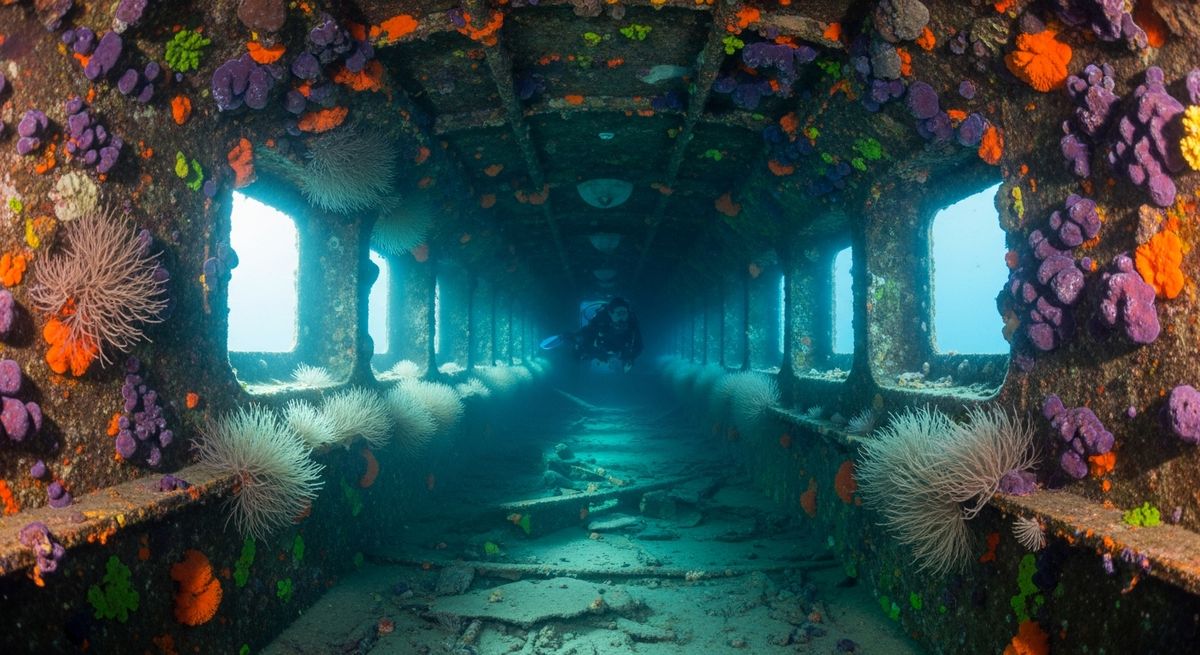
Virador
Protected Area
Santa Rosa
Why dive here
With 217+ marine species recorded in the area - including dolphins, humpback whales, orcas, sea turtles and pufferfish - Virador offers some of Caribbean Coast's richest wreck diving. Water ranges 29-31°C, warmest March, April, May.
Virador is a solid choice when you’re diving out of Playas del Coco, a short 20-minute boat ride. We often find ourselves drifting around this pinnacle, and it’s a pretty easy ride, usually taking us about an hour to circle. The real draw here is the sheer volume of fish. Think schools of jacks so dense they dim the light, and plenty of brashy grunts holding their ground. While it’s not the deepest dive, topping out around 20m, we love hanging out in the slightly deeper sandy areas, keeping an eye out for white tip reef sharks and the occasional Haller’s round ray. Visibility averages around 9m, so it’s not always gin-clear, but we’ve had some fantastic days here. It’s a great spot for a relaxed drift, especially if you enjoy being enveloped by fish rather than hunting for macro. If you’re into big schools and a comfortable current, Virador usually delivers.
Safety Notes
Wreck site - avoid penetration without wreck diving certification. Watch for sharp metal and entanglement hazards.
Virador Wreck History
Vessel Type
cargo ship
Cause
unknown
The "Abessinia Wreck" is a well-known dive site in the Northumberland region, widely believed to be the remains of the SS Abessinia, a German cargo steamship that grounded on the Farne Islands in 1921. As one of the shallowest wrecks in the area, it's a fantastic and accessible dive for all certification levels. The wreckage is heavily scattered due to its long exposure to the powerful North Sea swells, creating a sprawling underwater playground. Divers can spend their time exploring the ship's huge boilers and identifiable sections of machinery, which are now encrusted with marine life and provide shelter for an abundance of fish and invertebrates. Its shallow nature makes it an ideal second dive of the day or a great opportunity for underwater photographers seeking excellent light conditions.
Nearest Dive Centres to Virador
Dive shops near Virador
BA
TikiHut Watersports Coco (located near Bosque del Mar hotel in playa Hermosa)
Rockdivers Pick up
Deep Blue Diving
Summer Salt Dive Center
Summer Salt
Reviews for Virador
Conditions
Ocean conditions, forecast and tides for Virador
Virador Ocean Conditions
Monthly averages for Virador, sourced from Open-Meteo marine data + Copernicus Marine (EU) - nearest station: Open-Meteo marine grid (9.78, -84.89) (48km away)
October Averages
Sea Temperature
29°C
85°F · Range: 27.9–31.1°C
Current Speed
5 cm/s
Direction: N (0°)
Chlorophyll-a
0.142 mg/m³
Clear water
Salinity
28.81 PSU
Based on 4 years of monitoring data · Data sources: Open-Meteo marine data + Copernicus Marine (EU)
Plan & book
Ways to dive Caribbean Coast, from day trips to liveaboards.
Day trips & courses
via GetYourGuideGuided dives, courses and snorkel trips with instant booking.
Find dive trips in Caribbean CoastPlaces to stay
via Booking.comHotels and dive resorts near Caribbean Coast.
Search stays in Caribbean CoastDive insurance
Most travel insurance excludes or limits scuba. Check what you need before you go.
Dive insurance explainedPartner links: we may earn a commission if you book, at no extra cost to you. How we make money
Where to Stay near Virador
Prices from Booking.com. We may earn a commission at no extra cost to you.