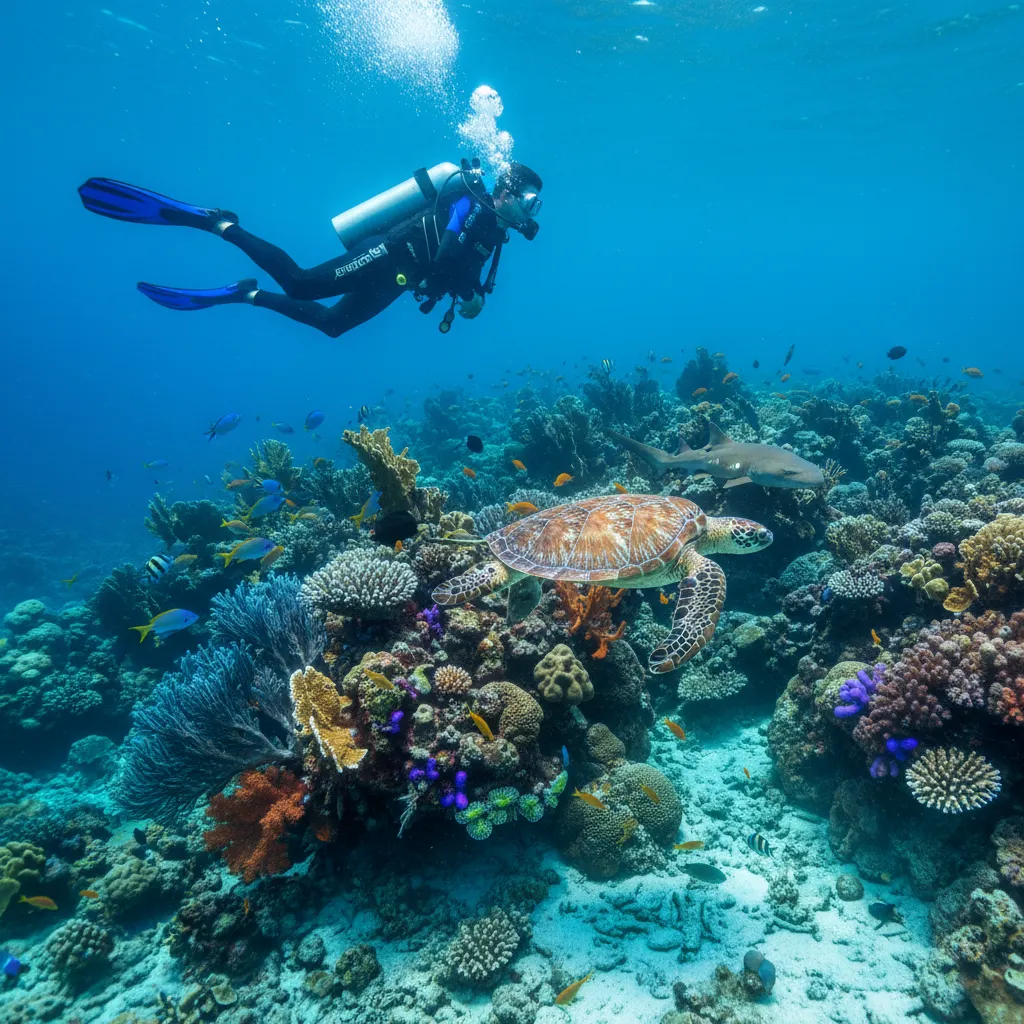
Diving in Corn Islands
Why dive here
Corn Islands offers some of Nicaragua's richest diving, with 207+ marine species recorded in the area - including barracuda, lemon sharks, seahorses, sea turtles and sperm whales. Water sits around 28°C.
The Corn Islands, tucked off Nicaragua's Caribbean coast, feel like a proper escape. You fly in on a tiny prop plane, and the pace just… slows. Diving here is proper old-school Caribbean: think uncrowded reefs, easy-going dive shops, and genuinely good value. We love the sheer variety, from exploring the labyrinthine tunnels of Blue Channel, where nurse sharks often snooze, to the playful drift over sites like Blowing Rock, which is a fantastic spot to see big parrotfish and the occasional reef shark cruising by. Our favourite time to visit is outside hurricane season, roughly February to May, when the weather is settled and visibility is usually cracking. You'll see a lot of the usual Caribbean suspects, but we’re particularly fond of spotting the quirky cowfish and those shy redlip blennies peeking from crevices. Keep an eye out for the mushroom scorpionfish, too; they’re masters of disguise on the reef. It’s not a place for guaranteed pelagic action, though silky sharks do pass through, but for vibrant reef health and a truly laid-back vibe, the Corn Islands are hard to beat. Just be ready for that island time to kick in; everything moves a little slower, which is exactly why we go.
Corn Islands Dive Site Map
Dive sites and dive centres in Corn Islands
Corn Islands Dive Sites
45 dive sites in Corn Islands
ATLANTIC FREEZE
The Atlantic Freeze, an old carrier blown onto the shore by Hurricane Joan back in '88, isn't your typical deep wreck dive. Instead, it’s a fascinating, if slightly eerie, shallow exploration right off the beach. We love how accessible it is; you can literally wade out to it. What makes it special for us is the way the ship’s skeleton, particularly the bow, has been completely taken over by the sea. You’ll find a huge amount of schooling fish here, darting through the rusted metal. The light plays beautifully off the hull in the afternoons, especially when the water is calm. Look closely, and you’ll spot nurse sharks tucked into crevices, their tails occasionally flicking out. Our favorite part is the stern section, which breaks the surface at low tide; it’s a stark reminder of the hurricane's power. It’s a great spot for photographers and newer divers who want the wreck experience without the depth. Just be mindful of surge on choppier days, as it can push you around a bit.
Baboon Cay
Baboon Cay offers a gentle coral reef dive on the protected side of Great Corn Island. We found fields of elkhorn coral stretching out, providing shelter for schooling snapper and grunts. It’s a shallower site, usually calm, making it a good spot for new divers or those looking for a relaxed second dive. Keep an eye out for nurse sharks resting under ledges.
Baboon Cay
Baboon Cay offers a gentle coral reef dive on the protected side of Great Corn Island. We found fields of elkhorn coral stretching out, providing shelter for schooling snapper and grunts. It’s a shallower site, usually calm, making it a good spot for new divers or those looking for a relaxed second dive. Keep an eye out for nurse sharks resting under ledges.
Blowing Rock
Blowing Rock sits about a 20-minute boat ride from Big Corn Island, a striking pinnacle that breaks the surface. Descending, we usually find a good mix of hard and soft corals clinging to the rock face, with schools of grunts and snappers circling. Look closer for the angelfish and butterflyfish picking their way across the reef, and keep an eye out for larger blackfish lurking deeper. It’s a solid dive for those comfortable with a bit of current, offering consistent, enjoyable encounters without ever feeling too extreme.
Blowing Rock
Blowing Rock is a volcanic pinnacle that starts around 10m and drops to 35m, making it a good intermediate dive. You'll often find nurse sharks resting in crevices and reef sharks patrolling the deeper sections. Eagle rays glide by regularly, and we’ve spotted interesting smaller stuff like pygmy tonguefish and goldspot gobies on the rock face. It’s a solid dive for those who appreciate pelagics and unique macro life without extreme depths.
Boden Reef
Boden Reef gives you a good feel for the Caribbean side of Nicaragua. It’s a proper coral reef, not too deep, where you can kick back and really observe what’s going on. We often spot schools of grunts and snapper hanging out, and the barracuda here are usually quite curious, watching you from a distance. Keep an eye out for fringed filefish, they’re masters of camouflage and always a treat to find. It’s a relaxed dive, good for photographers who like to take their time, or anyone looking to enjoy a straightforward reef exploration.
Cave
The Cave, just off Little Corn, gives you exactly what the name implies, but in a user-friendly package. We're talking shallow caves and swim-throughs, nothing too demanding, bottoming out around 11 meters. Visibility often sits around 15 meters, making it easy to appreciate the rock formations draped in mustard hill coral. Look for blackfish darting around the crevices, and if you’re lucky, a passing eagle ray might glide by. It’s a nice easy dive, great for knocking off some rust or for anyone keen on poking into shadowy corners without the full overhead environment commitment.
Cayo Forster
Cayo Forster offers a classic Caribbean reef dive off the Corn Islands. We often find nurse sharks resting in the sandy patches here, along with a good scattering of lobsters tucked into the reef crevices. It’s a pretty gentle dive, suitable for newer divers or anyone looking for a relaxed exploration rather than strong currents. Expect healthy coral formations and plenty of smaller reef fish.
Cayo Forster
Cayo Forster offers a classic Caribbean reef dive off the Corn Islands. We often find nurse sharks resting in the sandy patches here, along with a good scattering of lobsters tucked into the reef crevices. It’s a pretty gentle dive, suitable for newer divers or anyone looking for a relaxed exploration rather than strong currents. Expect healthy coral formations and plenty of smaller reef fish.
Cayo French Man
Cayo French Man, just a short boat ride from Big Corn, offers a pleasant drift over a healthy coral reef. We typically see nurse sharks tucked under ledges and plenty of schooling snapper out in the open. It's a relaxed dive, good for getting comfortable with a bit of current, and the shallower sections are great for photography when the light is right. Keep an eye out for eagle rays gliding past in the blue, especially in the mornings.
Cayo French Man
Cayo French Man, just a short boat ride from Big Corn, offers a pleasant drift over a healthy coral reef. We typically see nurse sharks tucked under ledges and plenty of schooling snapper out in the open. It's a relaxed dive, good for getting comfortable with a bit of current, and the shallower sections are great for photography when the light is right. Keep an eye out for eagle rays gliding past in the blue, especially in the mornings.
Cayo Little Tyara
Cayo Little Tyara is a solid reef dive off the Corn Islands. We often find good brain and elkhorn coral formations here, with plenty of small reef fish flitting about. It's a relaxed dive, usually with gentle currents, making it a good choice for newer divers or those looking for a calm second or third tank. Expect a pleasant, unhurried exploration rather than big pelagic action.
Show all 45 dive sites in Corn Islands
- Cayo Little Tyara
- Cayo Noreste
- Cayo Noreste
- Columbilla Cay
- Columbilla Cay
- Compass Reef
- Compass Reef
- Egg Rock
- Egg Rock
- French Cay
- Great Tree Cay
- Great Tree Cay
- Jakes Place
- Kings Cay
- Kings Cay
- Lark Rock
- Little Kings Cay
- Little Kings Cay
- Long Reef
- Long Rock
- Mariner Shoal
- Maroon Knoll
- Seal Cay
- Seal Cay
- Seal Rock
- Shark Hole
- Suenos
- Tarpon Channel
- Tarpon Channel
- Turtle Hole
- White Hole
- Williams Cay
- Yellowtail Reef
Corn Islands Dive Centres
7 dive shops and operators in Corn Islands
Ocean Wildlife in Corn Islands
207 species recorded in Corn Islands
Corn Islands Daylight & Sunrise/Sunset
Sunrise and sunset times for Corn Islands, calculated from coordinates
Today - Sunday 11 October
Sunrise
05:23
Sunset
17:18
Daylight
11h 55m
Golden Hour
16:50
First light (dawn) at 05:02 · Last light (dusk) at 17:40
Monthly Averages
| Month | Sunrise | Sunset | Daylight |
|---|---|---|---|
| Jan | 05:59 | 17:27 | 11h 28m |
| Feb | 05:56 | 17:40 | 11h 44m |
| Mar | 05:42 | 17:45 | 12h 2m |
| Apr | 05:22 | 17:46 | 12h 24m |
| May | 05:10 | 17:51 | 12h 41m |
| JunLongest | 05:09 | 18:00 | 12h 51m |
| Jul | 05:16 | 18:03 | 12h 48m |
| Aug | 05:22 | 17:55 | 12h 33m |
| Sep | 05:23 | 17:36 | 12h 13m |
| OctNow | 05:24 | 17:16 | 11h 52m |
| Nov | 05:32 | 17:06 | 11h 34m |
| DecShortest | 05:47 | 17:11 | 11h 24m |
Times are approximate local times based on longitude. Actual times may vary slightly depending on the exact timezone observed in Corn Islands.
Where to Stay near Corn Islands
Prices from Booking.com. We may earn a commission at no extra cost to you.
Marine Protected Areas near Corn Islands
3 protected areas near Corn Islands - please respect local regulations when diving
Cayos Miskitos y Franja Costera Inmediata
Cayos Perlas
Sistema de Humedales de la Bahía de Bluefields
Getting to Corn Islands
Bluefields
San Andrés
San José (Alajuela)
Plan & book
Ways to dive Corn Islands, from day trips to liveaboards.
Day trips & courses
via GetYourGuideGuided dives, courses and snorkel trips with instant booking.
Find dive trips in Corn IslandsPlaces to stay
via Booking.comHotels and dive resorts near Corn Islands.
Search stays in Corn IslandsDive insurance
Most travel insurance excludes or limits scuba. Check what you need before you go.
Dive insurance explainedPartner links: we may earn a commission if you book, at no extra cost to you. How we make money