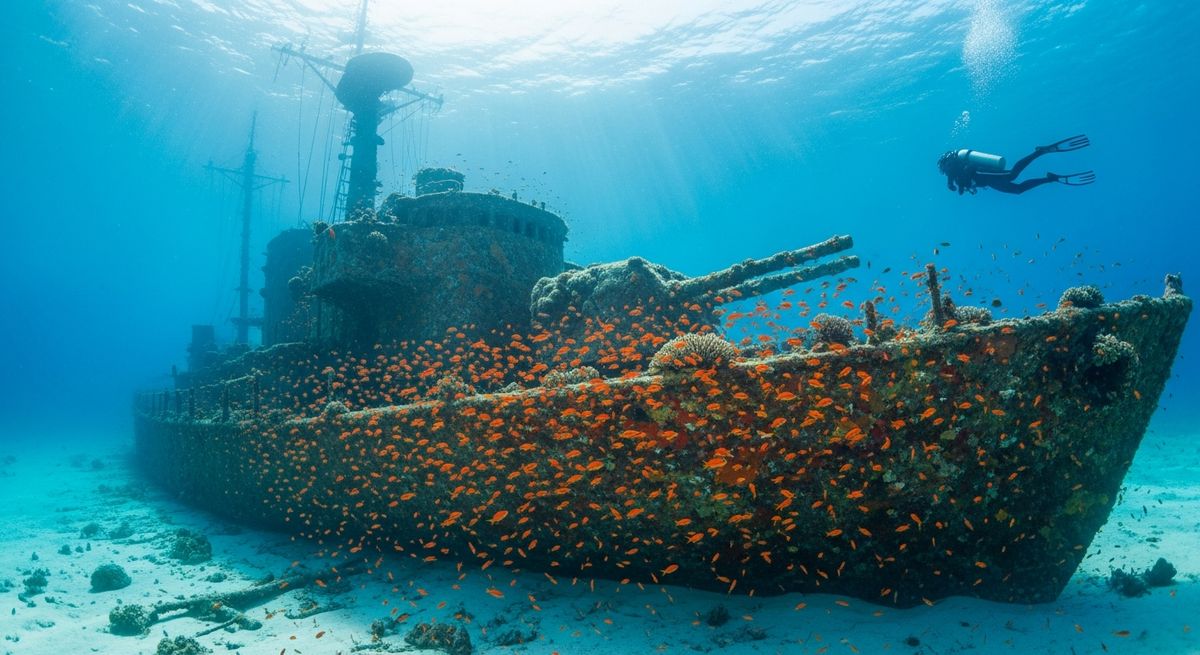
Cave
Why dive here
With 207+ marine species recorded in the area - including barracuda, lemon sharks, seahorses, sea turtles and sperm whales - Cave offers some of Corn Islands's richest wreck diving. Water ranges 27-30°C, warmest May, September, October.
The Cave, just off Little Corn, gives you exactly what the name implies, but in a user-friendly package. We're talking shallow caves and swim-throughs, nothing too demanding, bottoming out around 11 meters. Visibility often sits around 15 meters, making it easy to appreciate the rock formations draped in mustard hill coral. Look for blackfish darting around the crevices, and if you’re lucky, a passing eagle ray might glide by. It’s a nice easy dive, great for knocking off some rust or for anyone keen on poking into shadowy corners without the full overhead environment commitment.
Typical Cave Dive Profile
Illustrative profile based on site depth and type. Actual dive profiles vary - always follow your dive computer and training.
Safety Notes
Wreck site - avoid penetration without wreck diving certification. Watch for sharp metal and entanglement hazards.
Nearest Dive Centres to Cave
Dive shops near Cave
Dive Little Corn
Derek s Place
Dos Tiburones Dive Shop
Centro de Buceo de la Isla del Maíz
Reviews for Cave
Conditions
Ocean conditions, forecast and tides for Cave
Cave Ocean Conditions
Monthly averages for Cave, sourced from Open-Meteo marine data - nearest station: Open-Meteo marine grid (12.42, -83.29) (5km away)
October Averages
Sea Temperature
30°C
86°F · Range: 28.8–31.8°C
Air Temperature
28°C
82°F
Wind Speed
6.13 m/s
11.9 knots
Atmospheric Pressure
1010.4 hPa
Based on 4 years of monitoring data · Data sources: Open-Meteo marine data
Plan & book
Ways to dive Corn Islands, from day trips to liveaboards.
Day trips & courses
via GetYourGuideGuided dives, courses and snorkel trips with instant booking.
Find dive trips in Corn IslandsPlaces to stay
via Booking.comHotels and dive resorts near Corn Islands.
Search stays in Corn IslandsDive insurance
Most travel insurance excludes or limits scuba. Check what you need before you go.
Dive insurance explainedPartner links: we may earn a commission if you book, at no extra cost to you. How we make money
Where to Stay near Cave
Prices from Booking.com. We may earn a commission at no extra cost to you.