QUIDNET
Protected Area
Manglares de Panamá Viejo
Why dive here
With 175+ marine species recorded in the area - including bull sharks, dolphins, humpback whales, manta rays and mobula rays (devil rays) - QUIDNET offers some of Bocas del Toro's richest wreck diving. Water ranges 28-31°C, warmest May, June, October.
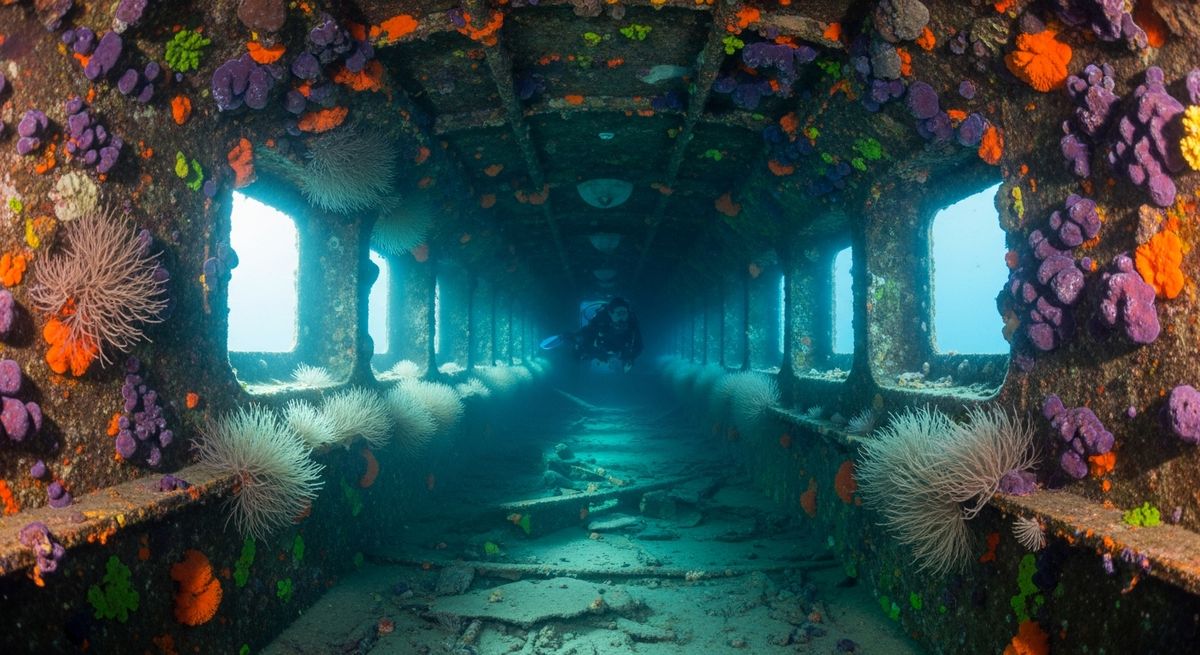
QUIDNET. Just the name sounds like a Cold War-era spy novel, doesn't it? This isn’t your typical Caribbean coral garden, and that’s why we love it. The *QUIDNET*, a substantial 110-meter carrier vessel, came to its end in 1979 after a run-in with another ship in the Panama Canal. Here in Bocas, she rests on her side in just 5 meters of water, making it one of the most accessible large wrecks you’ll ever dive. We’ve spent hours poking around this hull. The sheer scale is impressive, even in such shallow water. You can follow the deck plating, which now forms a vertical wall, and peer into cargo holds that are surprisingly open. Sunlight streams through the openings, illuminating schools of snapper that dart between the corroded metal. Look closely at the superstructure; it's practically encrusted with hard corals and sponges. We often find large parrotfish grazing on the hull, and nurse sharks are known to take shelter under the deeper sections. It’s a shallow dive, so you get incredible bottom time, perfect for photography or just soaking in the atmosphere of a truly historical wreck. We'd suggest going mid-morning, before the wind picks up, for the best visibility.
Typical QUIDNET Dive Profile
Illustrative profile based on site depth and type. Actual dive profiles vary - always follow your dive computer and training.
Safety Notes
Wreck site - avoid penetration without wreck diving certification. Watch for sharp metal and entanglement hazards.
Nearest Dive Centres to QUIDNET
Dive shops near QUIDNET
Scuba Panama
Ayyash Divers
Scuba Portobelo
2 Oceans Divers
Reviews for QUIDNET
Conditions
Ocean conditions, forecast and tides for QUIDNET
QUIDNET Ocean Conditions
Monthly averages for QUIDNET, sourced from Open-Meteo marine data + Copernicus Marine (EU) - nearest station: Open-Meteo marine grid (9.35, -82.2) (0km away)
October Averages
Sea Temperature
31°C
87°F · Range: 29.9–32.1°C
Current Speed
6 cm/s
Direction: E (90°)
Chlorophyll-a
0.326 mg/m³
Moderate productivity
Salinity
30.24 PSU
Based on 4 years of monitoring data · Data sources: Open-Meteo marine data + Copernicus Marine (EU)
Plan & book
Ways to dive Bocas del Toro, from day trips to liveaboards.
Day trips & courses
via GetYourGuideGuided dives, courses and snorkel trips with instant booking.
Find dive trips in Bocas del ToroPlaces to stay
via Booking.comHotels and dive resorts near Bocas del Toro.
Search stays in Bocas del ToroDive insurance
Most travel insurance excludes or limits scuba. Check what you need before you go.
Dive insurance explainedPartner links: we may earn a commission if you book, at no extra cost to you. How we make money
Where to Stay near QUIDNET
Prices from Booking.com. We may earn a commission at no extra cost to you.