Diving in Bocas del Toro
Why dive here
Bocas del Toro offers some of Panama's richest diving, with 175+ marine species recorded in the area - including bull sharks, dolphins, humpback whales, manta rays and mobula rays (devil rays). Water ranges 28-29°C, warmest January, August, December.
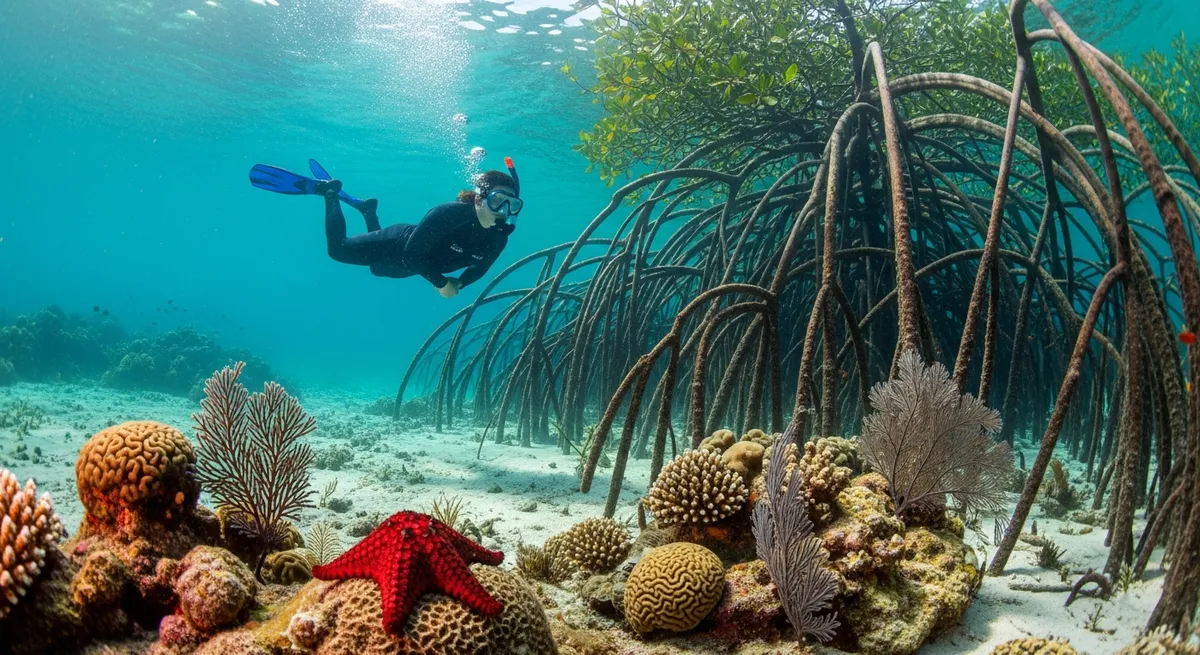
Bocas del Toro diving is a quirky Caribbean affair, distinct from Panama’s Pacific side. We’re talking about a relaxed archipelago, where the current descriptions often mention “colourful coral gardens, mangrove channels, and frog fish,” and that’s a fair summary. You'll spend your surface intervals dodging rain showers and enjoying the lively town, then dive into spots where the visibility can swing from 25 metres to a murky 10. It’s not always gin-clear, but we love it for its character. Our favourite dives here are the ones that blend reef and structure. Think about drifting past a school of Atlantic spadefish, or spotting a surprisingly large barracuda lurking near a coral head. The wreck sites are more for atmosphere than pristine history, often hosting jewel morays and the occasional spotted sharpnose puffer. You’ll find some great macro life, especially if you have a keen eye for dragon wrasse and those famously camouflaged frog fish - they really do test your patience. We’d suggest focusing on the shallower sites and mangrove channels. That’s where you’ll usually find the best light, and where the blend of hard and soft corals really pops. Just be ready for the occasional strong surge. It’s the Caribbean, after all.
Bocas del Toro Dive Site Map
Dive sites and dive centres in Bocas del Toro
Bocas del Toro Dive Sites
26 dive sites in Bocas del Toro
Airplane Wreck
We love a good wreck, and Bocas del Toro’s Airplane Wreck really delivers a quirky, memorable dive. It's an old DC-3, sunk deliberately, and it sits upright on a sandy bottom, shallow enough that you get some incredible light filtering through the water column. Our favourite thing about it is the way nature has already started reclaiming it; the cockpit is particularly cool, with glass still in some of the windows, and the fuselage offers these fantastic swim-throughs where you'll often find schooling grunts or a curious snapper peering out. You can still make out the pilot’s seat and controls, which is a neat touch. Look closely around the wings and you'll spot sergeant majors darting in and out, and we've even seen nurse sharks napping underneath the tail section on occasion. It’s not a deep dive, maybe 12-15 metres, making it perfect for newer wreck divers or those looking for a relaxed second dive. Head there in the late morning for the best light.
Buenaventura
Buenaventura in Bocas del Toro is a solid choice for a casual afternoon dive. It's a gentle reef slope, good for newer divers or those looking for a relaxed pace. We've often seen nurse sharks tucked under ledges here, and the usual suspects like parrotfish and schools of snapper are common. It’s a good, reliable spot when you're in the area.
Coral Reef Labyrinth
The Coral Reef Labyrinth in Bocas del Toro is a good spot for casual exploration. It's a shallow coral area with lots of nooks and crannies to poke around in, perfect for spotting smaller reef fish and crabs tucked away. We'd suggest it for newer divers or anyone looking for a relaxed, easy dive rather than a high-adrenaline drift. Visibility can vary, so check conditions beforehand.
DONAU
The Donau wreck, a fishing vessel sunk back in '75, sits upright on the seabed at a solid 50 metres. It’s a deep dive, no doubt, so bring your experience and your confidence. What you get for the effort is a proper wreck, still quite intact, with the superstructure offering plenty of dark corners to poke a light into. Groupers often hang out here, lurking in the shadows, and we’ve seen some decent schools of snapper darting around the mast. It's a great choice for those who appreciate the quiet intensity of a deeper wreck and don't mind the bottom time.
ECUADOR
Ecuador, off Isla Colón, is one of those dive sites that just keeps giving, even at its shallow depth. We love it because it’s a proper wreck dive – a 30-meter motor vessel – but without the usual associated challenges. This isn't just a pile of metal; the ship sits upright and largely intact, giving it a real presence. You can follow the length of the hull, spotting the propeller and rudder, then poke around the bridge area. What makes it special for us is how marine life has absolutely taken over. Schools of glassy sweepers shimmer inside the darker sections, and we often find nurse sharks resting under ledges. Look closely at the deck plating and you’ll find yellowline arrow crabs picking their way through the sponges. It’s perfect for divers who want to immerse themselves in a wreck without the pressure of deep profiles or strong currents. We always feel a sense of discovery here, like we're exploring a lost world in miniature. Go slow and really soak it in; there’s always something new to spot.
Enchanted Forrest
The Enchanted Forrest, off the coast of Bocas del Toro, offers a gentle drift suitable for newer divers. We found the highlight to be the swim-throughs and overhangs, creating a maze-like feel. Look for nurse sharks tucked into the crevices and schooling snapper around the rock formations. It's a relaxed dive, good for knocking off the rust.
FREELANCE
Freelance isn't your typical wreck dive, and that's exactly why we love it. This schooner, grounded and stripped bare long ago, sits in just 5 metres of water, making it a perfect spot for divers new to wrecks or those who just want a relaxed, long bottom time. We think it’s best explored with a good torch, even in the shallows, to really appreciate the way the light plays through the skeletal remains of the hull. You'll find schools of snapper darting in and out of the rusted ribs, and surprisingly large parrotfish grazing on the algae-covered timbers. It’s less about dramatic structure and more about the quiet, persistent colonisation by marine life – we’ve spent ages just watching juvenile drum fish doing their hypnotic dance among the beams. Our favourite part has to be the feeling of history, of a working vessel returned to the sea, now a home for countless critters.
IDA P
The IDA P wreck in Bocas del Toro is a solid dive, especially if you’re into poking around an older vessel. This motor vessel went down back in '86, catching fire then capsizing, and now it rests at a shallow nine meters. You can spend a good chunk of bottom time exploring its 54.9-meter length. We’ve found plenty of reef fish sheltering in its skeletal remains, and the coral growth isn't too shabby considering its history. It’s a pretty relaxed dive, good for newer wreck enthusiasts or just a chill afternoon dip.
Isla Iguana
Isla Iguana in Bocas del Toro is a solid choice for a relaxing dive, particularly if you’re newer to the sport or just fancy an easy drift. You'll often spot nurse sharks tucked under ledges and some decent snapper schools cruising by. The currents here are generally mild, making it a comfortable spot to practice buoyancy and enjoy the reef at your own pace.
Isla Perro
Isla Perro, in Bocas del Toro, offers a straightforward dive. Expect to cruise along a gently sloping reef, spotting the usual Caribbean suspects like parrotfish and angelfish. It's a relaxed site, good for knocking off the rust or for newer divers getting comfortable in the water.
Islote La MIel
Islote La Miel in Bocas del Toro is a decent spot for a relaxed dive, particularly if you’re newer to the sport or just getting back in the water. The site features a mix of reef formations with some interesting nooks to explore, where we've often found nurse sharks tucked away. You'll see plenty of schooling fish, like grunts and snappers, and a good chance of spotting lobsters hiding in the crevices. It’s a comfortable dive, rarely challenging, making it a good choice for multi-dive days.
Jose Pobre Caverns
Jose Pobre Caverns is a weird and wonderful dive, definitely our favourite if you’re looking for something a bit different in Bocas. It’s not about huge pelagics or endless reef walls here. Instead, you're exploring a labyrinth of shallow channels and caverns that snake through the coral. We love the feeling of swimming through these narrow cuts, especially when a school of grunts suddenly swirls out of a shadowy opening. The real magic happens when you break out into the small, sun-dappled pools inside the reef. The light filters down in shafts, illuminating little pockets where you’ll often find Caribbean hermit crabs scuttling over the sand or a sleepy spotted soapfish tucked into a crevice. Keep an eye out for the unusual stuff, too – we’ve spotted opossum pipefish blending perfectly with the sponges and plenty of those pretty Robert’s cowries clinging to the walls. It’s a dive that rewards slow, deliberate exploration. Best done mid-morning when the sun is high enough to really make those internal pools glow. This spot is ideal for divers who enjoy intricate topography and finding the small, unusual critters rather than big fish.
Show all 26 dive sites in Bocas del Toro
Bocas del Toro Dive Centres
10 dive shops and operators in Bocas del Toro
2 Oceans Divers
Ayyash Divers
coiba dream divers
Coiba Snorkel Diving Center
Fluid Adventures
Frutería
Panama Dive Center
Scuba Coiba
Show all 10 dive centres in Bocas del Toro
Ocean Wildlife in Bocas del Toro
175 species recorded in Bocas del Toro
Bocas del Toro Daylight & Sunrise/Sunset
Sunrise and sunset times for Bocas del Toro, calculated from coordinates
Today - Sunday 11 October
Sunrise
06:06
Sunset
18:04
Daylight
11h 58m
Golden Hour
17:36
First light (dawn) at 05:45 · Last light (dusk) at 18:25
Monthly Averages
| Month | Sunrise | Sunset | Daylight |
|---|---|---|---|
| Jan | 06:38 | 18:16 | 11h 38m |
| Feb | 06:38 | 18:27 | 11h 50m |
| Mar | 06:26 | 18:29 | 12h 3m |
| Apr | 06:09 | 18:28 | 12h 19m |
| May | 05:58 | 18:31 | 12h 32m |
| JunLongest | 05:59 | 18:38 | 12h 40m |
| Jul | 06:05 | 18:42 | 12h 37m |
| Aug | 06:10 | 18:36 | 12h 26m |
| Sep | 06:08 | 18:19 | 12h 11m |
| OctNow | 06:06 | 18:02 | 11h 56m |
| Nov | 06:11 | 17:54 | 11h 42m |
| DecShortest | 06:25 | 18:01 | 11h 35m |
Times are approximate local times based on longitude. Actual times may vary slightly depending on the exact timezone observed in Bocas del Toro.
Where to Stay near Bocas del Toro
Prices from Booking.com. We may earn a commission at no extra cost to you.
Marine Protected Areas near Bocas del Toro
12 protected areas near Bocas del Toro - please respect local regulations when diving
Banco Volcán
Humedal de Bahía de Panamá
Humedal de Bahía de Panamá
Reverendo Padre Jesús Héctor Gallego Herrera
Punta Patiño
Portobelo
Peñón de La Honda
Sarigua
Isla Boná
Isla Iguana
Taboga-Urabá
Manglares de Panamá Viejo
Getting to Bocas del Toro
Tocumen
Cartagena
San Andrés
Plan & book
Ways to dive Bocas del Toro, from day trips to liveaboards.
Day trips & courses
via GetYourGuideGuided dives, courses and snorkel trips with instant booking.
Find dive trips in Bocas del ToroPlaces to stay
via Booking.comHotels and dive resorts near Bocas del Toro.
Search stays in Bocas del ToroDive insurance
Most travel insurance excludes or limits scuba. Check what you need before you go.
Dive insurance explainedPartner links: we may earn a commission if you book, at no extra cost to you. How we make money