Diving in Yap
Why dive here
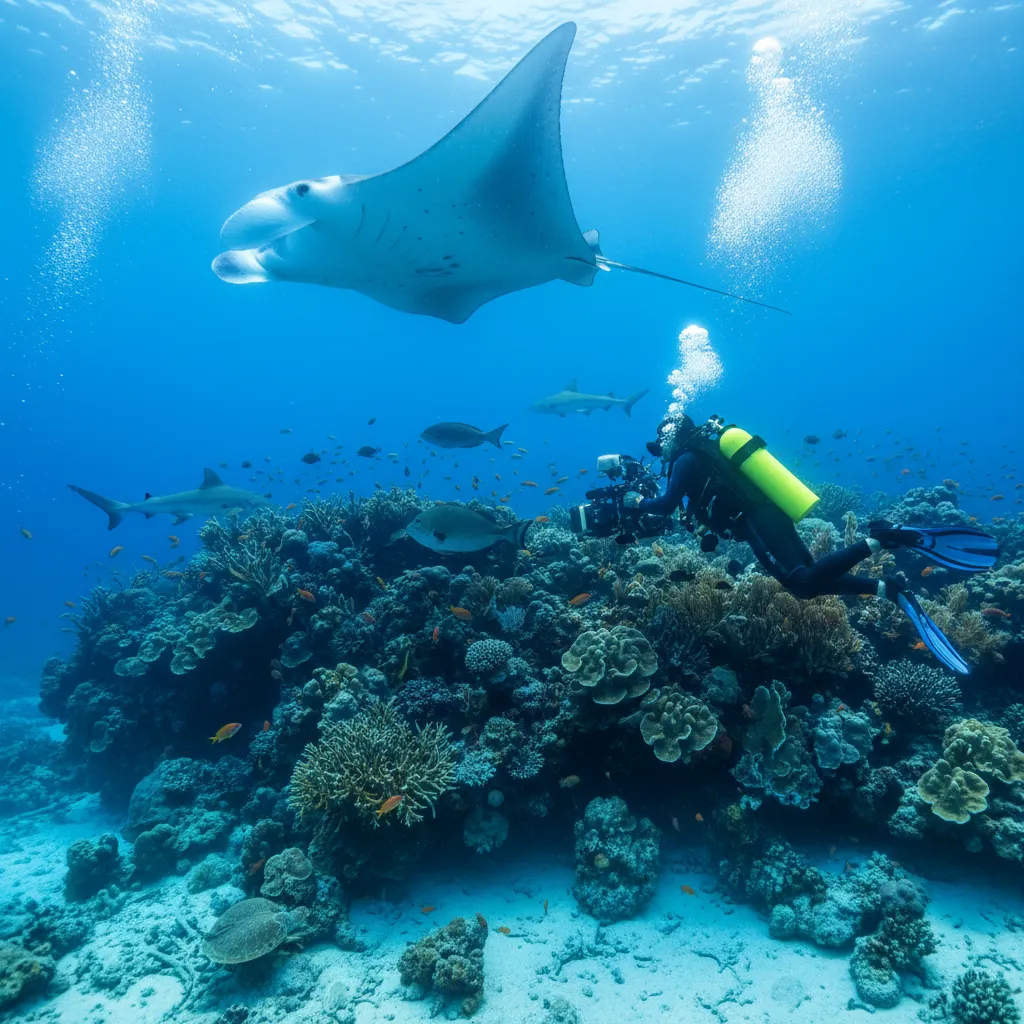
Yap offers some of Micronesia's richest diving, with 297+ marine species recorded in the area - including barracuda, blacktip reef sharks, giant moray eels, grey reef sharks and seahorses. Water ranges 29-30°C, warmest June, July, October.
Yap. It’s a name that conjures images of stone money and mantas, and honestly, the mantas deliver. We love Yap for its commitment to these gentle giants; the dive operators here know exactly where and when to find them at the cleaning stations, making for almost guaranteed encounters. It’s not just the mantas, though. We’ve had some cracking drift dives along the walls, sharing the current with whitetip reef sharks and the occasional spotted grouper. What makes Yap a standout for us is that focused experience. You come here for the mantas, and you get them, often within touching distance at sites like M’il Channel. Beyond the mantas, look for the smaller stuff - leopard blennies are common, and we’ve spent happy safety stops spotting dwarf morays tucked into crevices. The visibility can be excellent, though the currents that bring in the mantas can also make for a proper workout. Our favourite time to visit is during the drier months, from November to May, when the water is typically calmer and the manta action feels particularly consistent. Just remember, these are wild animals, so always respect their space, even when they seem oblivious to yours.
Yap Dive Site Map
Dive sites and dive centres in Yap
Yap Dive Sites
38 dive sites in Yap
1 2
We found "1 2" listed as a dive site in Yap, but specific details are pretty scarce. It's likely a local spot, perhaps a lesser-known coral patch or wall with typical Micronesian reef inhabitants. Without more information, we'd suggest it's best for divers already exploring Yap's famous manta ray channels who want to add an extra, exploratory dive to their logbook. Expect the usual suspects: reef fish, some hard and soft corals, maybe a turtle if you're lucky.
Big Bend
Big Bend in Yap is often a drift dive, following the channel. You'll move with the current past steep walls, looking out for grey reef sharks patrolling the drop-off. It’s a site for those comfortable with current and keen to see pelagics without much effort. Keep an eye on your depth here, as the wall drops deep.
Bird Island
Bird Island in Yap is mostly a drift dive, following the currents along a gently sloping reef. We've seen plenty of reef sharks here, often cruising in the blue, and the occasional manta ray makes an appearance too. It’s generally a relaxed dive, good for photographers who want to take their time, but keep an eye on the current strength; it can pick up. This spot is a solid choice for divers looking for pelagics without too much exertion.
CHIDAI MARU NO 25
The Chidai Maru No. 25 isn’t your typical deep Yap wreck. Forget the big swim-throughs and the thermoclines. This Japanese tanker ran aground on Ngulu Atoll, and she now sits right on the surface, her hull and superstructure breaking the water. We love this site for its sheer accessibility, a true snorkel-and-chill wreck dive. You’re exploring a shipwreck that’s practically an island, with the sun streaming through the shallow water illuminating every rivet. We’ve seen small reef sharks patrolling the shadows of the bow, and a kaleidoscope of reef fish darting in and out of the rusted metalwork. Our favourite part? Peeking into the exposed engine room from above, watching the light play on the submerged machinery. This spot is perfect for photographers who want ample natural light, or anyone who enjoys a leisurely drift over history without the need for heavy gear. Just grab your mask and fins, and you’re set for a proper look at a piece of wartime history.
Choqol Mini Wall
Choqol Mini Wall offers a mellow dive along a coral-encrusted drop-off. You’ll drift past gorgonian fans and a scatter of smaller reef fish, maybe a parrotfish or two chewing on coral. It’s a comfortable option for a relaxed second dive, or for those newer to wall diving looking to build confidence without strong currents.
CURACO
Curaco isn't your typical Yap dive, and that's precisely why we love it. This isn't a deep, blue water drift with manta rays, it’s a shallow, sun-drenched exploration of a grounded fishing vessel. Sunk back in '82, she sits upright in about 10 meters of water, offering a calm, accessible wreck dive that’s perfect for a second or third dive of the day, or even a relaxed afternoon snorkel. What we really enjoy about Curaco is how completely colonised by the reef it’s become. Her deck is a mosaic of hard corals, and schools of fusiliers swirl around the superstructure, often so thick they dim the sunlight filtering through the surface. Look closely in the nooks and crannies for nudibranchs, and we’ve spotted moray eels peeking out from collapsed sections of the hull. You can comfortably circumnavigate the entire wreck, peeking into the wheelhouse and imagining her working life. It's a gentle, visually rich dive, ideal for photographers or those who simply want to spend an hour absorbing the details of a thriving artificial reef.
Eagle’s Nest - Micronesia
Eagle’s Nest in Yap is one of those sites that just feels good to drop into. We’re talking about a gentle slope down to around 25m, perfect for anyone looking for a relaxed dive without much fuss. You’ll find resident reef sharks cruising by, often a few grey reef sharks, keeping a watchful eye on proceedings. We’ve also spotted whitetips tucked under ledges, and the occasional turtle makes an appearance. It’s a comfortable dive, ideal for those getting their sea legs or just wanting a chill afternoon underwater.
Gabach Channel
Gabach Channel in Yap is one of those spots where you just settle in and watch the show. We often find ourselves drifting along, keeping an eye out for grey reef sharks patrolling the deeper sections. It’s a pretty easy channel dive, good for divers who enjoy a relaxed drift and consistent shark encounters without too much effort. If you like a predictable current and pelagics, it’s a solid choice.
Gapow Reef
Gapow Reef is a solid Yap dive, often presenting mild currents that drift you along a healthy hard coral slope. We frequently spot reef sharks patrolling the deeper sections and smaller pelagics like jacks and barracuda schooling in the blue. It’s a good choice for divers looking for a relaxed drift and consistent fish action.
HAYABUSA MARU NO.2
The Hayabusa Maru No.2 is a little beauty, especially if you’re into smaller wrecks with character. Sunk in 1964, this 23.5-meter fishing vessel sits upright and pretty much intact. We love how approachable she is, with parts of the superstructure just below the surface, making it fantastic for extended bottom times and even snorkelers can get a good look. Drop down and you'll find the wheelhouse still mostly there, often with a curious batfish peeking out. Penetration is limited to small swim-throughs, but it's the external exploration that really shines. Keep an eye out for the resident moray eels tucked into crevices, and we’ve often seen schools of snapper circling the mast. It’s a photographer's dream on a sunny day, with shafts of light filtering through the water column onto the encrusted hull. We’d suggest going in the morning; the light is usually best then and the currents are often milder. It’s a very chill dive, perfect for a relaxed second or third tank.
Kurrekurredutt Dropoff
Kurrekurredutt Dropoff offers a classic Yap wall dive, plunging deep into the Pacific. We've often found ourselves drifting along, watching for reef sharks patrolling the edge and smaller critters tucked into the coral. It’s a straightforward dive, good for anyone comfortable with depths, looking to experience Yap’s dramatic underwater topography. Expect good visibility and the chance of pelagics cruising by.
Laura Marie Wreck
The Laura Marie, a Japanese fishing trawler, sits upright on a sandy bottom just outside Colonia, Yap’s main town. We love how accessible it is, a quick boat ride and you’re dropping down onto a proper piece of history. What really gets us about this wreck isn't just its story, but the way nature has claimed it back. You’ll find the wheelhouse still largely intact, a great spot to peer inside and imagine the old crew. Schools of batfish often hang out around the mast, just swaying with the gentle surge, and we've regularly seen reef sharks cruising by in the blue, using the wreck as a kind of waypoint. Our favourite part is probably the stern, where the propeller is still mostly there, now covered in a colourful tapestry of soft corals and anemones. It's a relaxed dive, typically with minimal current, making it a fantastic second dive of the day or a solid choice for those newer to wreck diving who still want plenty to explore. Visibility is usually pretty good, around 20 metres or more, giving you ample time to take in the whole scene.
Show all 38 dive sites in Yap
- Lionfish Wall
- Magic Kingdom
- Main Channel
- Manta Ridge
- Manta Ridge
- Miil Channel
- Mi'l Channel
- Mill Channel new cleaning station
- Mill Channel old cleaning station
- Mill Channel: Ridge
- Peelack Channel
- PINE MARCH NO 2
- Reef Wall
- Semakai Reef
- Slow and Easy
- Stammtisch
- Stop Sign
- Submerged Eastern Atoll Reef
- Sunrise Reef
- Sunrise Reef
- Ulithi Atoll Reefs mostly Awash
- Vertigo
- Western Reefs Awash
- Yap Caverns
- Yap Islands Fringing and Barrier Reefs Awash
- Zero plane
Yap Dive Centres
2 dive shops and operators in Yap
Ocean Wildlife in Yap
297 species recorded in Yap
Yap Daylight & Sunrise/Sunset
Sunrise and sunset times for Yap, calculated from coordinates
Today - Sunday 11 October
Sunrise
05:36
Sunset
17:34
Daylight
11h 58m
Golden Hour
17:06
First light (dawn) at 05:15 · Last light (dusk) at 17:55
Monthly Averages
| Month | Sunrise | Sunset | Daylight |
|---|---|---|---|
| Jan | 06:09 | 17:46 | 11h 38m |
| Feb | 06:08 | 17:58 | 11h 50m |
| Mar | 05:56 | 18:00 | 12h 4m |
| Apr | 05:39 | 17:58 | 12h 20m |
| May | 05:28 | 18:01 | 12h 33m |
| JunLongest | 05:29 | 18:09 | 12h 40m |
| Jul | 05:36 | 18:13 | 12h 37m |
| Aug | 05:40 | 18:06 | 12h 26m |
| Sep | 05:39 | 17:50 | 12h 11m |
| OctNow | 05:36 | 17:32 | 11h 56m |
| Nov | 05:42 | 17:24 | 11h 42m |
| DecShortest | 05:56 | 17:31 | 11h 35m |
Times are approximate local times based on longitude. Actual times may vary slightly depending on the exact timezone observed in Yap.
Where to Stay near Yap
Prices from Booking.com. We may earn a commission at no extra cost to you.
Marine Protected Areas near Yap
1 protected area near Yap - please respect local regulations when diving
And Atoll
Getting to Yap
Yap Island
Babelthuap Island
Plan & book
Ways to dive Yap, from day trips to liveaboards.
Day trips & courses
via GetYourGuideGuided dives, courses and snorkel trips with instant booking.
Find dive trips in YapPlaces to stay
via Booking.comHotels and dive resorts near Yap.
Search stays in YapDive insurance
Most travel insurance excludes or limits scuba. Check what you need before you go.
Dive insurance explainedPartner links: we may earn a commission if you book, at no extra cost to you. How we make money