Diving in Upolu
Why dive here
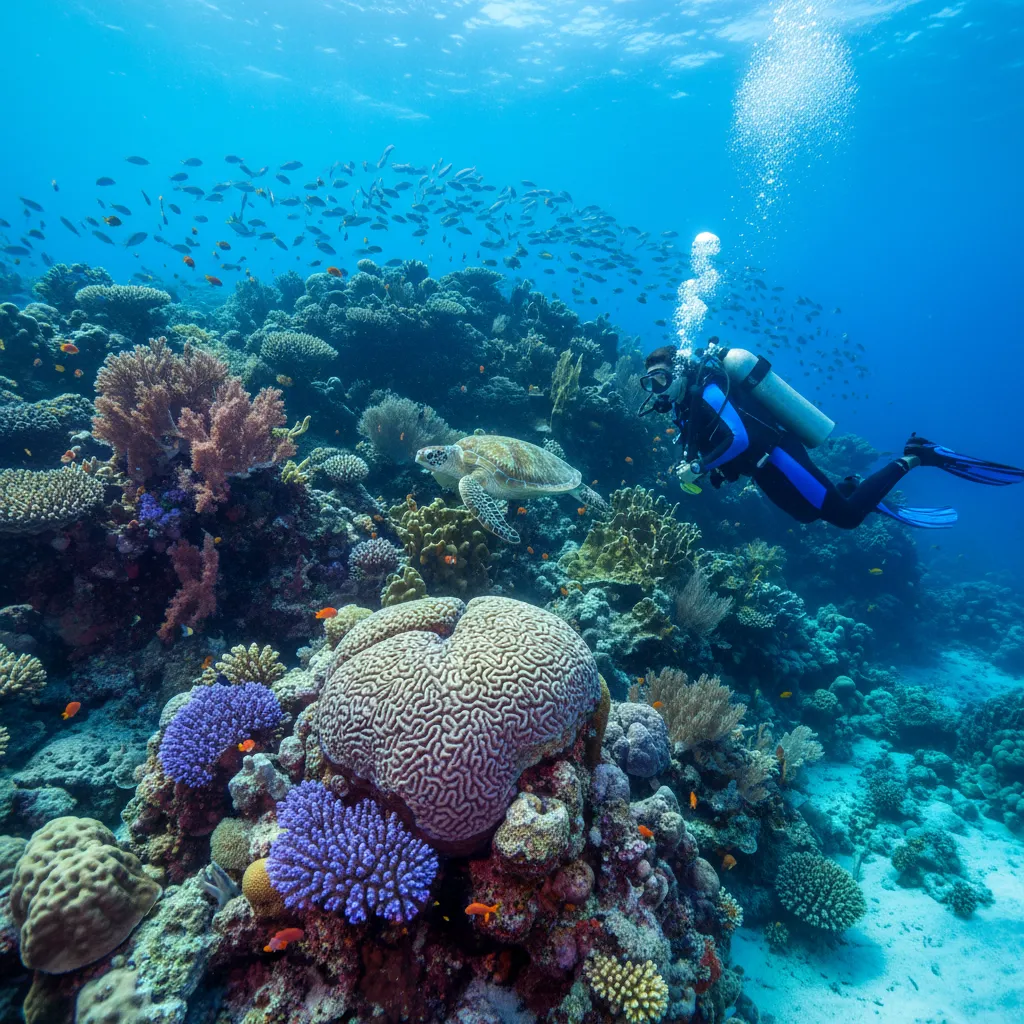
Upolu offers some of Samoa's richest diving, with 449+ marine species recorded in the area - including barracuda, blacktip reef sharks, eagle rays, giant moray eels and grey reef sharks. Water sits around 29°C.
Upolu delivers a relaxed, easygoing dive experience, a real throwback to how things felt a couple of decades ago. We love the accessible reef and cavern dives, particularly around the main island’s fringing reef. You’ll find some lovely macro here, we often spot Eye-lash Harptail-Blennies peeking out, and the Banded Toby is a regular. Our favourite dive is the Juno wreck, just off Apia, which is draped in colourful soft corals and home to plenty of Clown Tangs darting through the structure. Visibility can swing a bit depending on recent rains, but typically averages 15-20 metres. We always suggest hitting the water in the morning before any afternoon breezes kick up, making for calmer surface conditions. Look closely on the coral heads for tiny Strawberry Drupes or a shy Sneaky wrasse. It’s not about big pelagics here; it's about the intricate details and the peaceful drift over healthy coral. You’ll leave feeling refreshed, not rushed.
Upolu Dive Site Map
Dive sites and dive centres in Upolu
Upolu Dive Sites
8 dive sites in Upolu
Amuula Rock
Amuula Rock, just off Upolu, is one of our favourite spots for a relaxed dive in Samoa. The reef here isn't about huge pelagics, but rather about the sheer density of reef fish hugging the coral. We've often found ourselves in a kaleidoscope of common lyre-tail cod and six-line wrasse, flitting between the staghorn and leaf corals. It's a site that rewards a slow pace, really letting you observe the smaller details. Keep an eye out for freckled anglerfish; they blend in so well you might swim right past one. The rock itself creates some interesting nooks and crannies, perfect for spotting whitetail surgeonfish or even a shy whitetip reef shark cruising by. While the depth isn't extreme, there's enough topography to explore for a good 45-minute dive. We'd suggest this site for anyone looking for a chill dive with plenty of colourful reef life, especially if you enjoy macro photography or just want to drift and watch the everyday happenings of a healthy reef.
Apia Harbour Wreck
We love a wreck with a story, and the Apia Harbour Wreck has a cracker. This isn't some purpose-sunk artificial reef. This is a survivor of the devastating 1889 hurricane, a true piece of maritime history now lying peacefully at 10-20 metres. Descending, you can practically feel the weight of the past. The skeletal remains of the ship are completely draped in hard corals, mainly robust plate and staghorn formations, which gives it a more organic feel than some of the more stark, metal-focused wrecks out there. Our favourite parts are exploring the nooks and crannies where the marine life congregates. Look closely and you’ll find Banded Fringe Blennies peering out from crevices and Opossum Pipefish doing their best impression of a swaying coral branch. Schools of Big-eye Trevally often swirl around the bow, glinting in the shafts of light. This site is perfect for intermediate divers who appreciate a wreck with a strong historical narrative and enjoy spotting the smaller, camouflaged critters that have made it home. We’d suggest going in the morning; the light penetration really makes the corals pop.
KWANG MYUNG NO 65
The Kwang Myung No. 65 isn’t deep, and that’s precisely why we love it. This old fishing vessel, sunk back in '82, sits upright just below the surface, its superstructure breaking the water on a low tide. It’s an ideal spot for a long, relaxed dive or even a snorkel if you just want to poke around. We often find ourselves circling the wheelhouse, imagining the last moments of its working life before it became an artificial reef. What makes it special for us is the way the light filters through the shallows, illuminating every barnacle and frond of soft coral. Schools of small silver fish shimmer around the mast, and we’ve spotted moray eels peeking from shadowed nooks in the hull. The visibility here is usually excellent, making it easy to appreciate the scale of the wreck, even close up. It’s not a drift dive, so you can really take your time, exploring the decks and the growth that's completely taken over the metalwork. Our favourite time to visit is mid-morning, just as the sun gets high enough to really penetrate the water, painting the wreck in blues and greens.
Nāfanua Bank
Nāfanua Bank sits a fair way out from Upolu, which means fewer divers and usually better conditions. We’ve found the currents here can be a bit frisky, so it’s not really a place for your first ocean dive. But for those with a few logs in their book, it’s a drift diver’s dream. The reef here is just glorious, a proper explosion of branching corals and big, rounded bommies that shelter swarms of fish. We love watching the giant squirrelfish dart between crevices, their huge eyes seeming to glow in the deeper sections. You’ll often find schools of blue-lined tangs and parrotfish grazing on the coral, their colours popping against the blue. Keep an eye out for the smaller stuff too; we’ve spotted zebra blennies and those tiny, festive Christmas blennies wiggling on the reef crest. The visibility here, especially on a good day, is easily 25 metres. It feels like you’re flying over a submerged mountain range. Our tip: go mid-morning. The light penetrates beautifully, making the reds and oranges of the sponges truly vibrant.
NAM HAE NO.255
The Nam Hae No.255 isn't just a sunken fishing boat; it's a testament to the sea's reclaiming power, a quiet sentinel sitting in surprisingly shallow water near the airport. We love this wreck for its accessibility and the sheer density of glassfish that swirl through the holds. It feels less like a dive site and more like stepping into a living, breathing aquarium, the silver scales flashing like a disco ball as you swim through. At 29.9 metres, she's a decent size, and you can easily fin around the entire hull, peeking into the engine room or what’s left of the bridge. The bow points seaward, and the stern is practically kissing the shore, which makes for an easy entry and exit. Our favourite part is the proliferation of smaller life – we've seen everything from lionfish tucked into crevices to schools of snapper hugging the deck. It’s perfect for photographers and anyone who appreciates a wreck that tells a story, even if it's just the quiet tale of a boat succumbing to the elements. Go on a sunny day; the light play through the water onto the wreck is simply magical.
Namua Island
Namua Island really is something special, especially if you’re newer to diving or just want a relaxed, beautiful day out. We love pulling up to this little islet, just off Upolu’s eastern tip, knowing what’s below. The fringing reef here is shallow, topping out at around 15 metres, but it’s dense with corals and we’ve had some fantastic encounters with green turtles munching away, seemingly unbothered by us watching them. Entry is usually a gentle drop from the boat, and once you’re down, it’s all about a slow drift over the reef. We often spot needle-tooth morays peeking out from rocky crevices, and the smaller stuff is everywhere if you take the time to look – we’ve seen everything from colourful Indian seahares to plenty of cowries, like the Carnelian and Porous. Keep an eye out for the pink whiprays often found resting on the sandy patches between coral bommies. Visibility here tends to be consistently good, often pushing 20 metres, making it a great spot for underwater photography, particularly for wide-angle shots of the reef structure. Dive it in the morning for the best light.
Palolo Deep Marine Reserve
Palolo Deep isn't just a dive; it’s an event. You start with this easy snorkel over a shallow flat, maybe 5 meters deep, full of sun-dappled staghorn coral. Then, bam. It just drops away. A vertical wall plunges to 30 meters, revealing the ‘deep’ part of the name. It’s wild to hang there, looking down into that deep blue. We love the feeling of floating over the void. This dramatic drop-off means you get two very different dives in one. The shallow reef is where we’ve spotted Horned Bannerfish doing their thing and even a shy Alligator Pipefish tucked into the coral. Down deeper, along the wall itself, keep an eye out for Poss' Scorpionfish. They blend in so well. Visibility here is usually great, often 20 meters plus, which really lets you appreciate the scale of that drop. We’d suggest going in the morning; the light hitting the shallower reef is just something else. It's a spot that suits intermediate divers who appreciate dramatic topography and don't mind a bit of a current, which can pick up at times, especially near the entrance channel.
Tāemā Bank
Tāemā Bank is one of those places that feels wild, a proper offshore adventure. We love the sheer scale of the coral here; it’s not just a patch, it’s a whole submerged landscape of robust staghorn and hefty brain corals. Descending onto the bank, the light often shifts, filtering through schools of fusiliers so thick they momentarily dim the reef below. You’ll spot the usual suspects, of course – blackspot surgeonfish and saddled parrotfish grazing, but keep an eye out for the slinky slender snake eels poking from the sand. Our favourite encounters often involve the humphead unicornfish, cruising past with that distinctive horn. It’s a site that rewards patient observation rather than frantic searching. The currents can pick up out here, so it’s best for confident divers comfortable with a bit of drift. Plan your dive for midday if you can; the overhead sun really makes the coral colours pop.
Upolu Dive Centres
2 dive shops and operators in Upolu
Ocean Wildlife in Upolu
449 species recorded in Upolu
Upolu Daylight & Sunrise/Sunset
Sunrise and sunset times for Upolu, calculated from coordinates
Today - Sunday 11 October
Sunrise
06:01
Sunset
18:22
Daylight
12h 21m
Golden Hour
17:54
First light (dawn) at 05:40 · Last light (dusk) at 18:44
Monthly Averages
| Month | Sunrise | Sunset | Daylight |
|---|---|---|---|
| Jan | 06:08 | 19:00 | 12h 52m |
| Feb | 06:23 | 18:56 | 12h 34m |
| Mar | 06:28 | 18:40 | 12h 12m |
| Apr | 06:31 | 18:19 | 11h 48m |
| May | 06:37 | 18:05 | 11h 28m |
| JunShortest | 06:46 | 18:04 | 11h 18m |
| Jul | 06:50 | 18:11 | 11h 22m |
| Aug | 06:41 | 18:19 | 11h 38m |
| Sep | 06:21 | 18:21 | 12h 0m |
| OctNow | 05:59 | 18:23 | 12h 24m |
| Nov | 05:47 | 18:32 | 12h 45m |
| DecLongest | 05:51 | 18:48 | 12h 57m |
Times are approximate local times based on longitude. Actual times may vary slightly depending on the exact timezone observed in Upolu.
Where to Stay near Upolu
Prices from Booking.com. We may earn a commission at no extra cost to you.
Marine Protected Areas near Upolu
71 protected areas near Upolu - please respect local regulations when diving
Aleipata MPA
Nofoalii Aana
Safata MPA
Satapuala Aana
Poutasi Falealili
Samatau Falelatai (e)
Vaiee
Saoluafata Anoama'a
Afaga Tele
Sapapalii
Vaisala
Pu'apu'a
Showing 12 largest of 71
Getting to Upolu
Pago Pago
Apia
Plan & book
Ways to dive Upolu, from day trips to liveaboards.
Day trips & courses
via GetYourGuideGuided dives, courses and snorkel trips with instant booking.
Find dive trips in UpoluPlaces to stay
via Booking.comHotels and dive resorts near Upolu.
Search stays in UpoluDive insurance
Most travel insurance excludes or limits scuba. Check what you need before you go.
Dive insurance explainedPartner links: we may earn a commission if you book, at no extra cost to you. How we make money