Apia Harbour Wreck
Protected Area
Matautu Falelatai
Why dive here
With 449+ marine species recorded in the area - including barracuda, blacktip reef sharks, eagle rays, giant moray eels and grey reef sharks - Apia Harbour Wreck offers some of Upolu's richest wreck diving. Water ranges 28-30°C, warmest January, March, April.
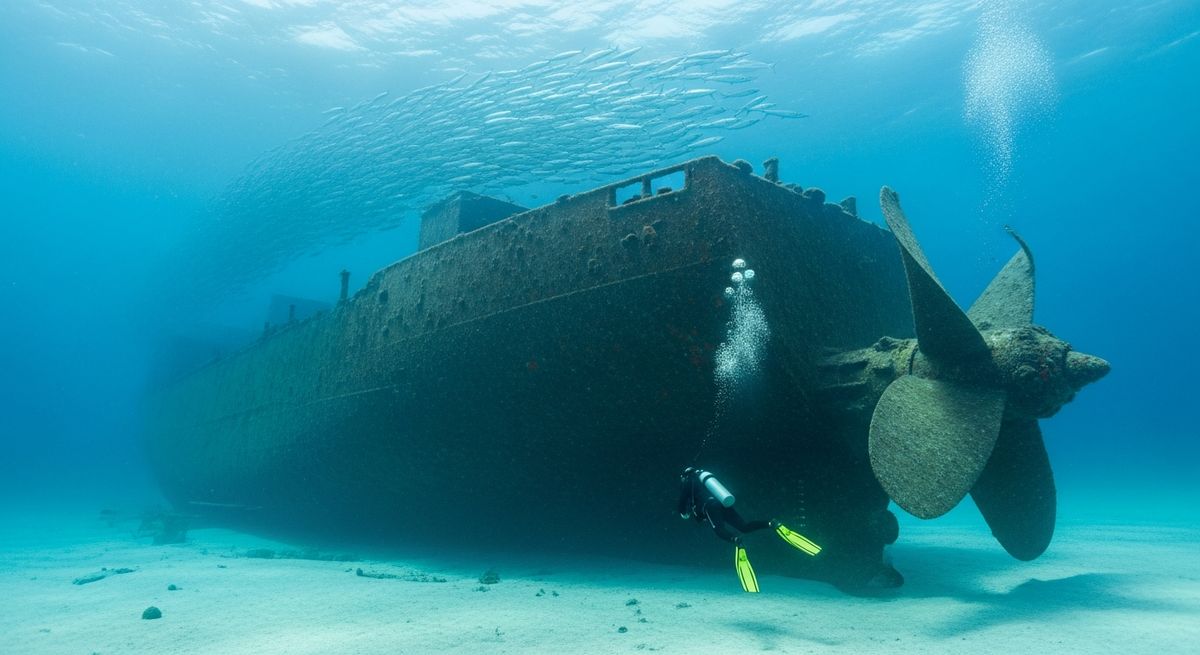
We love a wreck with a story, and the Apia Harbour Wreck has a cracker. This isn't some purpose-sunk artificial reef. This is a survivor of the devastating 1889 hurricane, a true piece of maritime history now lying peacefully at 10-20 metres. Descending, you can practically feel the weight of the past. The skeletal remains of the ship are completely draped in hard corals, mainly robust plate and staghorn formations, which gives it a more organic feel than some of the more stark, metal-focused wrecks out there. Our favourite parts are exploring the nooks and crannies where the marine life congregates. Look closely and you’ll find Banded Fringe Blennies peering out from crevices and Opossum Pipefish doing their best impression of a swaying coral branch. Schools of Big-eye Trevally often swirl around the bow, glinting in the shafts of light. This site is perfect for intermediate divers who appreciate a wreck with a strong historical narrative and enjoy spotting the smaller, camouflaged critters that have made it home. We’d suggest going in the morning; the light penetration really makes the corals pop.
Typical Apia Harbour Wreck Dive Profile
Illustrative profile based on site depth and type. Actual dive profiles vary - always follow your dive computer and training.
Safety Notes
Wreck site - avoid penetration without wreck diving certification. Watch for sharp metal and entanglement hazards.
Apia Harbour Wreck Wreck History
Year Sunk
1889
Vessel Type
warship
Cause
storm
The story of the Apia Harbour Wreck is one of geopolitical tension being dwarfed by the overwhelming power of nature. In March 1889, warships from Germany, the United States, and Great Britain were anchored in the poorly sheltered harbour, engaged in a tense standoff over control of the Samoan islands. Their colonial ambitions were about to be shattered by an impending cyclone.
When the catastrophic storm hit, the harbour became a death trap. The iron-hulled warships were tossed about by ferocious winds and massive swells. The German vessels SMS Adler and SMS Eber, along with the American ships USS Vandalia and USS Trenton, were all lost, either sinking outright or being smashed upon the reef, with a loss of over 200 sailors. In a legendary feat of seamanship, only the British cruiser HMS Calliope managed to power its way out of the harbour and into the relative safety of the open sea.
Today, the remains of one of these 19th-century warships lie in 10-20 meters of water. More than a century of immersion has obscured its specific identity, but its metal skeleton has become the foundation for a vibrant coral reef. Divers can explore this unique intersection of history and nature, swimming through a living ecosystem that has grown upon the bones of a once-mighty gunboat, a permanent monument to the 1889 Apia cyclone.
Nearest Dive Centres to Apia Harbour Wreck
Dive shops near Apia Harbour Wreck
View all dive centres in UpoluReviews for Apia Harbour Wreck
Conditions
Ocean conditions, forecast and tides for Apia Harbour Wreck
Apia Harbour Wreck Ocean Conditions
Monthly averages for Apia Harbour Wreck, sourced from Open-Meteo marine data - nearest station: Open-Meteo marine grid (-14.28, -170.67) (44km away)
October Averages
Sea Temperature
28°C
82°F · Range: 27.4–28.7°C
Air Temperature
26°C
79°F
Wind Speed
4.56 m/s
8.9 knots
Atmospheric Pressure
1012.9 hPa
Based on 4 years of monitoring data · Data sources: Open-Meteo marine data
Plan & book
Ways to dive Upolu, from day trips to liveaboards.
Day trips & courses
via GetYourGuideGuided dives, courses and snorkel trips with instant booking.
Find dive trips in UpoluPlaces to stay
via Booking.comHotels and dive resorts near Upolu.
Search stays in UpoluDive insurance
Most travel insurance excludes or limits scuba. Check what you need before you go.
Dive insurance explainedPartner links: we may earn a commission if you book, at no extra cost to you. How we make money
Where to Stay near Apia Harbour Wreck
Prices from Booking.com. We may earn a commission at no extra cost to you.