NZ 4031
Protected Area
Funafuti
Why dive here
With 152+ marine species recorded in the area - including blacktip reef sharks, eagle rays, grey reef sharks, humpback whales and whitetip reef sharks - NZ 4031 offers some of Funafuti Atoll's richest wreck diving. Water sits around 30°C.
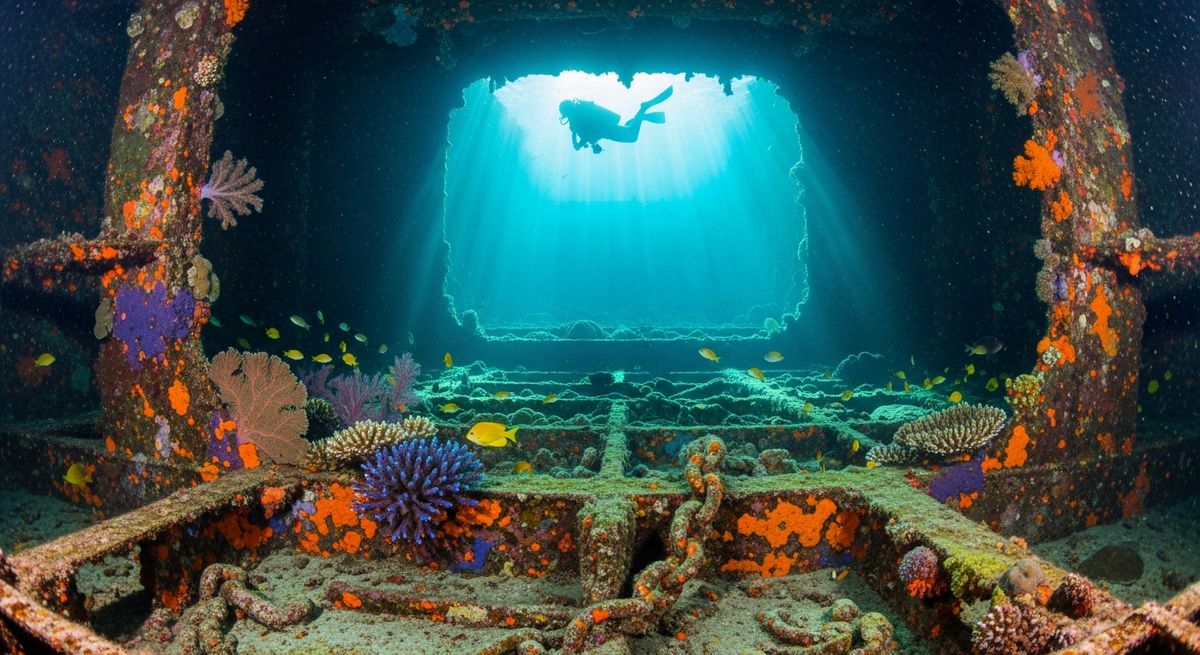
NZ 4031 isn't your typical Tuvalu reef dive. This is for the wreck heads, the history buffs, and anyone who appreciates a good story with their bottom time. What we have here is an old aircraft, a real piece of history that crashed on takeoff, according to the Pacific Islands Monthly back in '81. It sits at a manageable 20 meters, meaning you get good light penetration and plenty of time to explore. We love the eerie quiet down there, the way the light filters through the water and plays on the twisted metal. You can spend a good chunk of your dive picking out bits of fuselage, imagining the plane's final moments. It’s been down there long enough for the reef to start claiming it, so expect to see some interesting growth and a surprising number of smaller reef fish darting in and out of the wreckage. It's not a huge site, but it's one of our favourite spots for a contemplative dive, a real contrast to the vibrant outer reefs. Go early to avoid any surge, and take your time.
Typical NZ 4031 Dive Profile
Illustrative profile based on site depth and type. Actual dive profiles vary - always follow your dive computer and training.
Safety Notes
Depth of 20m - Advanced Open Water certification recommended.
Wreck site - avoid penetration without wreck diving certification. Watch for sharp metal and entanglement hazards.
Always perform a 3-minute safety stop at 5m before surfacing.
Reviews for NZ 4031
Conditions
Ocean conditions, forecast and tides for NZ 4031
NZ 4031 Ocean Conditions
Monthly averages for NZ 4031, sourced from Open-Meteo marine data - nearest station: Open-Meteo marine grid (-8.48, 179.08) (16km away)
October Averages
Sea Temperature
30°C
86°F · Range: 29–31°C
Air Temperature
28°C
82°F
Wind Speed
6.73 m/s
13.1 knots
Atmospheric Pressure
1010.3 hPa
Based on 4 years of monitoring data · Data sources: Open-Meteo marine data
Plan & book
Ways to dive Funafuti Atoll, from day trips to liveaboards.
Day trips & courses
via GetYourGuideGuided dives, courses and snorkel trips with instant booking.
Find dive trips in Funafuti AtollPlaces to stay
via Booking.comHotels and dive resorts near Funafuti Atoll.
Search stays in Funafuti AtollDive insurance
Most travel insurance excludes or limits scuba. Check what you need before you go.
Dive insurance explainedPartner links: we may earn a commission if you book, at no extra cost to you. How we make money
Where to Stay near NZ 4031
Prices from Booking.com. We may earn a commission at no extra cost to you.