LI SHUEN NO.1
Protected Area
墾丁國家公園
Why dive here
With 537+ marine species recorded in the area - including barracuda, giant moray eels, seahorses, sea turtles and sperm whales - LI SHUEN NO.1 offers some of Kenting National Park's richest wreck diving. Water ranges 24-30°C, warmest July, August, September.
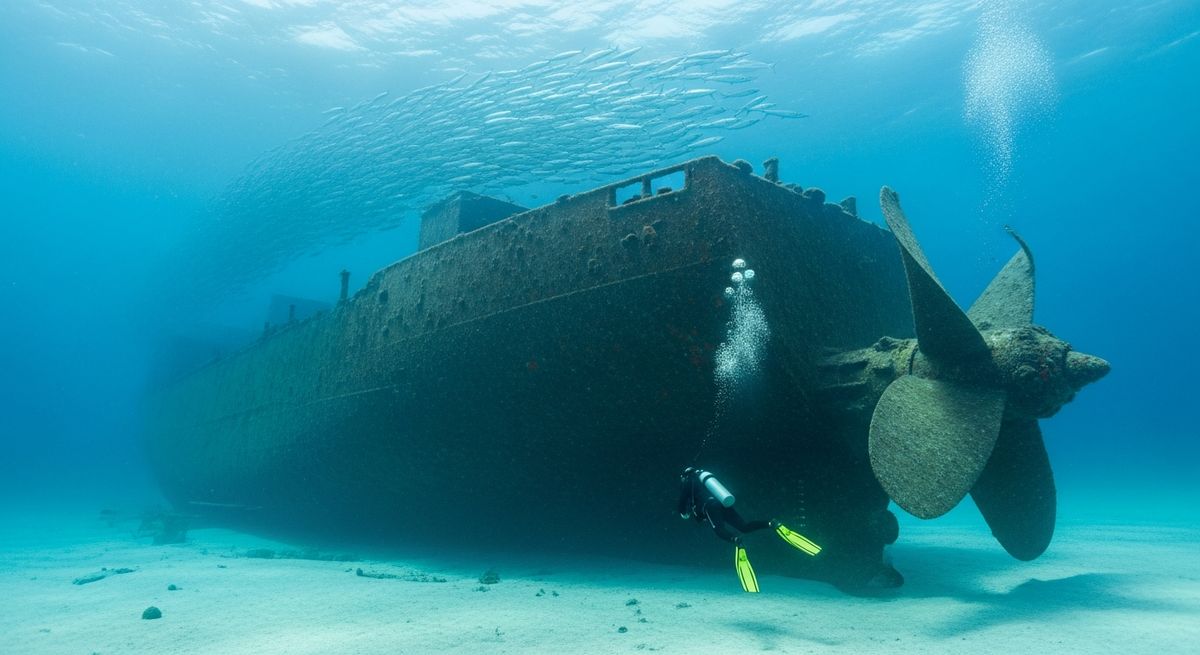
The Li Shuen No.1 isn’t just another sunken boat; it’s a properly moody wreck dive, and one of our favourites in Kenting when the conditions are right. This old fishing trawler, built in '74 and lost in a Northeast monsoon back in '87, now lies broken in two sections, creating a real playground for divers. We love poking around the bow section, especially – it's still quite intact, and you can duck into the hold if you're comfortable with overhead environments. What really makes it sing for us is the way the reef has just totally embraced it. Soft corals drape off the metal like colourful curtains, and the nooks and crannies are packed with glassfish, hiding from the jacks that often cruise by. Keep an eye out for moray eels tucked into crevices, too; we’ve spotted some absolute monsters here. The stern section is more broken up, but it makes for some dramatic swim-throughs as schools of fusiliers swirl around the twisted metal. We’d suggest hitting this one on a calm day; even a slight swell can make the interior penetrations a bit sporty. It’s best suited for divers who enjoy exploring a wreck with a bit of history, rather than just admiring a pretty coral garden.
Safety Notes
Wreck site - avoid penetration without wreck diving certification. Watch for sharp metal and entanglement hazards.
Nearest Dive Centres to LI SHUEN NO.1
Dive shops near LI SHUEN NO.1
Drifters’ Diving Club
Azure Journey Dive
Kenting Long Jing Dive Resort
Heart Ocean Dive
SUNBEAM DIVE CENTER
OCEANS DIVING CENTER
Reviews for LI SHUEN NO.1
Conditions
Ocean conditions, forecast and tides for LI SHUEN NO.1
LI SHUEN NO.1 Ocean Conditions
Monthly averages for LI SHUEN NO.1, sourced from Open-Meteo marine data - nearest station: Open-Meteo marine grid (22.61, 120.21) (6km away)
October Averages
Sea Temperature
29°C
84°F · Range: 24.5–30.9°C
Air Temperature
26°C
79°F
Wind Speed
8.89 m/s
17.3 knots
Atmospheric Pressure
1011.6 hPa
Based on 4 years of monitoring data · Data sources: Open-Meteo marine data
Plan & book
Ways to dive Kenting National Park, from day trips to liveaboards.
Day trips & courses
via GetYourGuideGuided dives, courses and snorkel trips with instant booking.
Find dive trips in Kenting National ParkPlaces to stay
via Booking.comHotels and dive resorts near Kenting National Park.
Search stays in Kenting National ParkDive insurance
Most travel insurance excludes or limits scuba. Check what you need before you go.
Dive insurance explainedPartner links: we may earn a commission if you book, at no extra cost to you. How we make money
Where to Stay near LI SHUEN NO.1
Prices from Booking.com. We may earn a commission at no extra cost to you.