Diving in Lakshadweep
Why dive here
Lakshadweep offers some of India's richest diving, with 364+ marine species recorded in the area - including barracuda, blacktip reef sharks, dugongs, eagle rays and giant moray eels. Water ranges 29-31°C, warmest March, April, May.
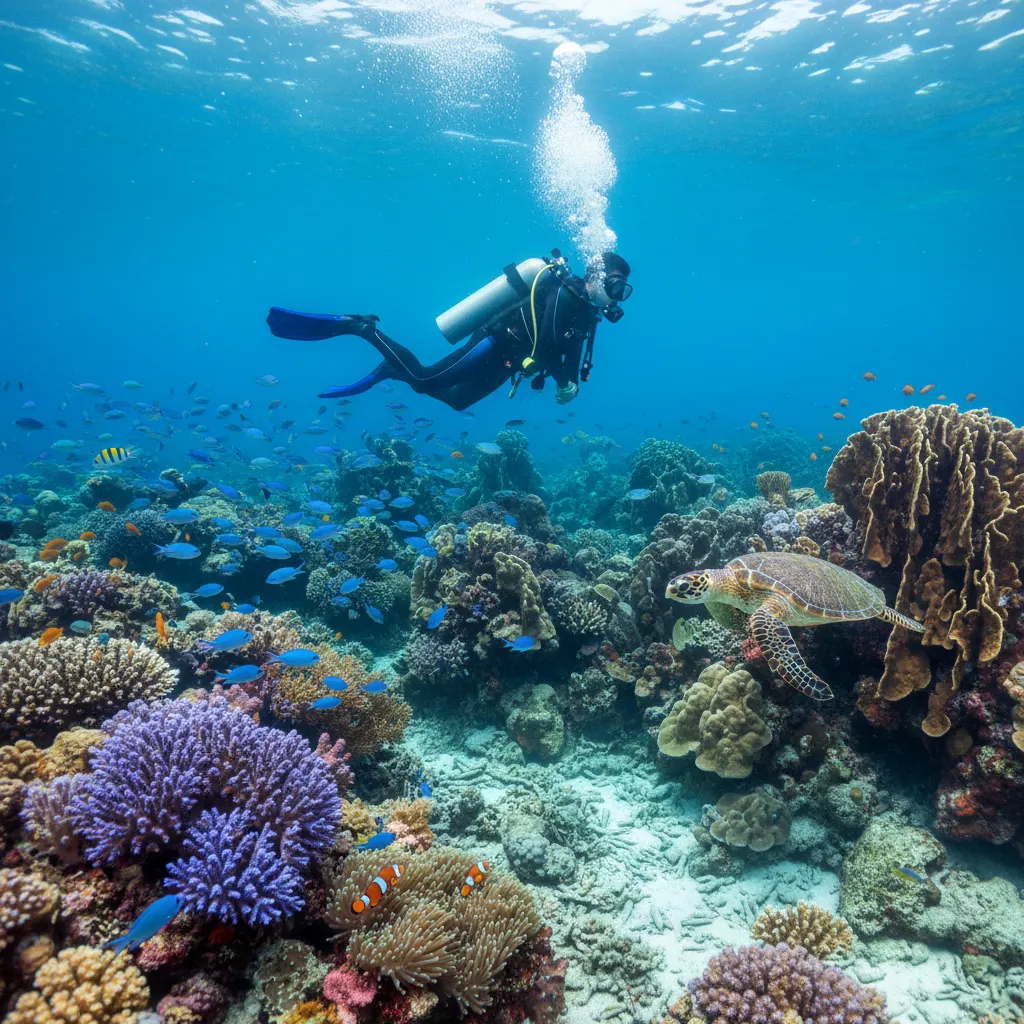
Lakshadweep. Just the name sounds like somewhere you have to work to get to, and you do. It’s an archipelago of coral atolls, a bit of a journey from the mainland, which keeps the crowds down, and that’s a huge part of its appeal. We’ve always found the reefs here incredibly healthy, less touched than many other Indian Ocean spots. You’ll spend most of your time drifting along walls covered in Montipora and corrugated corals, keeping an eye out for patrolling blacktip reef sharks. What we really love are the endless schools of big long-nosed butterflyfish that seem to follow you, and the way the sapphire demoiselles glimmer against the deeper blue. We’ve seen more white dolphins here than anywhere else in India, a real treat. Visibility is usually superb, letting you pick out the tiny mimic blennies darting into their holes or a camouflaged sharptooth seabass blending into the reef. For a bit of excitement, look for narrow-barred Spanish mackerel zipping past. The calm lagoon dives are perfect for beginners, while the outer reefs offer gentle drifts for those with more experience. Our top tip? Go during the drier months for the calmest seas and best chances of spotting nesting turtles on shore.
Lakshadweep Dive Site Map
Dive sites and dive centres in Lakshadweep
Lakshadweep Dive Sites
27 dive sites in Lakshadweep
Agatti Edge
Agatti Edge drops to a consistent 19 metres, making it a good spot for intermediate divers. We often find schooling fusiliers here, sometimes so thick they blot out the sun for a moment. Keep an eye on the blue for reef sharks patrolling the drop-off. It’s a solid, straightforward dive without any major surprises, good for getting a feel for the atoll diving.
Butterfly Valley
Butterfly Valley, off Lakshadweep, is a straightforward dive, topping out at 23 metres. It’s ideal for newer divers getting comfortable in the Indian Ocean. We’ve found it’s a good spot to simply cruise along, often seeing smaller reef fish darting between the corals. It’s not a site for big pelagics, but a pleasant, easy dive.
Byramgore Reef
Byramgore Reef in Lakshadweep feels like diving a well-kept secret. This coral reef offers good visibility on most days, making it an enjoyable spot for photographers. Expect a decent collection of reef fish, some small sharks, and the occasional turtle drifting past. It's a solid choice for those looking for a relaxed dive away from crowded spots.
Byramgore Reef
Byramgore Reef in Lakshadweep offers a solid dive for those exploring India's less-visited sites. We found a healthy coral reef, a mix of hard and soft corals, with fusiliers and snapper commonly schooling over the top. It's a good spot for a relaxed morning dive, usually with mild currents. If you're looking for a steady reef dive away from the crowds, it fits the bill.
Byramgore Reef
Byramgore Reef in Lakshadweep feels like diving a well-kept secret. This coral reef offers good visibility on most days, making it an enjoyable spot for photographers. Expect a decent collection of reef fish, some small sharks, and the occasional turtle drifting past. It's a solid choice for those looking for a relaxed dive away from crowded spots.
Cherbaniani Reef
Cherbaniani Reef offers a classic Lakshadweep coral experience, mostly for more experienced divers due to its remote location. We've found the corals here, while not always spectacular, support a good variety of reef fish and pelagics often cruise the deeper sections. Expect encounters with schooling jacks and the occasional reef shark patrolling the outer edges. It's an honest dive, best for those looking to explore an untouched corner of the archipelago.
Eastern Jetty
Eastern Jetty is a straightforward reef dive, reaching a maximum of 15m. It’s a good spot for beginners or those getting back into the swing of things, with gentle conditions often present. We’ve found a mix of reef fish here, typical for the region. It’s a solid option for an easy afternoon dive.
Grand Canyon
The Grand Canyon site in Lakshadweep lives up to its name, a truly massive sand channel cutting through the reef. It’s not the most colourful dive, but the sheer scale is impressive, with walls of hard coral rising on either side. We often spot big Napoleon wrasse cruising along the edge, and the occasional reef shark will glide through the deeper sections. This site is surprisingly mellow for its depth, making it a good choice for newer divers looking to explore deeper water without strong currents.
Hard Coral Cafe
Hard Coral Cafe lives up to its name, a gently sloping reef covered in some impressive hard coral formations, mostly table corals and brain corals. At just 19 metres, it’s a calm introduction to Lakshadweep diving, perfect for beginners and those looking for a relaxed multi-level profile. You'll likely spot reef fish weaving through the coral, and we've seen a few green sea turtles here too. It’s a nice, easy dive.
Indira-Shastri Dweep
Indira-Shastri Dweep offers a gentle entry into Lakshadweep's underwater world, a site we’ve found particularly good for a relaxed afternoon dive. The reef here, while not dramatic, is home to a steady collection of smaller fish. We often spot belted wrasse darting between coral heads, and the Moluccan cardinalfish tend to hang in shimmering schools. Keep an eye out for the coral blennies, they’re masters of camouflage and always a treat to find. It’s a good spot for newer divers, or anyone looking for a calm dive without strong currents.
Kalpitty Slope
Kalpitty Slope is a gentle drift in the Lakshadweep archipelago, ideal for newer divers getting comfortable with currents. The slope itself is soft coral, home to smaller reef fish darting between the polyps. We often spot groups of parrotfish grazing the algae here. It's a relaxed dive, good for a first or second trip out.
Manta Point
Manta Point in Lakshadweep certainly delivers on its name, though we’ve found the manta encounters can be hit or miss depending on the season and luck. Even without the big rays, this site offers a pleasant wall dive, dropping from 12m down to 20m, making it a comfortable spot for beginners. We often find a good number of oriental sweetlips here, sometimes schooling close to the wall, and Napoleonfish are a regular sight. Keep an eye out for hawksbill turtles too; they seem quite at home munching on the corals. It’s a gentle introduction to Lakshadweep’s diving, best enjoyed as a calm drift along the reef edge.
Lakshadweep Dive Centres
11 dive shops and operators in Lakshadweep
Ammathi Scuba
Barefoot Retreats and Leisure Pvt. Ltd.
Dive Andaman (India) Pvt.Ltd
Ke-Lak Adventures
Lak Scuba
Lakshadweep Diving Academy
Neel Diving
Scuba Evolution India
Show all 11 dive centres in Lakshadweep
Ocean Wildlife in Lakshadweep
364 species recorded in Lakshadweep
Lakshadweep Daylight & Sunrise/Sunset
Sunrise and sunset times for Lakshadweep, calculated from coordinates
Today - Sunday 11 October
Sunrise
06:01
Sunset
17:57
Daylight
11h 56m
Golden Hour
17:29
First light (dawn) at 05:40 · Last light (dusk) at 18:18
Monthly Averages
| Month | Sunrise | Sunset | Daylight |
|---|---|---|---|
| Jan | 06:35 | 18:07 | 11h 32m |
| Feb | 06:33 | 18:20 | 11h 47m |
| Mar | 06:20 | 18:23 | 12h 3m |
| Apr | 06:01 | 18:23 | 12h 22m |
| May | 05:50 | 18:27 | 12h 38m |
| JunLongest | 05:49 | 18:36 | 12h 46m |
| Jul | 05:56 | 18:39 | 12h 43m |
| Aug | 06:02 | 18:32 | 12h 30m |
| Sep | 06:02 | 18:13 | 12h 12m |
| OctNow | 06:01 | 17:55 | 11h 54m |
| Nov | 06:08 | 17:45 | 11h 37m |
| DecShortest | 06:23 | 17:51 | 11h 29m |
Times are approximate local times based on longitude. Actual times may vary slightly depending on the exact timezone observed in Lakshadweep.
Where to Stay near Lakshadweep
Prices from Booking.com. We may earn a commission at no extra cost to you.
Marine Protected Areas near Lakshadweep
10 protected areas near Lakshadweep - please respect local regulations when diving
Sundarban Reserve Forest
Chilika Lake
Mannar Valaiguda in Tamil
Parc national des Sundarbans
Thane Creek
Thillai Vanam
Gulf of Mannar
Sunderban
Ashtamudi Wetland
Point Calimere Wildlife and Bird Sanctuary
Getting to Lakshadweep
Agatti
Mangaluru
Kannur
Plan & book
Ways to dive Lakshadweep, from day trips to liveaboards.
Day trips & courses
via GetYourGuideGuided dives, courses and snorkel trips with instant booking.
Find dive trips in LakshadweepPlaces to stay
via Booking.comHotels and dive resorts near Lakshadweep.
Search stays in LakshadweepDive insurance
Most travel insurance excludes or limits scuba. Check what you need before you go.
Dive insurance explainedPartner links: we may earn a commission if you book, at no extra cost to you. How we make money