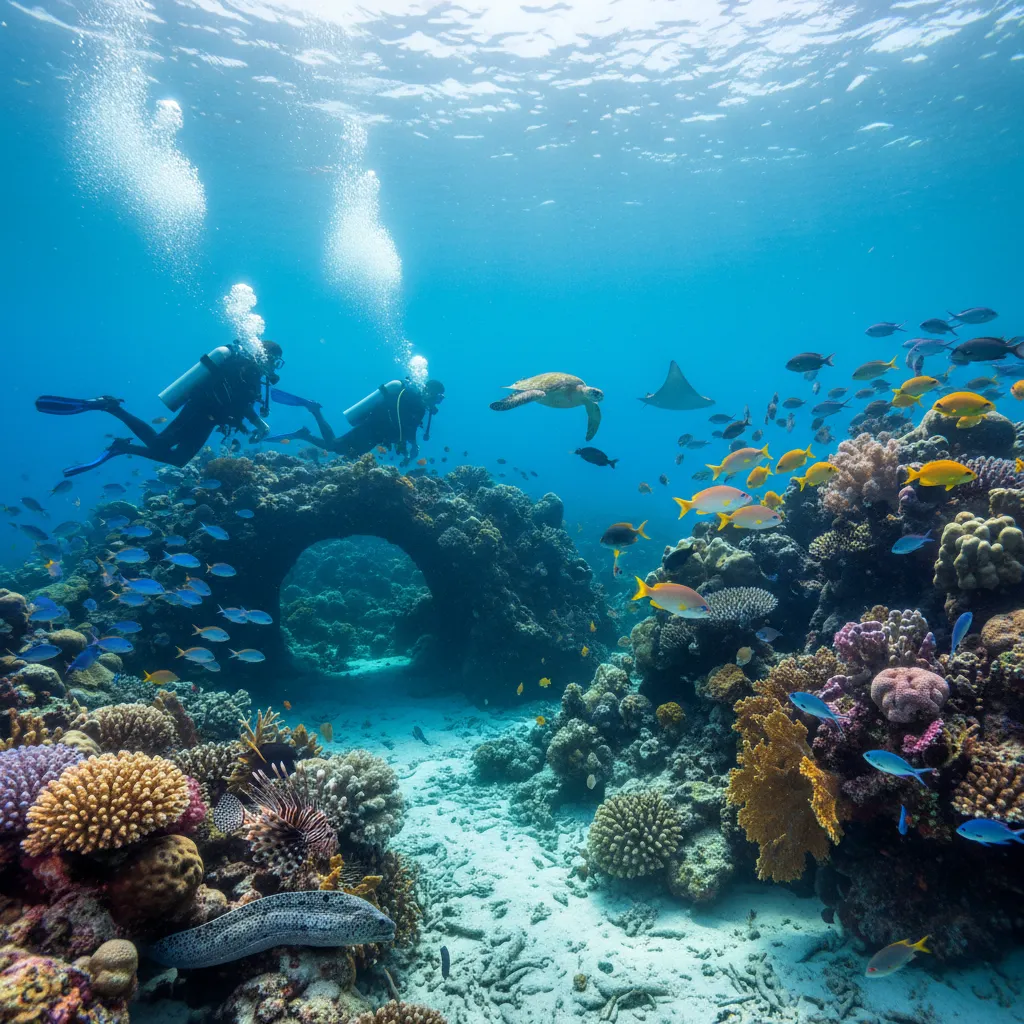
Diving in Flic en Flac & West Coast
Why dive here
Flic en Flac & West Coast offers some of Mauritius's richest diving, with 434+ marine species recorded in the area - including barracuda, blue sharks, dolphins, dwarf minke whales and great white sharks. Water ranges 25-29°C, warmest February, March, April.
The Flic en Flac and West Coast stretch is where many divers first dip their fins in Mauritius, and for good reason. It’s a busy spot, yes, but the sheer variety of dive sites means you can always find something new. We particularly love the drift dives here, letting the currents carry you past schools of fusiliers and snapper. The Cathedral is our favourite, a massive underwater archway where the light filters in, creating a genuinely magical atmosphere. We’ve seen humphead wrasse cruise through there on more than one occasion. Visibility is generally good, often hitting 20 metres or more, especially outside the rainy season. Keep an eye out for the delicate longnose hawkfish perched on branching corals, they’re a treat. If wrecks are your thing, there are a few decent ones scattered about, now home to clouds of glassfish and the occasional black triggerfish. It’s a reliable area for decent diving, just be prepared for a bit of company on the more popular sites. Try to get on the earliest boat out.
Flic en Flac & West Coast Dive Site Map
Dive sites and dive centres in Flic en Flac & West Coast
Flic en Flac & West Coast Dive Sites
46 dive sites in Flic en Flac & West Coast
Aqua BASE
Aqua BASE in Flic en Flac has always been a solid pick for us, especially when the south-easterlies kick up a chop elsewhere. It’s not about dramatic drop-offs here; it’s more about the sheer density of everyday reef life, a proper fish soup. We’ve had dives where the schools of Pacific Gregory were so thick, they almost created a shimmering wall, making you feel like you were swimming through glitter. Keep an eye out for the Lineated Butterflyfish weaving through the coral heads and the occasional Strawberry Grouper lurking under ledges – they’re often surprisingly bold. We love how reliably you’ll spot things here. The Big-eye Trevally often patrol in small, curious packs, and if you’re patient, you might find a Dwarf Moray peeking out from its crevice. It’s a site that rewards slow exploration, peering into every nook. For divers who appreciate abundant reef fish and a relaxed pace, it’s a cracker. It’s a friendly site, good for shaking off the rust or just enjoying a calm, easy dive.
Aquarium
Aquarium is exactly what it sounds like, a perfectly contained, vibrant dive. We love this site for its sheer abundance of small, colourful reef fish, making it a proper joy for photographers and anyone just wanting to relax and soak it all in. You’ll settle onto a sandy bottom at around 12 metres, watching schools of Clouded Rainbowfish shimmer past and the bold yellows of Flameback Angelfish darting between the coral heads. Our favourite time to visit is when a gentle current is running; it really brings out the Blackside Hawkfish and Banded-tail Coral-cod, who seem to enjoy the activity. Keep an eye out for Ambon Pufferfish and Dwarf Morays tucked into crevices. While the occasional turtle or eagle ray might glide by in the blue, the real show here is at eye-level, among the corals. It’s an easy, shallow dive, perfect for newer divers building confidence or experienced divers who just want an easy, unhurried tour of Mauritius's smaller, charming residents.
Aquarium
Aquarium is exactly what it sounds like, a perfectly contained, vibrant dive. We love this site for its sheer abundance of small, colourful reef fish, making it a proper joy for photographers and anyone just wanting to relax and soak it all in. You’ll settle onto a sandy bottom at around 12 metres, watching schools of Clouded Rainbowfish shimmer past and the bold yellows of Flameback Angelfish darting between the coral heads. Our favourite time to visit is when a gentle current is running; it really brings out the Blackside Hawkfish and Banded-tail Coral-cod, who seem to enjoy the activity. Keep an eye out for Ambon Pufferfish and Dwarf Morays tucked into crevices. While the occasional turtle or eagle ray might glide by in the blue, the real show here is at eye-level, among the corals. It’s an easy, shallow dive, perfect for newer divers building confidence or experienced divers who just want an easy, unhurried tour of Mauritius's smaller, charming residents.
Bambous
Bambous might not be the poster child for pelagic encounters in Mauritius, but we love it for its sheer drama. Dropping to 32 meters, this site is all about the wall, a seriously impressive rock face that just keeps going down. It’s perfect for divers who appreciate topography over big fish, though you’ll still spot plenty of African butterflyfish flitting about and parrotfish grazing the rock. The visibility here often hits 23 meters, giving you a proper sense of the scale of the wall. We recommend drifting along, really taking in the textures and the way the light plays on the rock formations. Keep an eye out for smaller stuff tucked into crevices, like Emery’s pygmygoby or the distinctive Dragonfish. It’s a site that rewards a slower pace, letting you absorb the underwater landscape. Bring a good torch to peek into the darker corners – you might just find a sleepy rock cod.
Bambous
Bambous might not be the poster child for pelagic encounters in Mauritius, but we love it for its sheer drama. Dropping to 32 meters, this site is all about the wall, a seriously impressive rock face that just keeps going down. It’s perfect for divers who appreciate topography over big fish, though you’ll still spot plenty of African butterflyfish flitting about and parrotfish grazing the rock. The visibility here often hits 23 meters, giving you a proper sense of the scale of the wall. We recommend drifting along, really taking in the textures and the way the light plays on the rock formations. Keep an eye out for smaller stuff tucked into crevices, like Emery’s pygmygoby or the distinctive Dragonfish. It’s a site that rewards a slower pace, letting you absorb the underwater landscape. Bring a good torch to peek into the darker corners – you might just find a sleepy rock cod.
BASE Diving
BASE Diving, just off Flic en Flac, is one of those sites we always try to hit when we're on the west coast of Mauritius. It’s not about huge pelagics here, though you might catch a glimpse of a southern right whale if you’re very lucky in season. We go for the sheer density of small stuff, tucked into the staghorn corals that dominate the reef. You’ll find walls of giant squirrelfish staring out from every crevice, their eyes like little red lamps. The telescopefish are bizarre, drifting like fragments of weed. Look closely among the seagrass patches; we’ve spotted tiny bridled gobies darting about. The halfmoon triggerfish are everywhere, their patterns vivid against the coral. It’s a photographer's dream if you're into macro, and we love drifting slowly, just letting the gentle current guide us over the reef, spotting species like the snakehead cowrie. We'd suggest an afternoon dive here; the light filters through the water beautifully then, illuminating the corals and making the colours pop.
Bassin Verde
Bassin Verde, just off Flic en Flac, is a site we return to often, especially when we want a relaxed dive with plenty to observe without fighting a current. It’s got this lovely, low-profile coral reef nestled in the sand, topping out around 19 metres. Don’t expect dramatic drop-offs; instead, you get these intimate patches of staghorn coral, a real magnet for smaller reef fish. We love settling into the sandy areas, watching bullethead parrotfish graze, their crunching audible if you listen closely. You’ll spot flathead sleepers half-buried, and there are always plenty of blacktail chromis flitting above the coral. It’s ideal for lingering, practising buoyancy in the calm water, or just taking your time with a camera. We've often found undulated morays peeking from crevices. Bassin Verde suits divers who appreciate the subtle beauty of a healthy reef and prefer a gentle pace over big pelagic action. It’s a superb spot for newer divers to build confidence, but even experienced eyes will find plenty to keep them engaged here, especially if you enjoy searching for smaller, often overlooked critters.
Bassin Verde
Bassin Verde, just off Flic en Flac, is a site we return to often, especially when we want a relaxed dive with plenty to observe without fighting a current. It’s got this lovely, low-profile coral reef nestled in the sand, topping out around 19 metres. Don’t expect dramatic drop-offs; instead, you get these intimate patches of staghorn coral, a real magnet for smaller reef fish. We love settling into the sandy areas, watching bullethead parrotfish graze, their crunching audible if you listen closely. You’ll spot flathead sleepers half-buried, and there are always plenty of blacktail chromis flitting above the coral. It’s ideal for lingering, practising buoyancy in the calm water, or just taking your time with a camera. We've often found undulated morays peeking from crevices. Bassin Verde suits divers who appreciate the subtle beauty of a healthy reef and prefer a gentle pace over big pelagic action. It’s a superb spot for newer divers to build confidence, but even experienced eyes will find plenty to keep them engaged here, especially if you enjoy searching for smaller, often overlooked critters.
Batterie
Batterie is our go-to for a relaxed dive in Flic en Flac. It’s shallow, capping out at just 10m, which makes it perfect for knocking off some rust or taking new divers out for their first proper reef experience after the initial course. We often follow the coral line after entering, just letting the gentle current (if there is one) push us along. What we really love here is the sheer density of the common reef fish. You’ll weave through schools of Blacktail Chromis and Cape Damsel, and we’ve spotted more than a few Undulated Morays peeking out from their rocky hideouts. Keep an eye on the sandy patches too; we’ve had some cracking encounters with double-ended pipefish there. The Staghorn corals are quite pretty and the visibility, averaging around 12m, is usually good enough to appreciate them. It's not a site for big pelagics, but for a chilled-out afternoon watching the smaller stuff, it’s a winner.
Batterie
Batterie is our go-to for a relaxed dive in Flic en Flac. It’s shallow, capping out at just 10m, which makes it perfect for knocking off some rust or taking new divers out for their first proper reef experience after the initial course. We often follow the coral line after entering, just letting the gentle current (if there is one) push us along. What we really love here is the sheer density of the common reef fish. You’ll weave through schools of Blacktail Chromis and Cape Damsel, and we’ve spotted more than a few Undulated Morays peeking out from their rocky hideouts. Keep an eye on the sandy patches too; we’ve had some cracking encounters with double-ended pipefish there. The Staghorn corals are quite pretty and the visibility, averaging around 12m, is usually good enough to appreciate them. It's not a site for big pelagics, but for a chilled-out afternoon watching the smaller stuff, it’s a winner.
Big Rock, Mauritius
Big Rock is one of those drift dives that, with the right current, really shines. We’ve found ourselves just hanging in the blue here, watching the world slide by. It’s essentially a massive submerged boulder, or a series of them really, creating interesting swim-throughs and overhangs. The rock itself is covered in sponges and anemones, which are always busy with small critters. Look closely for those tiny Minute Triplefins darting around, and we often spot a Dwarf Moray peeking out from a crevice. The real magic happens when a smooth current picks up. That’s when you get the chance to drift past schools of Black-banded Hogfish and see those elegant Candelamoa Parrotfish munching on the coral. Visibility can be excellent, often hitting that 19m average or better, making it perfect for spotting larger pelagics further out. We’ve had a few incredible encounters with eagle rays here, soaring past us in the deeper water towards the 22m mark. It’s a site that works for most qualified divers, but really comes alive for those who appreciate a relaxed drift and keep an eye out for the big stuff passing through.
Big Rock, Mauritius
Big Rock is one of those drift dives that, with the right current, really shines. We’ve found ourselves just hanging in the blue here, watching the world slide by. It’s essentially a massive submerged boulder, or a series of them really, creating interesting swim-throughs and overhangs. The rock itself is covered in sponges and anemones, which are always busy with small critters. Look closely for those tiny Minute Triplefins darting around, and we often spot a Dwarf Moray peeking out from a crevice. The real magic happens when a smooth current picks up. That’s when you get the chance to drift past schools of Black-banded Hogfish and see those elegant Candelamoa Parrotfish munching on the coral. Visibility can be excellent, often hitting that 19m average or better, making it perfect for spotting larger pelagics further out. We’ve had a few incredible encounters with eagle rays here, soaring past us in the deeper water towards the 22m mark. It’s a site that works for most qualified divers, but really comes alive for those who appreciate a relaxed drift and keep an eye out for the big stuff passing through.
Show all 46 dive sites in Flic en Flac & West Coast
- Canal Trazar
- Canon
- Cathedral
- Dolphin Lagoon
- Exploration Sous-Marine
- GRAND BETELGEUSE
- JAMAL SHAH
- Kei Sei 113 Wreck
- KeiSei 113, Wreck
- Klondike
- KT Mawar
- La Casa Robert
- La Cathédrale
- la passe du puits
- L’Eveillé
- Little Swiss
- L’Orient, Wreck
- Ocean Spirit
- Octopus Island
- Pamela Reef
- Parc
- Préyebère Anemone Garden
- Raunglap
- Roche Zanana
- Seafan Valley
- Sir Gretan
- Snake II
- Snake Reef
- Snake Reef, Mauritius
- Sweet Lips
- Swiss Drop
- TAYEB
- Tian Xiang (Wreck)
- Tug 2, Wreck
Flic en Flac & West Coast Dive Centres
26 dive shops and operators in Flic en Flac & West Coast
Bigorno Diving Centre LTD
Blues Diving Centre
Blue World Explorer Adventures
Crystal Divers Mauritius
Crystal Diving
Dive Drem Divers Mauritius
Dive Passion Mauritius
Dive Spirit Mauritius
Show all 26 dive centres in Flic en Flac & West Coast
- Diving World Victoria
- Dodo Divers
- Emperator Diving Center
- Euro-Divers - Club Med Albion
- Euro-Divers Club Med La Pointe
- Excellence Piscine
- Le Paradis Diving
- Maritim Divers
- Nabridas Pool Shop
- Nemo Diving Centre
- Octopus Diving Centre
- Pro Dive Mauritius
- ScubaCaribe Mauritius
- SeaUrchin Diving Center Mauritius
- Sundivers Ltd
- Swim With Seb
- Tamarin Ocean Pro Diving Ltd
- Ticabo
Ocean Wildlife in Flic en Flac & West Coast
434 species recorded in Flic en Flac & West Coast
Flic en Flac & West Coast Daylight & Sunrise/Sunset
Sunrise and sunset times for Flic en Flac & West Coast, calculated from coordinates
Today - Sunday 11 October
Sunrise
05:44
Sunset
18:12
Daylight
12h 28m
Golden Hour
17:42
First light (dawn) at 05:22 · Last light (dusk) at 18:34
Monthly Averages
| Month | Sunrise | Sunset | Daylight |
|---|---|---|---|
| Jan | 05:43 | 18:57 | 13h 13m |
| Feb | 06:03 | 18:48 | 12h 46m |
| Mar | 06:13 | 18:27 | 12h 14m |
| Apr | 06:22 | 18:00 | 11h 38m |
| May | 06:33 | 17:42 | 11h 10m |
| JunShortest | 06:44 | 17:39 | 10h 55m |
| Jul | 06:46 | 17:47 | 11h 1m |
| Aug | 06:33 | 17:58 | 11h 25m |
| Sep | 06:08 | 18:05 | 11h 58m |
| OctNow | 05:41 | 18:13 | 12h 32m |
| Nov | 05:24 | 18:28 | 13h 4m |
| DecLongest | 05:26 | 18:46 | 13h 21m |
Times are approximate local times based on longitude. Actual times may vary slightly depending on the exact timezone observed in Flic en Flac & West Coast.
Where to Stay near Flic en Flac & West Coast
Prices from Booking.com. We may earn a commission at no extra cost to you.
Marine Protected Areas near Flic en Flac & West Coast
21 protected areas near Flic en Flac & West Coast - please respect local regulations when diving
Poudre d'Or Fishing Reserve
Port Louis Fishing Reserve
Black River Fishing Reserve
Balaclava Marine Park
Ile Ronde (Round Island)
Poste Lafayette Fishing Reserve
Ile Plate (Flat Island)
Coin de Mire (Gunner's Quoin)
Trou d'Eau Douce Fishing Reserve
Ile aux Serpents
Ilot Gabriel
Ile aux Aigrettes
Showing 12 largest of 21
Getting to Flic en Flac & West Coast
Plaine Magnien
Sainte-Marie
Saint-Pierre
Plan & book
Ways to dive Flic en Flac & West Coast, from day trips to liveaboards.
Day trips & courses
via GetYourGuideGuided dives, courses and snorkel trips with instant booking.
Find dive trips in Flic en Flac & West CoastPlaces to stay
via Booking.comHotels and dive resorts near Flic en Flac & West Coast.
Search stays in Flic en Flac & West CoastDive insurance
Most travel insurance excludes or limits scuba. Check what you need before you go.
Dive insurance explainedPartner links: we may earn a commission if you book, at no extra cost to you. How we make money