Big Rock, Mauritius
Protected Area
Black River Fishing Reserve
Why dive here
With 434+ marine species recorded in the area - including barracuda, blue sharks, dolphins, dwarf minke whales and great white sharks - Big Rock, Mauritius offers some of Flic en Flac & West Coast's richest cave diving. Water ranges 25-29°C, warmest February, March, April.
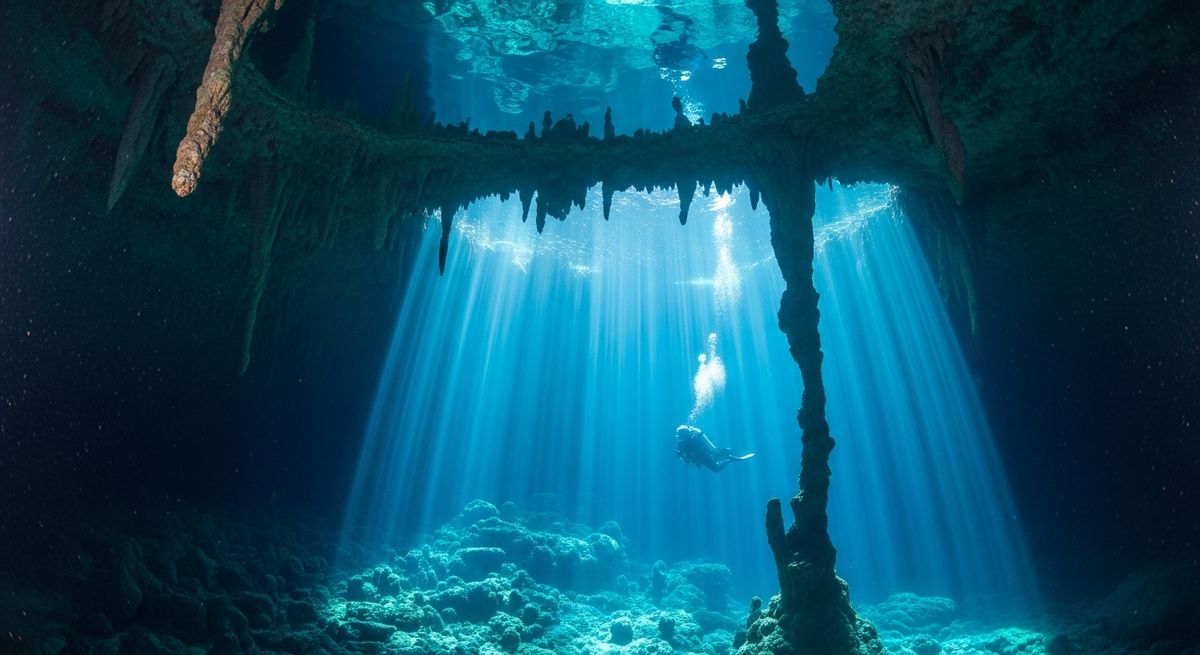
Big Rock is one of those drift dives that, with the right current, really shines. We’ve found ourselves just hanging in the blue here, watching the world slide by. It’s essentially a massive submerged boulder, or a series of them really, creating interesting swim-throughs and overhangs. The rock itself is covered in sponges and anemones, which are always busy with small critters. Look closely for those tiny Minute Triplefins darting around, and we often spot a Dwarf Moray peeking out from a crevice. The real magic happens when a smooth current picks up. That’s when you get the chance to drift past schools of Black-banded Hogfish and see those elegant Candelamoa Parrotfish munching on the coral. Visibility can be excellent, often hitting that 19m average or better, making it perfect for spotting larger pelagics further out. We’ve had a few incredible encounters with eagle rays here, soaring past us in the deeper water towards the 22m mark. It’s a site that works for most qualified divers, but really comes alive for those who appreciate a relaxed drift and keep an eye out for the big stuff passing through.
Safety Notes
Overhead environment - never enter without proper cave/cavern training, redundant equipment, and a guideline.
Nearest Dive Centres to Big Rock, Mauritius
Dive shops near Big Rock, Mauritius
SeaUrchin Diving Center Mauritius
Ticabo
Euro-Divers - Club Med Albion
Sundivers Ltd
Nemo Diving Centre
Tamarin Ocean Pro Diving Ltd
Reviews for Big Rock, Mauritius
Conditions
Ocean conditions, forecast and tides for Big Rock, Mauritius
Big Rock, Mauritius Ocean Conditions
Monthly averages for Big Rock, Mauritius, sourced from Open-Meteo marine data - nearest station: Open-Meteo marine grid (-20.25, 57.38) (7km away)
October Averages
Sea Temperature
25°C
77°F · Range: 24.2–27.5°C
Air Temperature
24°C
76°F
Wind Speed
7.13 m/s
13.9 knots
Atmospheric Pressure
1017.9 hPa
Based on 4 years of monitoring data · Data sources: Open-Meteo marine data
Plan & book
Ways to dive Flic en Flac & West Coast, from day trips to liveaboards.
Day trips & courses
via GetYourGuideGuided dives, courses and snorkel trips with instant booking.
Find dive trips in Flic en Flac & West CoastPlaces to stay
via Booking.comHotels and dive resorts near Flic en Flac & West Coast.
Search stays in Flic en Flac & West CoastDive insurance
Most travel insurance excludes or limits scuba. Check what you need before you go.
Dive insurance explainedPartner links: we may earn a commission if you book, at no extra cost to you. How we make money
Where to Stay near Big Rock, Mauritius
Prices from Booking.com. We may earn a commission at no extra cost to you.