AGIOS NICOLAOS
Protected Area
NISIDES SARONIKOU KOLPOU KAI THALASSIA PERIOCHI
Why dive here
AGIOS NICOLAOS is a wreck dive where divers can encounter dolphins and sea turtles. Water ranges 15-26°C, warmest July, August, September.
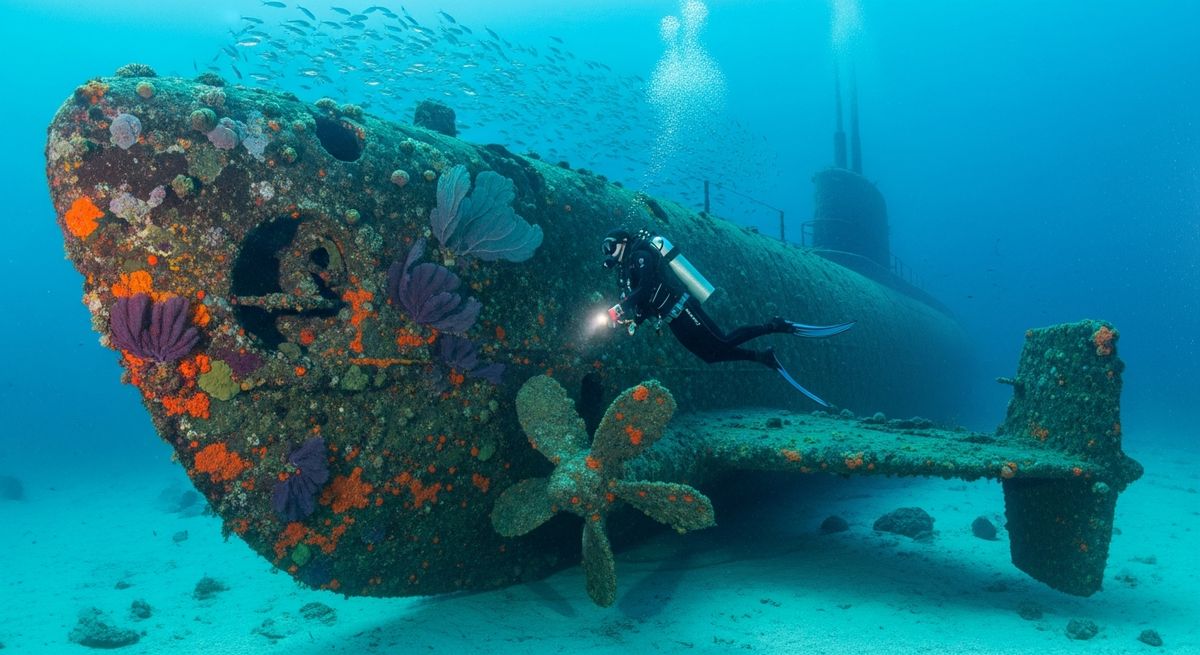
The Agios Nicolaos wreck is a proper piece of history, just waiting to be explored. We've always been drawn to wrecks that tell a story, and this 70-meter tanker, sunk in a fiery explosion back in '89, definitely has one. Descending onto the main deck, you can almost feel the heat of that day. The sheer scale of the ship is impressive, with a collapsed superstructure that's a labyrinth of twisted metal and shadows. We love exploring the hold areas, where schools of amberjacks hang in the gloom, and curious dusky groupers eye you from dark corners. Look closely at the deck plating; it's practically coated in colourful sponges and small anemones, a real testament to how quickly the Mediterranean reclaims things. For experienced divers, we'd suggest taking the time to penetrate some of the larger, safer sections of the wreck. Just be mindful of the silt and keep your buoyancy dialled in. It’s a site that rewards careful exploration, a captivating look into maritime history, now a thriving artificial reef.
Typical AGIOS NICOLAOS Dive Profile
Illustrative profile based on site depth and type. Actual dive profiles vary - always follow your dive computer and training.
Safety Notes
Depth of 25m - Advanced Open Water certification recommended.
Wreck site - avoid penetration without wreck diving certification. Watch for sharp metal and entanglement hazards.
Always perform a 3-minute safety stop at 5m before surfacing.
AGIOS NICOLAOS Wreck History
Year Sunk
1989
Vessel Type
tanker
Cause
fire
The Agios Nicolaos had a relatively short but dramatic life. Built in Germany in 1968, the tanker served the shipping lanes for just over two decades before its fiery demise in the summer of 1989. On July 9th, while carrying a full, volatile cargo, disaster struck. A catastrophic explosion ripped through the vessel, which was immediately engulfed in flames. The inferno was unstoppable, and the ship was lost, sinking to the seabed where it remains today.
Lying at a depth of 25 metres within the Alonissos Marine Park, the wreck of the Agios Nicolaos is a compelling site for certified advanced divers. The explosion tore the ship apart, and its twisted, scarred metalwork tells the story of its violent end. Exploring the wreckage, divers can witness the immense power of the blast, now softened by two decades of marine growth. As part of a protected marine area, the wreck has become a thriving artificial reef, attracting schools of fish and other sea creatures, creating a scene of serene beauty from a moment of chaos.
Nearest Dive Centres to AGIOS NICOLAOS
Dive shops near AGIOS NICOLAOS
Balco sub
Seals
Halkeas
Fantasea
Seals
ACTIVE DIVER
Reviews for AGIOS NICOLAOS
Conditions
Ocean conditions, forecast and tides for AGIOS NICOLAOS
AGIOS NICOLAOS Ocean Conditions
Monthly averages for AGIOS NICOLAOS, sourced from Open-Meteo marine data + Copernicus Marine (EU) - nearest station: Open-Meteo marine grid (38.09, 24.15) (15km away)
October Averages
Sea Temperature
23°C
73°F · Range: 21–25.6°C
Current Speed
1.41 cm/s
Direction: SW (225°)
Chlorophyll-a
0.13 mg/m³
Clear water
Salinity
34.63 PSU
Based on 4 years of monitoring data · Data sources: Open-Meteo marine data + Copernicus Marine (EU)
Plan & book
Ways to dive Alonissos Marine Park, from day trips to liveaboards.
Day trips & courses
via GetYourGuideGuided dives, courses and snorkel trips with instant booking.
Find dive trips in Alonissos Marine ParkPlaces to stay
via Booking.comHotels and dive resorts near Alonissos Marine Park.
Search stays in Alonissos Marine ParkDive insurance
Most travel insurance excludes or limits scuba. Check what you need before you go.
Dive insurance explainedPartner links: we may earn a commission if you book, at no extra cost to you. How we make money
Where to Stay near AGIOS NICOLAOS
Prices from Booking.com. We may earn a commission at no extra cost to you.