ALUX (PROBABLY)
Protected Area
THALASSIA PERIOCHI KOLPOU KYPARISSIAS: AKR. KATAKOLO - KYPARISSIA
Why dive here
ALUX (PROBABLY) is a wreck dive where divers can encounter dolphins, ocean sunfish (mola mola), sea turtles and sperm whales.
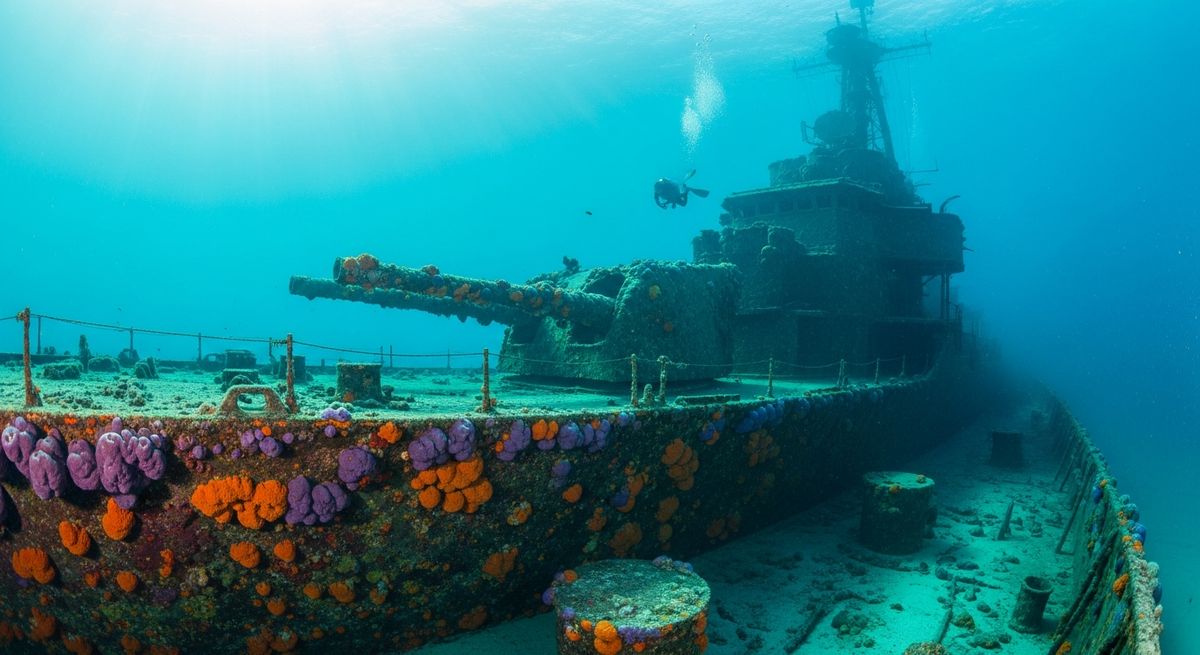
Alright, let’s talk ALUX. This isn't your typical deep-blue Greek dive, and that’s precisely why we love it. What you’ve got here is an Italian submarine, a casualty from 1944, sitting in barely two metres of water. Two metres! It's a proper wreck, surprisingly intact given its age and location, but it’s more snorkel or freedive territory than full scuba. We’ve spent hours drifting over the wreck, peering into what's left of the conning tower and imagining the crew’s final moments. The bow section is surprisingly defined, a hulking shadow just below the surface. What really makes ALUX special, though, is how much life has moved in. Schools of tiny silversides dart in and out of the openings, and you’ll spot gobies and blennies tucked into every crevice. Our favourite find was a small octopus camouflaged against the hull plating, barely visible until it pulsed colour. It’s perfect for a lazy afternoon; bring a mask, fins, and a snorkel. No heavy gear needed, just curiosity.
Typical ALUX (PROBABLY) Dive Profile
Illustrative profile based on site depth and type. Actual dive profiles vary - always follow your dive computer and training.
Safety Notes
Wreck site - avoid penetration without wreck diving certification. Watch for sharp metal and entanglement hazards.
ALUX (PROBABLY) Wreck History
Year Sunk
1944
Vessel Type
submarine
Cause
grounding
Lying in the impossibly clear waters off Zakynthos is a ghost of World War II, believed to be the Italian submarine 'Alux'. According to wartime records, the submarine ran aground on the island's shores around New Year's Day in 1944 and was declared a total loss. The exact circumstances of its grounding remain shrouded in the fog of war, but the result is one of the most accessible submarine wrecks in the Mediterranean. Sitting in just 2 meters of water, this wreck is less of a scuba dive and more of an interactive historical exhibit for snorkelers and freedivers.
Divers and swimmers can easily explore the submarine's weathered hull, which breaks the surface at low tide. The outer casing has corroded over the decades, revealing the intricate 'bones' and pressure hull of the vessel within. Its extreme shallowness allows for long, relaxed exploration under bright Greek sunlight, offering a unique opportunity to photograph and study the remains of a wartime submarine without the need for deep-diving equipment. It's a fantastic and unusual site for divers of all levels, providing a direct connection to the naval conflict that once engulfed the Ionian Sea.
Reviews for ALUX (PROBABLY)
Conditions
Ocean conditions, forecast and tides for ALUX (PROBABLY)
Plan & book
Ways to dive Zakynthos & Ionian Islands, from day trips to liveaboards.
Day trips & courses
via GetYourGuideGuided dives, courses and snorkel trips with instant booking.
Find dive trips in Zakynthos & Ionian IslandsPlaces to stay
via Booking.comHotels and dive resorts near Zakynthos & Ionian Islands.
Search stays in Zakynthos & Ionian IslandsDive insurance
Most travel insurance excludes or limits scuba. Check what you need before you go.
Dive insurance explainedPartner links: we may earn a commission if you book, at no extra cost to you. How we make money
Where to Stay near ALUX (PROBABLY)
Prices from Booking.com. We may earn a commission at no extra cost to you.