BUCADOR (PROBABLY)
Protected Area
Area marina protetta Capotesta - Punta Falcone
Why dive here
With 74+ marine species recorded in the area - including blue sharks, dolphins, mobula rays (devil rays), oceanic whitetip sharks and ocean sunfish (mola mola) - BUCADOR (PROBABLY) offers some of Sardinia's richest wreck diving. Water ranges 14-27°C, warmest July, August, September.
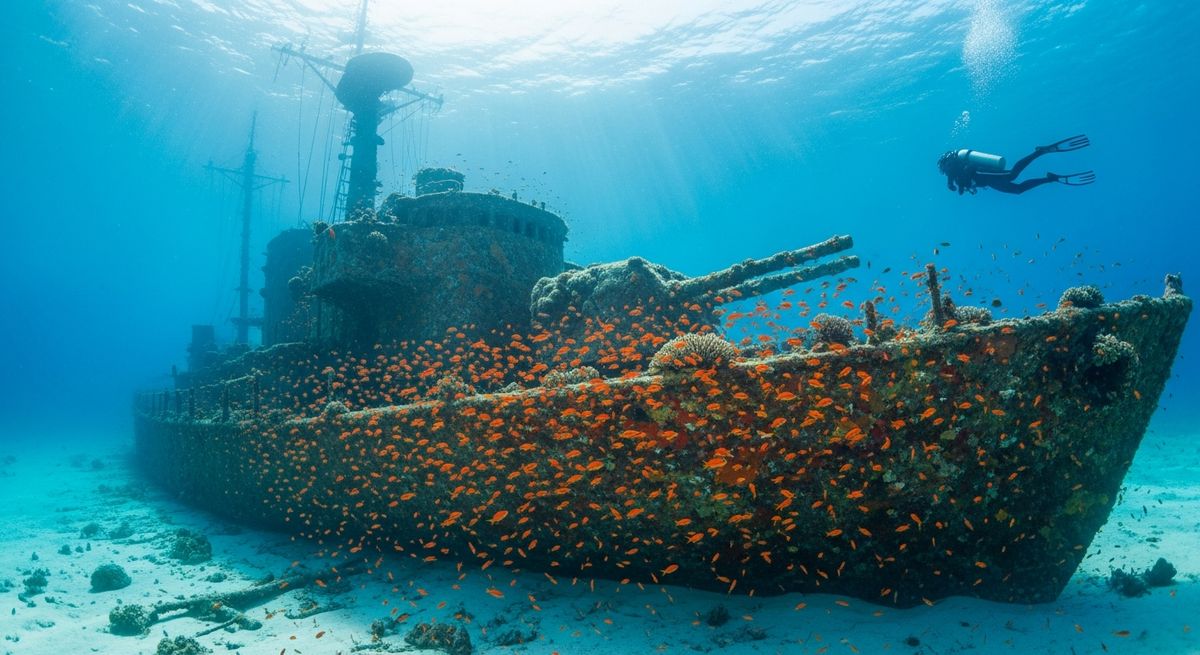
Alright, let's talk about the *Bucador*, or as we affectionately call it, "Probably the Bucador." We love this site not just for the wreck itself, but for the story. This isn't some deep, dark behemoth. She sits in a modest 10 metres of water, a bulk carrier that tried to beach herself on Cavallo Island back in '76 but eventually just slid under. What you get is a wonderfully accessible wreck, broken in places but with enough structure to feel like a proper exploration. The stern is the deeper part, listing dramatically, and that's where we often find the best fish action – schools of damselfish that scatter as you approach, and often a grumpy moray eel peeking from a dark crevice. The bow lies shallower, spread across the rocks, an inviting jumble of twisted metal and rusted plating. Sunlight streams through the gaps, illuminating the sponges and sea squirts that have claimed every surface. We'd suggest going on a calm morning; the visibility can be stellar, making the whole wreck feel almost ethereal. It's an easy dive, perfect for photographers or anyone wanting to spend a relaxed hour just soaking it all in.
Typical BUCADOR (PROBABLY) Dive Profile
Illustrative profile based on site depth and type. Actual dive profiles vary - always follow your dive computer and training.
Safety Notes
Wreck site - avoid penetration without wreck diving certification. Watch for sharp metal and entanglement hazards.
BUCADOR (PROBABLY) Wreck History
Year Sunk
1976
Vessel Type
bulk carrier
Cause
grounding
The final voyage of the Italian bulk carrier Bucador was a short and ill-fated one. On February 7, 1976, while on passage from Fiumicino to Porto Torres, the vessel met its demise in the waters off Sardinia. The ship struck a submerged rock, sustaining critical damage to its hull. In a desperate attempt to save the vessel and her cargo, the crew tried to beach her on the nearby Cavallo Island, but the sea was unforgiving. The Bucador succumbed to its injuries and slipped beneath the waves.
Today, the Bucador rests in a shallow grave at just 10 meters, making it a fantastic and accessible dive for all certification levels. Bathed in the clear, bright light of the Mediterranean sun, the wreck is easy to navigate and perfect for underwater photography. What remains of the bulk carrier is scattered across the seabed, its metallic bones providing a complex habitat for a wide array of marine life. Divers can expect to see schools of fish weaving through the superstructure and octopuses hiding in the vessel's nooks and crannies, turning a maritime tragedy into a thriving underwater oasis.
Nearest Dive Centres to BUCADOR (PROBABLY)
Dive shops near BUCADOR (PROBABLY)
ASD FOCUS
AREA11 DIVING CENTER
KALLISTE PLONGEE
Nautica Sabatani
PORTO-VECCHIO PLONGEE
ORSO DIVING CLUB
Reviews for BUCADOR (PROBABLY)
Conditions
Ocean conditions, forecast and tides for BUCADOR (PROBABLY)
BUCADOR (PROBABLY) Ocean Conditions
Monthly averages for BUCADOR (PROBABLY), sourced from Open-Meteo marine data - nearest station: Open-Meteo marine grid (41.18, 9.42) (10km away)
October Averages
Sea Temperature
22°C
71°F · Range: 19.6–24°C
Air Temperature
18°C
65°F
Wind Speed
4.65 m/s
9.0 knots
Atmospheric Pressure
1018.1 hPa
Based on 4 years of monitoring data · Data sources: Open-Meteo marine data
Plan & book
Ways to dive Sardinia, from day trips to liveaboards.
Day trips & courses
via GetYourGuideGuided dives, courses and snorkel trips with instant booking.
Find dive trips in SardiniaPlaces to stay
via Booking.comHotels and dive resorts near Sardinia.
Search stays in SardiniaDive insurance
Most travel insurance excludes or limits scuba. Check what you need before you go.
Dive insurance explainedPartner links: we may earn a commission if you book, at no extra cost to you. How we make money
Where to Stay near BUCADOR (PROBABLY)
Prices from Booking.com. We may earn a commission at no extra cost to you.