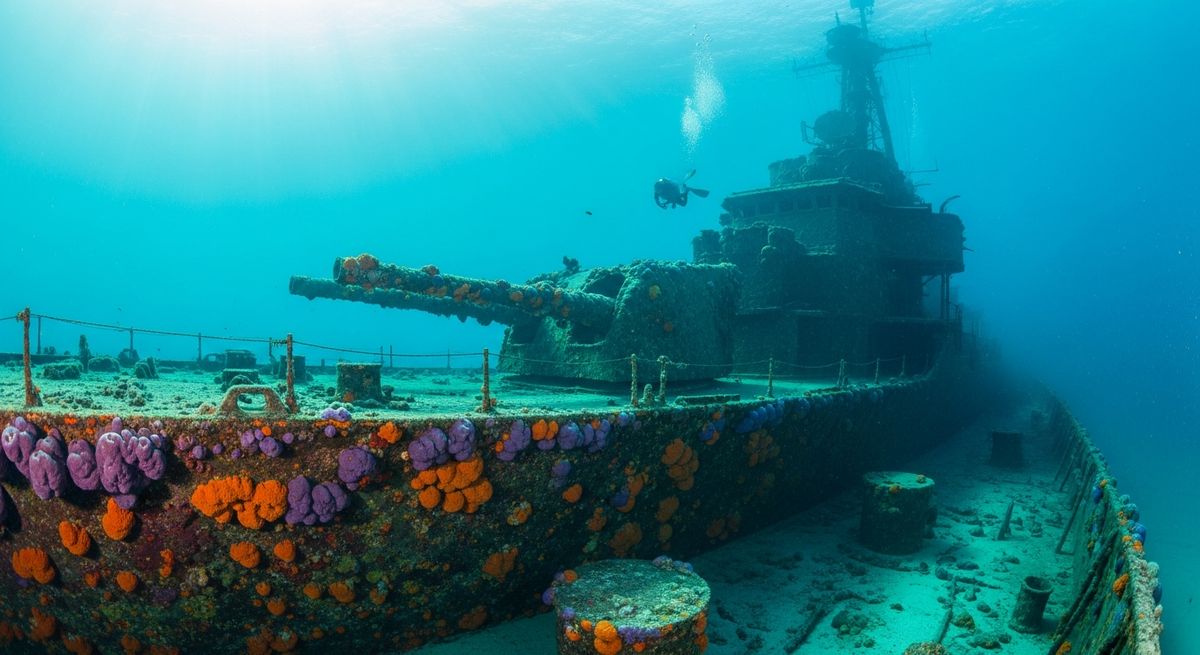
IRINI
Why dive here
IRINI is a wreck dive where divers can encounter dolphins, ocean sunfish (mola mola) and sea turtles. Water ranges 16-28°C, warmest July, August, September.
Irini sits in pretty shallow water, just 3 meters deep, which means it’s great for a long bottom time or for divers getting comfortable with wrecks. This old container ship went down in 1991, so it’s had plenty of time to settle and for marine life to move in. You can swim around the deck and superstructure, spotting damselfish darting in and out of the holds and perhaps a grumpy scorpionfish tucked away. The size of the wreck, nearly 80 meters long, makes it quite a substantial explore even in the shallows. We think it’s a solid choice for an easy dive, especially if you're keen on seeing how a wreck becomes part of the reef.
Typical IRINI Dive Profile
Illustrative profile based on site depth and type. Actual dive profiles vary - always follow your dive computer and training.
Safety Notes
Wreck site - avoid penetration without wreck diving certification. Watch for sharp metal and entanglement hazards.
Nearest Dive Centres to IRINI
Dive shops near IRINI
View all dive centres in GozoReviews for IRINI
Conditions
Ocean conditions, forecast and tides for IRINI
IRINI Ocean Conditions
Monthly averages for IRINI, sourced from Open-Meteo marine data + Copernicus Marine (EU) - nearest station: Open-Meteo marine grid (36.08, 14.25) (15km away)
October Averages
Sea Temperature
24°C
76°F · Range: 22.1–26.6°C
Current Speed
13.6 cm/s
Direction: SE (126°)
Chlorophyll-a
0.114 mg/m³
Clear water
Salinity
37.92 PSU
Based on 4 years of monitoring data · Data sources: Open-Meteo marine data + Copernicus Marine (EU)
Plan & book
Ways to dive Gozo, from day trips to liveaboards.
Day trips & courses
via GetYourGuideGuided dives, courses and snorkel trips with instant booking.
Find dive trips in GozoPlaces to stay
via Booking.comHotels and dive resorts near Gozo.
Search stays in GozoDive insurance
Most travel insurance excludes or limits scuba. Check what you need before you go.
Dive insurance explainedPartner links: we may earn a commission if you book, at no extra cost to you. How we make money
Where to Stay near IRINI
Prices from Booking.com. We may earn a commission at no extra cost to you.