ROBERT ROWAN (POSSIBLY)
Why dive here
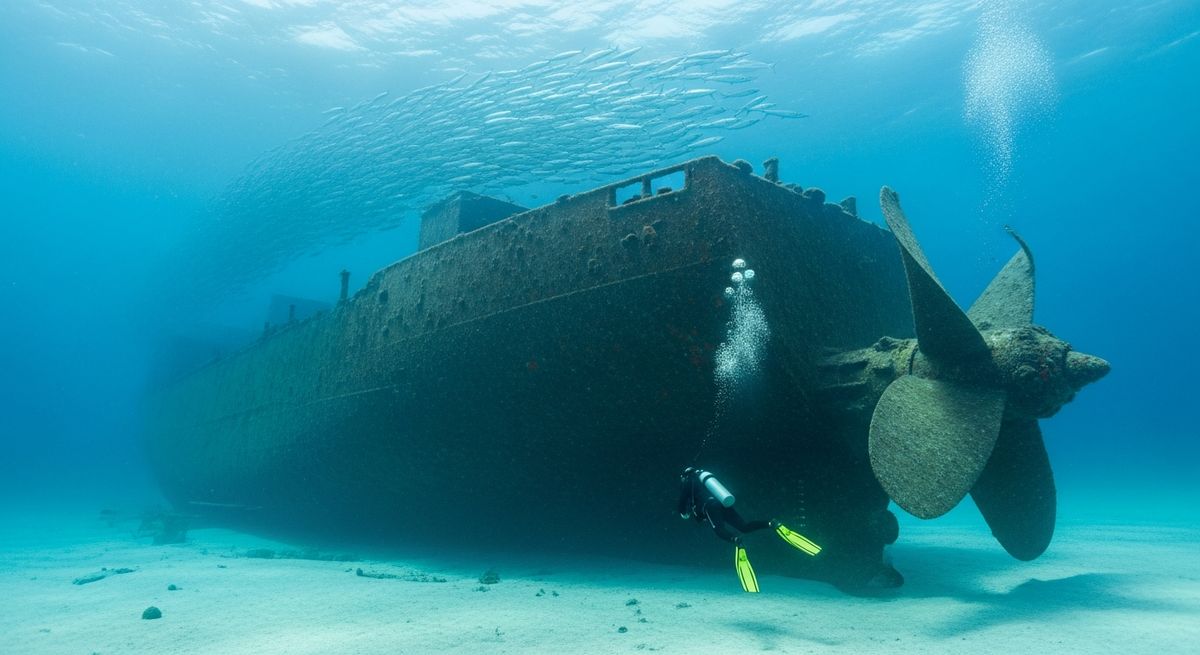
ROBERT ROWAN (POSSIBLY) is a wreck dive where divers can encounter dolphins, ocean sunfish (mola mola) and sea turtles. Water ranges 16-28°C, warmest July, August, September.
The Robert Rowan, or what we think is the Robert Rowan, sits in about 12 meters of water, just off the coast of Gozo. This steamship met a dramatic end in 1943, blowing up after taking hits from bombs and artillery, and that history really defines the site. We’ve found scattered pieces of the hull and machinery spread across the seabed, giving it more of an archaeological feel than a classic intact wreck. You'll spend your time here exploring the debris field, looking for clues to the ship's past, while damselfish dart around the plates and octopus hide in crevices. It's an interesting dive for those who enjoy a bit of history and don't mind a treasure hunt vibe over a grand superstructure.
Typical ROBERT ROWAN (POSSIBLY) Dive Profile
Illustrative profile based on site depth and type. Actual dive profiles vary - always follow your dive computer and training.
Safety Notes
Wreck site - avoid penetration without wreck diving certification. Watch for sharp metal and entanglement hazards.
Always perform a 3-minute safety stop at 5m before surfacing.
Nearest Dive Centres to ROBERT ROWAN (POSSIBLY)
Dive shops near ROBERT ROWAN (POSSIBLY)
View all dive centres in GozoReviews for ROBERT ROWAN (POSSIBLY)
Conditions
Ocean conditions, forecast and tides for ROBERT ROWAN (POSSIBLY)
ROBERT ROWAN (POSSIBLY) Ocean Conditions
Monthly averages for ROBERT ROWAN (POSSIBLY), sourced from Open-Meteo marine data + Copernicus Marine (EU) - nearest station: Open-Meteo marine grid (36.08, 14.25) (15km away)
October Averages
Sea Temperature
24°C
76°F · Range: 22.1–26.6°C
Current Speed
13.6 cm/s
Direction: SE (126°)
Chlorophyll-a
0.114 mg/m³
Clear water
Salinity
37.92 PSU
Based on 4 years of monitoring data · Data sources: Open-Meteo marine data + Copernicus Marine (EU)
Plan & book
Ways to dive Gozo, from day trips to liveaboards.
Day trips & courses
via GetYourGuideGuided dives, courses and snorkel trips with instant booking.
Find dive trips in GozoPlaces to stay
via Booking.comHotels and dive resorts near Gozo.
Search stays in GozoDive insurance
Most travel insurance excludes or limits scuba. Check what you need before you go.
Dive insurance explainedPartner links: we may earn a commission if you book, at no extra cost to you. How we make money
Where to Stay near ROBERT ROWAN (POSSIBLY)
Prices from Booking.com. We may earn a commission at no extra cost to you.