UNISOL (PROBABLY)
Protected Area
Anse aux Canards 19-05-04 Water Fowl Gathering Area
Why dive here
With 142+ marine species recorded in the area - including blue sharks, blue whales, dolphins, dwarf minke whales and great white sharks - UNISOL (PROBABLY) offers some of New Brunswick & Bay of Fundy's richest wreck diving. Water ranges -1-13°C, warmest July, August, September.
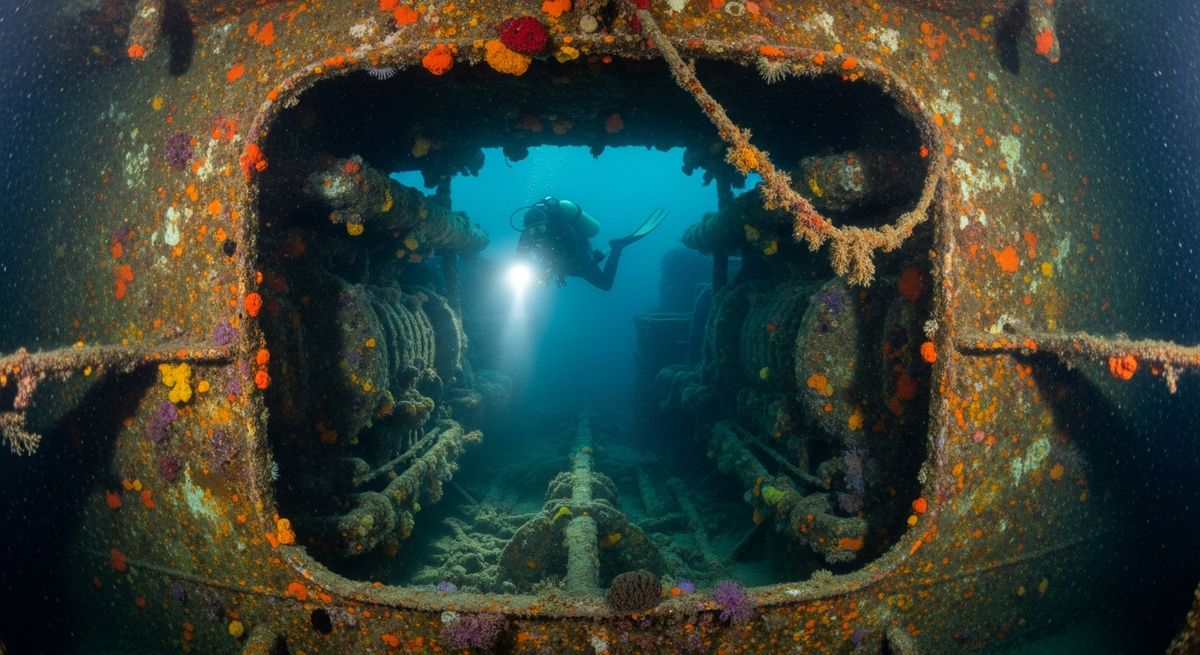
The *UNISOL* is a curious dive, sitting in what feels like impossibly shallow water for a vessel of its size. We’re talking two metres, tops, so it’s less a dive and more a snorkel with a tank. But don't let the depth fool you; this isn't some quick dip. The carrier went down in '83, and time has turned it into a surprisingly robust artificial reef. You'll spend your time hovering over the deck, picking out details of the superstructure. Rusting winches and mooring bits are easy to spot, and the scale of the ship even in this shallowness is impressive. We love tracing the deck, noticing how the light plays on the metal, dappling through the water. Crabs are everywhere, scuttling into cracks, and you'll find small schools of fish darting amongst the twisted metal. It’s an easy, relaxed exploration, perfect for photographers or anyone wanting to see a significant wreck without the depth. Our tip: go at high tide; it gives you a tiny bit more room to manoeuvre and better ambient light.
Typical UNISOL (PROBABLY) Dive Profile
Illustrative profile based on site depth and type. Actual dive profiles vary - always follow your dive computer and training.
Safety Notes
Wreck site - avoid penetration without wreck diving certification. Watch for sharp metal and entanglement hazards.
Cold water this month (avg 9°C). Drysuit or thick wetsuit (7mm+) recommended.
Nearest Dive Centres to UNISOL (PROBABLY)
Dive shops near UNISOL (PROBABLY)
View all dive centres in New Brunswick & Bay of FundyReviews for UNISOL (PROBABLY)
Conditions
Ocean conditions, forecast and tides for UNISOL (PROBABLY)
UNISOL (PROBABLY) Ocean Conditions
Monthly averages for UNISOL (PROBABLY), sourced from Open-Meteo marine data - nearest station: Open-Meteo marine grid (49.1, -66.69) (33km away)
October Averages
Sea Temperature
9°C
48°F · Range: 5.3–12.9°C
Air Temperature
11°C
52°F
Wind Speed
5.5 m/s
10.7 knots
Atmospheric Pressure
1016.3 hPa
Based on 4 years of monitoring data · Data sources: Open-Meteo marine data
Plan & book
Ways to dive New Brunswick & Bay of Fundy, from day trips to liveaboards.
Day trips & courses
via GetYourGuideGuided dives, courses and snorkel trips with instant booking.
Find dive trips in New Brunswick & Bay of FundyPlaces to stay
via Booking.comHotels and dive resorts near New Brunswick & Bay of Fundy.
Search stays in New Brunswick & Bay of FundyDive insurance
Most travel insurance excludes or limits scuba. Check what you need before you go.
Dive insurance explainedPartner links: we may earn a commission if you book, at no extra cost to you. How we make money
Where to Stay near UNISOL (PROBABLY)
Prices from Booking.com. We may earn a commission at no extra cost to you.