Aeolus (Wreck)
Protected Area
Queen Anne's Revenge Shipwreck
Why dive here
With 42+ marine species recorded in the area - including sea turtles - Aeolus (Wreck) offers some of North Carolina's richest wreck diving. Water ranges 12-28°C, warmest July, August, September.
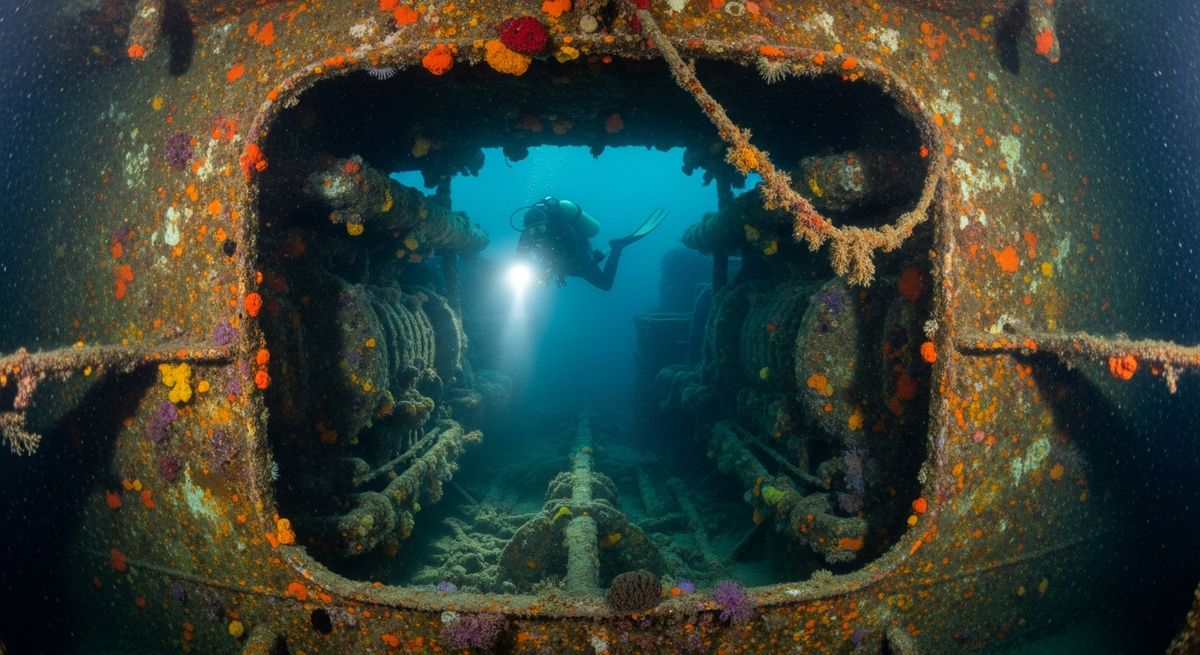
North Carolina’s wreck alley is packed with sunken history, but the *Aeolus* always stands out for us. It’s a destroyer escort, purpose-sunk in 1988, and it’s taken on a whole new life. Dropping down, you’ll see the bow first, often surrounded by sand tiger sharks cruising the thermocline. We love exploring the bridge area; the swim-throughs here are easy and the light often shafts through, illuminating schools of baitfish that pulse with the current. The *Aeolus* sits upright, which makes navigating it surprisingly intuitive, even at 31 meters. Keep an eye out for Goliath groupers tucked into the deeper sections of the hull, and we’ve often spotted massive loggerhead sea turtles resting on the deck. Our favourite time to dive it is late summer when the water is warmest and visibility can push past 20 meters, letting you appreciate the sheer scale of the wreck as you descend. Just remember, currents can pick up here, so good buoyancy control is a must. It’s a fantastic intermediate dive, offering penetration options without being overly challenging.
Typical Aeolus (Wreck) Dive Profile
Illustrative profile based on site depth and type. Actual dive profiles vary - always follow your dive computer and training.
Safety Notes
Deep dive (31m) - monitor air consumption closely. Advanced certification recommended.
Wreck site - avoid penetration without wreck diving certification. Watch for sharp metal and entanglement hazards.
Always perform a 3-minute safety stop at 5m before surfacing.
Aeolus (Wreck) Wreck History
Year Sunk
1988
Vessel Type
warship
Cause
scuttled
Tonnage
15,100 tons
This vessel began her life in 1945 as the USS Turandot (AKA-47), an attack cargo ship for the U.S. Navy. After World War II, she was converted and recommissioned in 1955 as the USS Aeolus (ARC-3), a specialized cable repair ship. For the next three decades, she played a vital, behind-the-scenes role during the Cold War, laying and maintaining thousands of miles of strategic underwater communication cables across the globe.
After being decommissioned in 1985, the Aeolus was prepared for her final mission. On August 1st, 1988, she was intentionally sunk off the coast of Morehead City, North Carolina, to become a cornerstone of the state's thriving artificial reef program. For eight years, the massive 439-foot ship sat perfectly upright, a spectacular dive destination. In 1996, the immense power of Hurricane Fran tore the wreck into three distinct sections, creating the dynamic site divers know today.
Lying in 31 meters of water, the Aeolus is a premier wreck dive in North Carolina's famed "Graveyard of the Atlantic." Divers can explore the three main pieces: the bow, a midsection featuring the iconic cable-laying wheel, and the imposing stern. The wreck is a magnet for marine life, attracting huge schools of baitfish, amberjack, and barracuda. It is also a reliable place to encounter the region's famous sand tiger sharks, which often patrol the structure, providing an unforgettable and awe-inspiring underwater encounter.
Nearest Dive Centres to Aeolus (Wreck)
Dive shops near Aeolus (Wreck)
View all dive centres in North CarolinaReviews for Aeolus (Wreck)
Conditions
Ocean conditions, forecast and tides for Aeolus (Wreck)
Aeolus (Wreck) Ocean Conditions
Monthly averages for Aeolus (Wreck), sourced from Open-Meteo marine data - nearest station: Open-Meteo marine grid (34.6, -76.6) (0km away)
October Averages
Sea Temperature
23°C
73°F · Range: 19.9–26.4°C
Air Temperature
20°C
67°F
Wind Speed
1.8 m/s
3.5 knots
Atmospheric Pressure
1016.7 hPa
Based on 4 years of monitoring data · Data sources: Open-Meteo marine data
Plan & book
Ways to dive North Carolina, from day trips to liveaboards.
Day trips & courses
via GetYourGuideGuided dives, courses and snorkel trips with instant booking.
Find dive trips in North CarolinaPlaces to stay
via Booking.comHotels and dive resorts near North Carolina.
Search stays in North CarolinaDive insurance
Most travel insurance excludes or limits scuba. Check what you need before you go.
Dive insurance explainedPartner links: we may earn a commission if you book, at no extra cost to you. How we make money
Where to Stay near Aeolus (Wreck)
Prices from Booking.com. We may earn a commission at no extra cost to you.