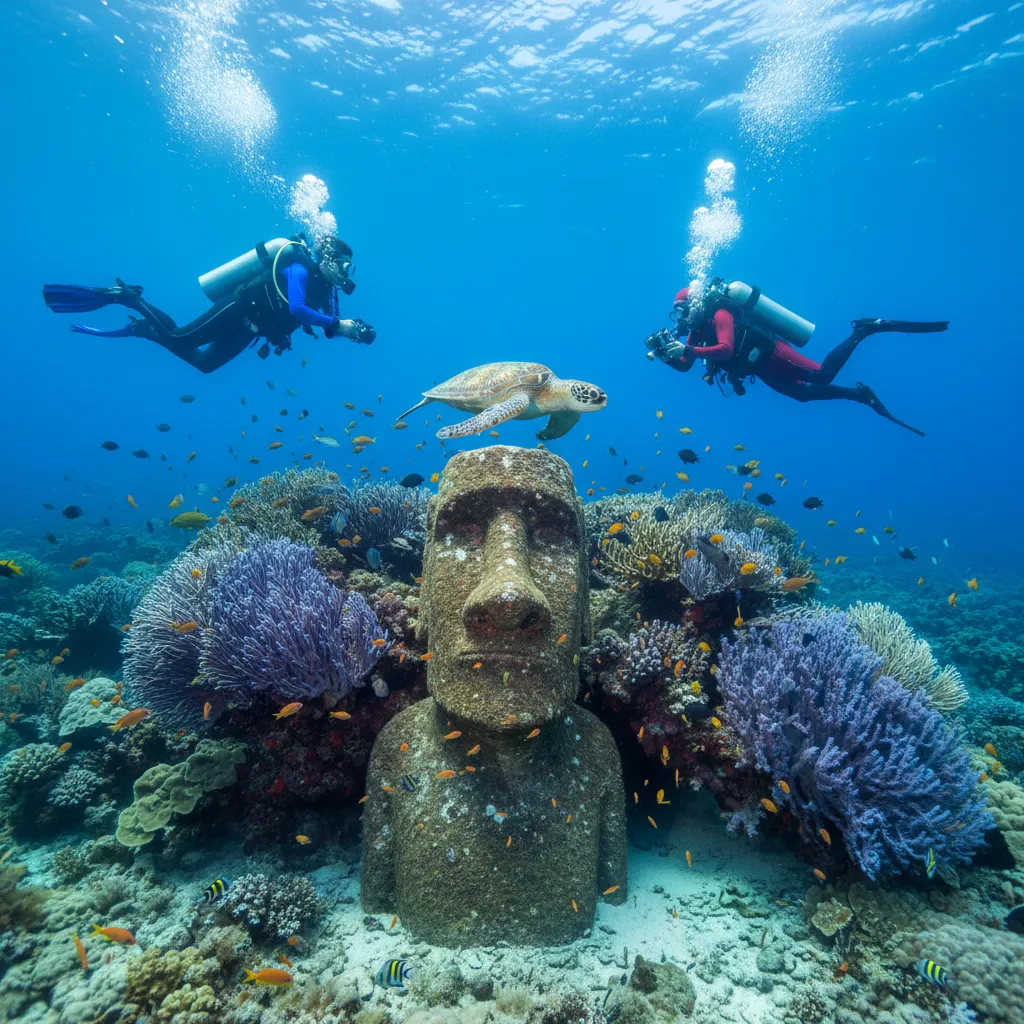
Diving in Easter Island (Rapa Nui)
Why dive here
Easter Island (Rapa Nui) offers some of Chile's richest diving, with 32+ marine species recorded in the area - including bull sharks, humpback whales and pufferfish. Water ranges 21-26°C, warmest February, March, April.
Diving Rapa Nui isn't about chasing huge pelagics, though a bull shark might cruise by if you're lucky. Instead, it’s all about the water itself and the geological drama playing out underwater. Visibility often stretches to 60 metres, sometimes more, giving a feeling of endless space as you drift past volcanic caverns and towering pinnacles. You'll spot some interesting endemics, like the Easter Island butterflyfish or the dotted wrasse, alongside a respectable collection of morays and an abundance of starfish. There’s a quiet beauty to these reefs, with unusual coral formations like the cauliflower coral and petaloid corals adding texture to the stark volcanic rock. It's a remote experience, certainly, but one that feels genuinely unique.
Easter Island (Rapa Nui) Dive Site Map
Dive sites and dive centres in Easter Island (Rapa Nui)
Easter Island (Rapa Nui) Dive Sites
6 dive sites in Easter Island (Rapa Nui)
Buceo Orca
Buceo Orca on Rapa Nui offers a solid dive, especially if you're keen on the unique East Pacific species. We've often spotted the Limespot Butterflyfish fluttering around the cauliflower coral formations, and the Pink Squirrelfish really stand out against the darker volcanic rock. Keep an eye out for the Bull Sharks – they’re around, though usually shy. It’s a good spot for a relaxed dive, no strong currents to fight, making it suitable for divers who prefer a gentle pace while still seeing some interesting fish.
Cathedral
Cathedral is probably our favourite dive on Rapa Nui, a true standout. Dropping down, you’ll find yourself navigating a network of volcanic rock arches and swim-throughs, not really a cave in the traditional sense, but more an open system of caverns. It’s the light here that truly makes it special. Sunbeams slice through the water, creating these ethereal shafts that dance on the rocks, illuminating the black teatfish and spotted puffers that seem to drift lazily in the currents. Visibility on a good day can hit 40 metres, making the whole place feel even more immense. We’ve had some cracking encounters with green wrasse and the occasional passing Allison’s tuna here, too. Keep an eye out for the banded thicklip and blueskin; they’re often tucked into crevices. This site is definitely one for intermediate divers comfortable with overhead environments, though it never truly feels enclosed. We’d suggest going in the morning; the light show is at its best then.
Centro de Buceo Mike Rapu
Diving with Mike Rapu on Rapa Nui gives you a solid introduction to the island’s unique underwater world. The operation is well-run, and they know the local spots inside and out. You'll often drop onto volcanic formations, looking out for species like the banded thicklip or a curious blue spotted wrasse. Expect good visibility most days, often 30 metres or more. It’s a comfortable dive for anyone with some experience, but it’s the sheer geological drama that really stands out here, not necessarily huge schools of fish.
Motu Nui
Motu Nui, right there by the iconic birdman islets, offers a different kind of Pacific diving. It’s not about the usual rainbow reef chaos, but rather an experience in stark, volcanic beauty. We love dropping into the dramatic underwater topography here, all those deep blue slopes and crevices carved by ancient lava flows. Look closely and you’ll find species you simply won't see anywhere else – the lime-spot butterflyfish and cigar wrasse are real show-stoppers, along with the endemic Pacific Gregory darting through the cauliflower corals. The deeper sections can bring bigger pelagics; we've had a few heart-stopping encounters with bull sharks cruising by, though they're not an everyday occurrence. The visibility is usually excellent, letting you appreciate the scale of the landscape. We’d suggest keeping an eye out for the smaller stuff too, like the lamellose wentletraps tucked into the cracks. It's a site that rewards observation rather than frantic searching, ideal for intermediate divers who appreciate geological drama as much as unique fish.
REGENT OAK
The Regent Oak isn't just another wreck; it's a colossal piece of history, slowly dissolving into the Pacific off Hanga Roa. We love how the sheer size of this bulk carrier creates its own mini-ecosystem. You’re not just swimming over a sunken ship, you’re navigating corridors of rust and steel. Dropped in 1983, she’s now well-colonised. The ship’s bow is our favourite part, reaching a shallow 15 metres, making it accessible for most divers. You can spend a whole dive just exploring the deck machinery and the cavernous holds, now home to schools of black triggerfish and swarms of colourful surgeonfish. We’d suggest looking for the moray eels often tucked into crevices along the collapsed hull plates. Visibility here is usually excellent, giving you clear views of the scale of the wreck. It’s a site that suits divers who appreciate the skeletal beauty of a large wreck and the surprising amount of life it attracts. Just be mindful of the currents, which can pick up around the wreck, particularly on an incoming tide.
The Needles
The Needles on Rapa Nui, they're exactly what they sound like – volcanic spires punching up from a sandy seabed. We love a site with a memorable topography, and these deliver. You drop in and immediately feel that unique Pacific current, but it’s generally gentle here, perfect for beginner divers. We've seen visibility pushing past 60 metres, a truly staggering amount of clear blue water that makes the Needles feel like they're floating. Our favourite part is gliding through the gaps between the rock columns, watching the sunlight dapple the sand below. Look for the endemic Big long-nosed Butterflyfish flitting about, or a Banded thicklip cruising by. Keep an eye out for Speckled morays peeking from crevices. It’s a shallower dive, mostly 5-20 metres, so you get plenty of bottom time to really explore the nooks and crannies. This is our pick for a relaxing, beautiful dive where the scenery above the surface is just as dramatic as below.
Easter Island (Rapa Nui) Dive Centres
2 dive shops and operators in Easter Island (Rapa Nui)
Ocean Wildlife in Easter Island (Rapa Nui)
32 species recorded in Easter Island (Rapa Nui)
Easter Island (Rapa Nui) Daylight & Sunrise/Sunset
Sunrise and sunset times for Easter Island (Rapa Nui), calculated from coordinates
Today - Sunday 11 October
Sunrise
05:48
Sunset
18:23
Daylight
12h 35m
Golden Hour
17:52
First light (dawn) at 05:24 · Last light (dusk) at 18:46
Monthly Averages
| Month | Sunrise | Sunset | Daylight |
|---|---|---|---|
| Jan | 05:37 | 19:17 | 13h 40m |
| Feb | 06:02 | 19:04 | 13h 2m |
| Mar | 06:19 | 18:37 | 12h 18m |
| Apr | 06:34 | 18:03 | 11h 28m |
| May | 06:51 | 17:39 | 10h 48m |
| JunShortest | 07:06 | 17:32 | 10h 26m |
| Jul | 07:07 | 17:41 | 10h 34m |
| Aug | 06:49 | 17:57 | 11h 8m |
| Sep | 06:17 | 18:11 | 11h 54m |
| OctNow | 05:44 | 18:25 | 12h 41m |
| Nov | 05:20 | 18:46 | 13h 26m |
| DecLongest | 05:18 | 19:08 | 13h 50m |
Times are approximate local times based on longitude. Actual times may vary slightly depending on the exact timezone observed in Easter Island (Rapa Nui).
Where to Stay near Easter Island (Rapa Nui)
Prices from Booking.com. We may earn a commission at no extra cost to you.
Marine Protected Areas near Easter Island (Rapa Nui)
5 protected areas near Easter Island (Rapa Nui) - please respect local regulations when diving
Rapa Nui
Isla de Sala y Gómez e islotes adyacentes a la Isla de Pascua
Hanga Oteo
Coral Nui Nui
Motu Tautara
Getting to Easter Island (Rapa Nui)
Isla De Pascua
Plan & book
Ways to dive Easter Island (Rapa Nui), from day trips to liveaboards.
Day trips & courses
via GetYourGuideGuided dives, courses and snorkel trips with instant booking.
Find dive trips in Easter Island (Rapa Nui)Places to stay
via Booking.comHotels and dive resorts near Easter Island (Rapa Nui).
Search stays in Easter Island (Rapa Nui)Dive insurance
Most travel insurance excludes or limits scuba. Check what you need before you go.
Dive insurance explainedPartner links: we may earn a commission if you book, at no extra cost to you. How we make money